
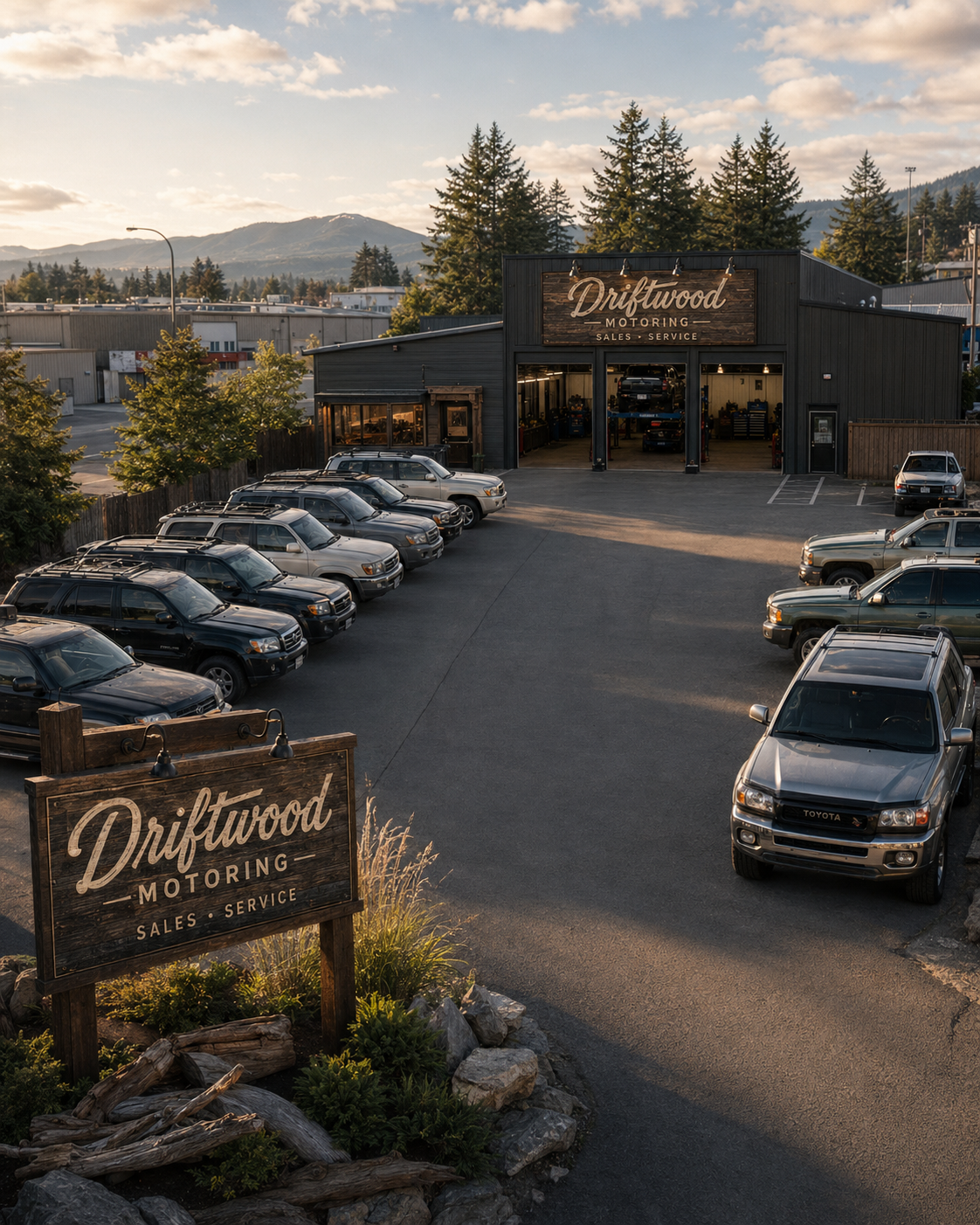
The shop is currently imaginary.
The automotive obsession is not.
My GMT800 Yukon Ruined Me for Other Trucks
I went truck shopping with what seemed like a perfectly reasonable idea: sell the Yukon, buy something with a bed, and make bikes, kayaks, camping gear and family adventures a little easier.
Simple.
Then I climbed into a 2014 Ram 1500 Longhorn and immediately forgot how money works.
It’s Like Riding a Horse Inside a Truck
The Longhorn interior is ridiculous—and I mean that as a compliment.
Brown leather. Cowboy stitching. Longhorn badges. Enough Western-themed trim to make you wonder whether the truck should come with a saddle rack and a complimentary subscription to Yellowstone.
I’ve watched Yellowstone and all the spinoffs more than once. The amount of Carhartt in my closet has quietly increased. Apparently, I am exactly the kind of idiot this interior was designed to manipulate.
And it worked.
The second I sat down, I liked it. It feels special in a way most modern grey-and-black interiors simply don’t. It’s warm, comfortable and just cheesy enough to be brilliant. It genuinely feels like riding a horse inside a truck—and really, what more could a guy ask for?
The 5.7-litre Hemi sounded right, and I loved the way the eight-speed automatic shifted. The truck needed a proper detail and appeared to need a little mechanical attention, but the dealer was upfront about the obvious issues. None of it immediately scared me away.
I got out of that truck considerably more interested than I had any business being.
Then I Remembered What I Already Own
The problem is sitting in my driveway.
Our 2003 GMC Yukon Denali is old. It has clear-coat issues, a couple of small rust spots and the usual assortment of 23-year-old-truck personality traits. It also starts every morning, drives beautifully, carries the entire family and has handled road trips, camping trips and daily life without turning every outing into a mechanical hostage situation.
It has the 6.0-litre Vortec, all-wheel drive, comfortable leather seats and enough cargo space to swallow an irresponsible amount of family crap. It’s paid for. I know what has been repaired, I know what still needs attention, and parts don’t cost me what they cost the average person.
Most importantly, I trust it.
That creates a fairly stupid problem when shopping for its replacement.
I can spend $20,000 or $30,000 on a newer truck with a nicer dashboard, more gears and a collection of buttons that make my inner middle-aged cowboy happy. But am I actually buying something more dependable?
Maybe. Possibly. Hopefully.
Those aren’t especially comforting words when followed by a monthly payment.
The GMT800 Has Set an Annoyingly High Bar
The Yukon isn’t perfect, but it is annoyingly good at almost everything.
It’s comfortable enough. Powerful enough. Useful enough. Simple enough to repair. Old enough that depreciation has basically run out of places to hide. If something breaks, there are parts everywhere—and I’m not terrified that one electronic tantrum will require a technician, three software subscriptions and a small ritual sacrifice.
That’s what I mean when I say the GMT800 ruined me.
It didn’t ruin newer vehicles by being fancier. It ruined them by being so fundamentally competent that spending a pile of money to replace it feels difficult to justify.
The Ram was absolutely nicer inside. It should be. It was built more than a decade later and upholstered by somebody who apparently owned a cattle ranch.
But “nicer” and “better for us” aren’t necessarily the same thing.
A Bed Would Be Handy. Let’s Not Call It a Crisis.
I still want a pickup bed. It would make hauling bikes, kayaks, paddleboards and camping gear easier. There is real utility there.
But if we’re being honest, it’s more of a want than a need. A proper hitch-mounted bike rack solves the biggest immediate problem without selling a vehicle I already love. Kayaks can go on the roof. The Yukon already carries a shocking amount of gear.
Apparently, “I would prefer a box” is not quite the same thing as “we urgently need to spend thirty grand.”
Annoying, but true.
So Am I Selling the Yukon?
I don’t know.
That is the honest answer.
I loved the Longhorn. I liked the Hemi, loved the transmission and remain dangerously vulnerable to saddle-coloured leather. If the right truck appeared at the right price, I could still be persuaded to make a terrible—or possibly excellent—decision.
But every truck I drive eventually has to face the same deeply unfair question:
Is this actually going to improve our life enough to replace the paid-for GMT800 sitting at home?
So far, the Yukon keeps winning.
Not because it’s newer. Not because it’s perfect. And certainly not because it has ventilated seats or an infotainment screen the size of a television.
It wins because it works, I trust it, and every supposedly better replacement comes with a price tag—and its own exciting collection of ways to piss me off.
The horse-truck almost got me, though.
I’m still thinking about that interior.
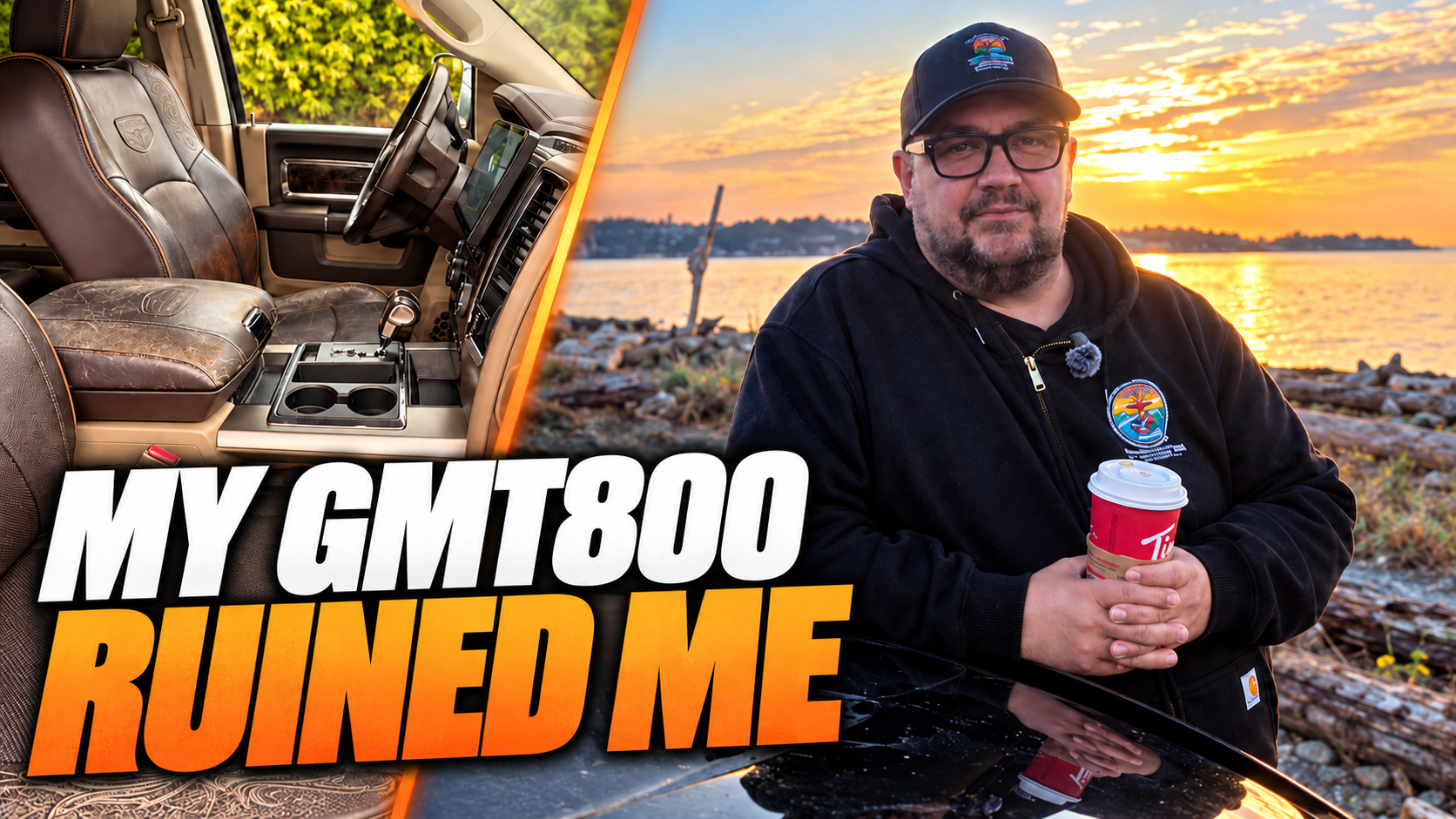
I Drove a Ram Longhorn and Now It Won’t Leave Me Alone
I went looking for a pickup bed. I came home wondering whether I’m simply a sucker for riding a horse inside a truck.
There is nothing particularly wrong with my Yukon.
That is the annoying part of this whole story.
It is a 2003 Yukon Denali that I’ve owned for about five years. It has taken us on road trips, camping trips and all the usual family adventures. It starts every time, drives properly and has been remarkably reliable for a 23-year-old vehicle with more than 275,000 kilometres on it. I just serviced it. It has brand-new tires. I know what has been repaired, what still needs attention and which noises are simply part of the furniture.
I had planned to keep it forever.
Then I bought an e-bike.
The e-bike did not expose a catastrophic flaw in the Yukon. It exposed the fact that a pickup bed would be handy. A bed would be easier for bikes, kayaks, camping gear and all the assorted crap that follows a five-year-old around. It would save me from trying to turn the inside of a reasonably nice SUV into a muddy equipment locker.
There is an obvious, inexpensive answer to this problem: buy a really good bike rack.
Naturally, I started shopping for trucks.
This was supposed to be research
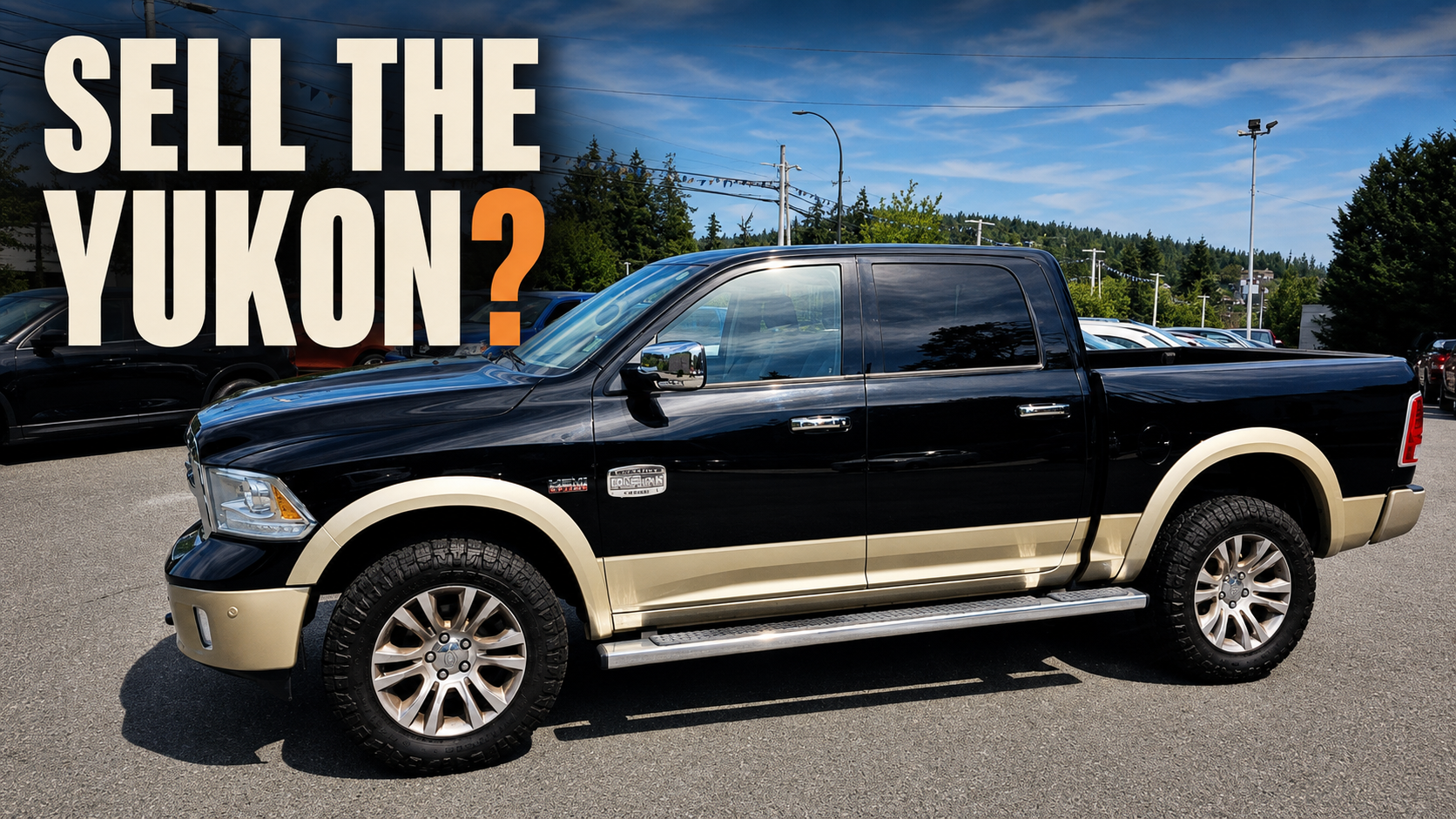
One of the trucks I found was a local 2014 Ram 1500 Laramie Longhorn. Black over tan, crew cab, 5.7-litre Hemi, four-wheel drive and just under 200,000 kilometres. It was close enough to home that there was no good reason not to drive it.
This was meant to be useful research. I have spent plenty of time around trucks, but I had never actually driven this generation of Ram. I wanted to see how it compared with my Yukon and with a GMC Denali I was also looking at.
The Ram was not perfect. The black paint showed the normal scratches and marks that black paint collects if anyone so much as thinks about touching it. There was a little rust beginning on part of the painted bumper. A wheel bearing was making itself known, which the dealer disclosed before I drove it. It is a 12-year-old truck. Anyone expecting a crystal decanter and a handwritten apology over every stone chip is shopping in the wrong part of the market.
Mechanically, the GMC I drove that day may have felt a little tighter. The Ram clearly needed a bit of work.
And then I opened the door.
Apparently, I want to ride a horse inside a truck
The Longhorn interior is ridiculous.
It is saddle-brown leather, contrast stitching, real-looking wood, embossed logos, western details and enough cowboy theatre to make you wonder whether the owner’s manual is stored in a saddlebag. The backs of the front seats have buckled leather pockets. The leather is everywhere. Even the gauges seem like they should be telling you how many cattle are left in the herd.
It is somewhere between a high-end tack room and a steakhouse that serves bourbon in a boot.
I absolutely loved it.
I should probably admit that I have watched Yellowstone all the way through more than once, along with every spinoff they have managed to rope together. The amount of Carhartt in my wardrobe has also grown noticeably over the last few years. I do not own a horse, any cattle or enough land to store either one, but clearly the marketing has found its mark.
So yes, I am one of those guys. I admit it.
Parked back at home, the Longhorn would saddle up quite nicely to the hitching post—which, in my case, is a numbered parking stall at a condo. Nothing says rugged western independence quite like carrying your groceries in from an underground parkade.
There is a fine line between distinctive and cheesy, and the Longhorn gallops over that line without looking back. But it commits to the idea so completely that it works. This isn’t another black interior with silver plastic and a trim badge doing all the heavy lifting. It has a personality.
That drive made me realize I am not just looking for a truck. I am apparently looking for a special-edition truck with a faintly absurd interior theme.
Longhorn. King Ranch. Possibly a Toyota 1794 Edition. Give me brown leather, unnecessary stitching and the vague sense that I should own boots. Apparently that is my weakness.
I always thought the western editions were a bit much. It turns out I meant they were a bit much for other people. For me, they are exactly enough.
Blake has only seen the Ram in a video so far, but I am reasonably confident a five-year-old will support the idea of riding a horse inside a truck. His enthusiasm will not improve my decision-making.
And the damn thing drove well
The interior would have been easier to dismiss if the truck had driven like an exhausted old workhorse.
It didn’t.
The Hemi sounded and felt exactly like a Hemi should. More importantly, I loved the eight-speed automatic. It shifted cleanly, made good decisions and gave the truck a much more modern feeling than my Yukon’s old four-speed. I noticed the transmission because I wasn’t noticing the transmission, which is usually the best thing you can say about one.
The cooled seats were less life-changing than I had imagined. I expected refrigerated buttocks. What I got was a polite suggestion of ventilation. Maybe I was wearing thick shorts. Maybe the fans need attention. Maybe cooled seats are simply one of those features that sounds more glorious in a classified ad than it feels in real life.
The heated driver’s seat worked, though, which already puts it ahead of the Yukon at the moment.
There was also something appealing about the size and layout. Huge back seat, useful storage, proper bed and enough comfort that it could take over road-trip duty without feeling like a punishment. At the amount I drive—probably 5,000 kilometres a year—the mileage would barely move. It is not a disposable commuter. It would be a family and adventure vehicle that occasionally gets asked to do truck things.
Unfortunately, that is a pretty coherent argument.
The Yukon has committed no crime
This would all be much easier if the Yukon were broken, unreliable or generally pissing me off.
It isn’t.
Yes, it has aged. The paint needs help. There are clear-coat problems, a few minor rust spots and the usual list of things a 23-year-old vehicle can offer if you stare at it with a flashlight for long enough. But the important parts have been good to us. I know the truck. I trust it. I still like driving it.
Replacing a known old vehicle with an unknown old vehicle is not automatically an upgrade just because the unknown one has a bed and smells faintly of a leather goods store.
The practical voice says to detail the Yukon, install the replacement driver’s seat parts I already own, buy a serious bike rack and carry on. That solves the immediate problem without turning one useful old vehicle into an entirely new set of jobs.
The other voice keeps showing me that Longhorn interior.
That is the problem with driving something instead of merely looking at the ad. An ad is easy to close. A truck that you have sat in, driven and mentally loaded with bikes is much harder to dismiss.
Now I’m haunted by it
Since the test drive, I have looked at other Longhorns. There aren’t many. I looked at a local King Ranch and, predictably, liked that too. I have learned something unfortunate about myself: ordinary luxury is not enough. If I am going to own a truck, I want the version with a story, even if that story was written by a marketing department wearing brand-new cowboy boots.
The Longhorn is still sitting there. The Yukon is still sitting in my driveway, having done absolutely nothing to deserve replacement. A bike rack remains the intelligent answer.
And I remain haunted by a black-and-tan Ram with a noisy wheel bearing and an interior that looks like Yellowstone opened a furniture store.
Maybe I keep the Yukon. Maybe somebody buys the Ram and solves the problem for me. Maybe I decide that a bed, a newer cabin and a truck I genuinely enjoy are enough to justify moving on from something I once planned to keep forever.
There is no grand conclusion yet. This is the uncomfortable part in the middle, where the sensible choice is obvious but the other choice keeps looking better every time you think about it.
At least I know what I want now.
Apparently, I want to ride a horse inside a truck.
5 Reliable Used Trucks Under $20,000 Without the Toyota Tax

Buying a dependable used truck for less than $20,000 should be simple.
It isn't.
The used market is full of 15-year-old work trucks with 300,000 kilometres, six warning lights and an advertisement claiming they were “lady driven.” Apparently women never skip oil changes, overload trucks or reverse into concrete posts.
At the other end, everybody recommends the same obvious answer: buy a Toyota.
That is not bad advice. Toyota earned its reputation. Unfortunately, Toyota sellers have also heard about that reputation, and some now believe a faded Tacoma with frame rust and lunar mileage belongs in the same pricing conversation as municipal infrastructure.
That is the Toyota tax. You are not only buying the truck. You are buying the legend, the resale value and the word “bulletproof” typed four times into the Marketplace description.
So this is not another list of the most popular trucks, and it is not a list of every decent pickup you could find for $20,000 Canadian. The Ford F-150 is not underrated. Neither is a generic late-model Silverado. They sell by the continent-load, inspire lifelong tribal loyalties and can start an argument in any Canadian Tire parking lot.
An older generation can become underappreciated, though—especially once buyers forget how much simpler it was than the technology-laden truck that replaced it.
We are looking for the trucks that tend to be ignored, misunderstood or buried underneath the usual Tacoma-versus-F-150 noise. They still have to be useful. They still need defensible mechanicals. Most importantly, you should be able to find a decent one without selling a kidney to a man named Kyle.
None of them is literally indestructible. No used vehicle is. Rust, neglect and previous owners can destroy anything. Some people could ruin an anvil with a rubber hammer.
But buy the right years, choose the correct powertrain and arrange a proper inspection, and these five trucks offer considerably more value than their reputations suggest.
What Makes a Used Truck Underrated?
Cheap alone does not count.
A truck can be inexpensive because buyers have overlooked it. It can also be inexpensive because the transmission is made of wet cardboard and everybody except you has already discovered this.
For this list, an underrated truck needs to have most of the following:
a powertrain with a credible record when maintained;
useful truck capability, even if truck traditionalists disapprove of how it is delivered;
parts and service that are still reasonably accessible;
a meaningful price advantage over the fashionable alternative;
at least one version or year range worth actively seeking;
enough personality that ownership does not feel like a punishment.
The $20,000 figure is a ceiling, not an instruction to spend every dollar on the purchase. Prices vary wildly by province, mileage, cab configuration and how much Marketplace content the seller consumed before choosing a number.
I also checked current Canadian listings rather than assembling this from American listicles and optimistic memories. As of August 2026, all five can genuinely be found below the ceiling. That does not mean every one is a good buy. It means these are real Canadian-market options, not technically correct vehicles you will spend six months trying to locate.
Leave money for tires, fluids, deferred maintenance and the surprise that “never had an issue” somehow failed to cover.
Now, from the truck that requires the most careful shopping to the one that best represents this entire argument, here are five underappreciated pickups worth knowing.
5. 2015–2016 or 2020–2022 Chevrolet Colorado and GMC Canyon
The first-generation Colorado and Canyon did not exactly leave the public trembling with desire. They were trucks people bought because the GM dealer was nearby, another rebate appeared underneath the sales manager's desk and the alternative involved speaking to a Toyota salesperson.
The second generation, introduced for 2015, was a much more convincing effort.
These trucks offer proper crew cabs, available four-wheel drive, useful towing capacity and dimensions that make more sense around town than a modern half-ton swollen to the size of a starter home.
They also depreciate. This is unfortunate for the original owner and excellent for the rest of us.
The trick is that “2017 and newer” is not enough research. That advice gets repeated in videos because it is easy to remember, not because every truck built after midnight on December 31, 2016 became mechanically blessed.
The 2015 and 2016 V6 trucks use GM's earlier 3.6-litre V6 and a six-speed automatic. They avoid both the eight-speed transmission and Active Fuel Management introduced with the updated V6 for 2017. They are not glamorous, but glamour is frequently just complexity wearing good lighting.
For 2017, GM added a stronger 308-horsepower 3.6-litre V6, direct injection, cylinder deactivation and the 8L45 eight-speed automatic. The extra power is welcome. The additional systems provide more items to research while muttering into your coffee.
The 2017 through early 2019 trucks became known for torque-converter shudder. It often feels like driving over rumble strips during light acceleration. GM issued a detailed service bulletin for the condition, prescribing a complete fluid exchange using revised transmission fluid.
The bulletin identifies March 1, 2019 as the production breakpoint after which the newer fluid was used at the factory. For that reason, 2020 through 2022 V6 trucks are the later examples I would target if the price and mileage fit.
An earlier eight-speed truck is not automatically junk. It does, however, need to drive properly both cold and fully warmed up, and I would want documentation showing the updated-fluid procedure was completed. “They all do that” is not a repair invoice.
The available 2.8-litre Duramax diesel has excellent torque and can be wonderfully economical. It also has modern emissions equipment capable of turning those fuel savings into a four-digit repair bill with startling efficiency. Buy the diesel because you need what it does, not because somebody promised it would manufacture money while you sleep.
Inspect any Colorado or Canyon for rust, previous off-road damage, neglected fluids and suspension noises. Test every four-wheel-drive mode. Then give the transmission a long enough drive to reveal itself.
A carefully selected Colorado or Canyon feels newer than most trucks on this list and can cost thousands less than a comparable Tacoma. Just buy the truck in front of you—not the internet's lazy declaration that an entire generation is “bulletproof.”
4. 2009–2014 Honda Ridgeline
Yes, the Ridgeline is here.
Truck purists have spent years explaining that it is not a real truck because it uses unibody construction, independent suspension and all-wheel drive instead of a separate frame and the correct quantity of agricultural discomfort.
Meanwhile, many of those same people use their “real trucks” to commute alone and purchase three bags of mulch every spring.
If you tow a large travel trailer, regularly carry extremely heavy payloads or treat logging roads as competitive motorsport, the first-generation Ridgeline is not the right tool.
If you carry bicycles, camping gear, tools, children and whatever your family found at Costco, it makes an uncomfortable amount of sense. If most pickup owners were completely honest about what they actually do with their trucks, a Ridgeline would serve an embarrassing number of them better.
The 2009–2014 Ridgeline uses Honda's 3.5-litre V6, a five-speed automatic and a capable four-wheel-drive system. It has four proper doors, a useful composite bed and a lockable trunk hidden beneath the bed floor.
That trunk remains one of the smartest storage solutions ever installed in a pickup. It keeps tools, groceries and wet gear secure and out of the cabin. It also doubles as a cooler, assuming you are comfortable pouring ice into part of your vehicle—which feels wrong even when Honda says it is fine.
The major scheduled-maintenance item is the timing belt. Look for documentation showing that the timing belt, tensioner and preferably the water pump were replaced when required. If the seller cannot remember, assume the job is due and negotiate accordingly.
Canadian buyers must also take rear structural corrosion seriously. Transport Canada issued a recall covering 2006–2014 Ridgelines because corrosion around the fuel-tank mounting area could allow the tank to detach.
That is not the charming sort of quirk you simply learn to live with.
Check the VIN for completed recall work and have the rear structure properly inspected. Do not accept “looks clean from here” from somebody standing six feet away in white sneakers.
One advantage of the Ridgeline is that many lived gentler lives than conventional pickups. They were family vehicles, not plow trucks, fleet trucks or mobile platforms for proving something at the boat launch.
The Ridgeline is underappreciated because it refuses to participate in truck cosplay. It rides well, uses space brilliantly and handles ordinary life better than most traditional pickups. If that is not “truck enough” for a stranger on Facebook, he is welcome to make your payments.
3. 1999–2006 Chevrolet Silverado and GMC Sierra—Plus the 2007 Classic
The first-generation Chevrolet Silverado and GMC Sierra belong to GM's GMT800 family. Those seven characters matter to people who spend too much time discussing old GM trucks online, but ordinary buyers are more likely to search by the years—which is why both belong here.
Look for a 1999–2006 Silverado or Sierra, or the old-body-style 2007 Classic. These trucks came with GM's familiar 4.8-, 5.3- and 6.0-litre V8 engines, depending on model and configuration. They are simple, widely understood and supported by a parts supply approximately the size of Saskatchewan.
They also predate Active Fuel Management. All eight cylinders remain employed full-time rather than four of them quietly going on break while the lifters reconsider their career choices.
I drive a 2003 GMC Yukon Denali from the same GMT800 family, powered by the 6.0-litre V8. It is why I keep comparing newer vehicles to an old GM platform that cost us about eight grand. The thing is comfortable, useful, straightforward to repair and still feels like a proper vehicle instead of a subscription service with cupholders.
The pickups share that basic appeal while adding the one feature my Yukon cannot provide: an open bed for filthy bikes, landscaping supplies and everything else I would prefer not to place beside the family seats.
The engines are generally the easy part. The 4L60E four-speed automatic used in many half-tons is the main mechanical concern. Some run for hundreds of thousands of kilometres. Others decide third gear was merely a suggestion. Ask whether it has been rebuilt, inspect the fluid and watch for slipping, delayed engagement or flared shifts.
Heavy-duty versions with the 6.0-litre and 4L80E can be extremely durable, but do not buy three-quarter-ton fuel consumption and ride quality unless you need three-quarter-ton capability. An empty HD truck will remind your spine that payload capacity is achieved somehow.
At this age, rust matters more than the engine badge. Inspect the frame, cab mounts, brake lines, fuel lines, rocker panels, box supports and suspension mounting points. Fresh black paint underneath may indicate careful preservation. It may also indicate that a can of undercoating has been asked to testify on the seller's behalf.
Expect old-GM electrical quirks, worn seat foam, sagging headliners and interior plastics that occasionally surrender to sunlight. Fortunately, repairs are well documented and virtually every independent shop has worked on one.
The radio opening also makes an aftermarket Apple CarPlay upgrade reasonably painless. I complain about modern technology because much of it deserves complaining about. CarPlay is pretty sweet, though. I am grumpy, not unreasonable.
GMT800 pickups are not rare, but clean, unmodified examples are increasingly underappreciated relative to both newer trucks and Toyota equivalents. Find one that has not been consumed by rust or modified by somebody with a light-bar sponsorship fantasy, and it remains one of the best cheap-truck foundations available.
2. 2012–2019 Nissan Frontier
The second-generation Nissan Frontier arrived for 2005 and remained fundamentally similar for what felt like the rest of recorded history.
That made it ancient when it was still sitting in new-car showrooms. Today, it is part of the appeal.
The Frontier did not receive a new turbocharger every three years, add eleven transmission ratios or grow a dashboard large enough to show a Marvel movie. Nissan built a straightforward body-on-frame truck and then spent years gradually sorting it out.
The sweet spot is generally 2012 through 2019, equipped with the 4.0-litre V6 and five-speed automatic. The V6 makes 261 horsepower, uses a timing chain and has a strong reputation when it receives ordinary maintenance.
The five-speed automatic is not exciting technology. It just changes gears. Remember when that was enough?
Earlier Frontiers deserve more caution. Some experienced timing-chain component problems, and a failed radiator could allow coolant and automatic-transmission fluid to mix. Owners call the resulting substance the “strawberry milkshake of death,” because catastrophic transmission failure apparently needed a cheerful dessert-themed nickname.
Starting with 2012 moves beyond the years most closely associated with those early problems, although age and abuse still matter more than any date printed in an article.
The Frontier has flaws. The interior contains enough hard plastic to supply a daycare. Its turning circle is approximately the size of Vancouver Island. Fuel economy suggests the truck believes gasoline is a renewable resource.
But it is a proper, useful truck. Four-wheel-drive models have low range. Crew cabs have usable rear seats. The bed carries bicycles, camping equipment and renovation debris without requiring you to vacuum half a beach out of the family SUV afterward.
Inspect the frame carefully for corrosion, listen for differential and driveline noises and be suspicious of heavily modified examples. A stock Frontier with service records is usually more attractive than one wearing a six-inch lift and evidence of several enthusiastic encounters with a mud hole.
This truck is frequently described as a cheaper Tacoma, which is fair but slightly insulting. The Frontier has its own virtues: strong V6 power, simple mechanicals and a long production run that left plenty of parts and knowledge behind.
It is not unknown. It is simply overshadowed—and that is exactly where used value tends to hide.
1. 2011–2015 Nissan Titan
The first-generation Nissan Titan might be the purest example of an underappreciated truck.
It is a full-size Japanese pickup with a naturally aspirated V8, a conventional automatic transmission, available four-wheel drive and serious towing ability. If the tailgate said Toyota, sellers would be asking considerably more money while explaining that 340,000 kilometres is “barely broken in.”
Instead, it says Nissan, so most buyers scroll past it on their way to the same three trucks everybody else wants.
Their loss.
The later first-generation trucks—particularly 2011 through 2015—are the examples I would target. They use Nissan's 5.6-litre VK56DE V8 and a five-speed automatic. In its final 2015 form, Nissan rated the V8 at 317 horsepower and 385 lb-ft of torque, with maximum towing capacity up to 9,500 pounds when properly equipped. The 2015 Titan specifications are old-school in the best way: one V8, one transmission and no turbocharged four-cylinder hiding in the order guide.
The engine is strong, torquey and generally durable. The cab is roomy, the bed has useful tie-down options and the truck feels more eager than many lumbering half-tons of its era.
It also sounds excellent, which is not a rational purchasing criterion but absolutely remains a criterion.
The later-year recommendation is not magic. It is simply a preference for more mature examples after Nissan had years to address early production problems. Any individual truck can still have lived a hard life.
Cracked exhaust manifolds are a known issue and can announce themselves with a ticking noise on cold start. Rear axle-seal and differential problems also deserve attention, particularly on earlier trucks. Check for oil around the axle ends, listen for whining or clunking and verify that the correct differential fluid has been used.
As with everything on this list, rust can overrule an otherwise excellent powertrain. Inspect the frame, cab mounts, brake and fuel lines, suspension mounting points and the underside of the bed. Test four-wheel drive properly rather than trusting a dashboard light.
Fuel economy is terrible. There is no polite way to massage that sentence. The Titan has a 5.6-litre V8, the aerodynamics of a garden shed and none of the modern tricks designed to make a large truck briefly pretend it is not a large truck.
On the other hand, buying a good Titan for thousands less than the Toyota equivalent pays for a great deal of fuel. Depreciation is unpleasant when you own a new vehicle and extremely useful when somebody else already absorbed it.
The Titan earns the top spot because it delivers exactly what this list promises: proven hardware, genuine truck capability and a large discount caused mostly by being outside the usual conversation.
It is not a Tundra substitute from the bargain aisle. It is a good truck that the market never learned to worship.
What About the Toyota Tundra?
The Toyota tax is not distributed evenly.
Tacomas receive the full religious surcharge because nearly everybody shopping for a dependable midsize truck starts there. Tundras—especially older ones—have traditionally been easier to buy for sensible money.
That is beginning to change as more people discover them, but the Tundra still deserves a separate mention.
The 2000–2006 first-generation Tundra is smaller than today's full-size trucks and wonderfully straightforward. The 4.7-litre 2UZ-FE V8 is smooth, durable and uses a timing belt. A documented belt and water-pump replacement is therefore considerably more useful than another seller saying the engine is “bulletproof.”
The later 2004–2006 Double Cab is especially appealing if you need actual rear-seat space. It is one of those rare older trucks that can perform family duty without occupying an entire postal code.
But the frame is not a minor footnote. Toyota documented excessive frame corrosion on certain 2000–2003 Tundras operated in cold, salty climates, including corrosion severe enough to perforate the frame. Any first-generation truck needs a proper frame inspection—not a quick glance at the visible section while the seller explains that Toyotas run forever. Check Toyota Canada's VIN recall and campaign lookup, but remember that completed campaign work does not eliminate the need to inspect a 20-year-old truck today.
Current Canadian listings prove first-generation Tundras can still be found below $20,000, and some are well below it. The catch is mileage: examples below $15,000 commonly sit around 290,000 to 350,000 kilometres. That may be survivable for the drivetrain. It does not make worn suspension, rusty frames and 20 years of deferred maintenance disappear.
The 2007–2021 second-generation Tundra is also excellent, particularly with the 5.7-litre V8 and six-speed automatic. Toyota rated the 2007 5.7 at 381 horsepower and 401 lb-ft of torque, numbers that remained competitive for years. It is a large, thirsty, genuinely capable truck with a reputation that is no longer much of a secret.
Early second-generation examples do appear below $20,000 in Canada. When I checked, 2007 trucks ranged from roughly $8,500 with 460,000 kilometres to $13,500 with 212,000 kilometres. That enormous spread is the whole used-truck market in miniature: the price ceiling alone tells you almost nothing.
Inspect second-generation trucks for frame and bed corrosion, cold-start noises, oil leaks and evidence of proper maintenance. Confirm every warning light behaves normally and test four-wheel drive. The 5.7 is formidable; it is not a force field surrounding the rest of the vehicle.
Why is the Tundra not one of the five? Because it is no longer truly overlooked, and putting a Toyota into a list built around avoiding the Toyota tax weakens the point. But if you find a clean first-generation truck with a genuinely solid frame—or a well-kept early second-generation truck below the cap—buying it is not surrender. It is simply finding the rare Toyota seller who has not priced reputation as a separate factory option.
How to Buy an Older Truck Without Immediately Regretting It
The badge matters less than the condition. At this age, a well-maintained version of the “wrong” year can be a better purchase than a neglected example from the internet-approved sweet spot.
Before buying any older truck:
Start it cold. Tell the seller not to warm it before you arrive. A cold start reveals timing noise, exhaust leaks, smoke and other expensive attempts at communication.
Inspect underneath. Surface rust and structural rust are not the same. If you do not know the difference, pay somebody who does.
Scan every module. The absence of a check-engine light does not prove the absence of stored or recently cleared faults.
Test four-wheel drive. Engage every mode on a suitable surface. A glowing symbol is not evidence that the transfer case obeyed.
Drive it long enough. Some transmission problems appear only when the fluid is warm. A lap around the block proves very little.
Check maintenance records. “My buddy is a mechanic” is not a service history.
Arrange an independent inspection. The seller's mechanic works for the seller. This is not a complex philosophical problem.
Keep a repair reserve. The most reliable 15-year-old truck in the world is still a 15-year-old truck.
The Best Cheap Truck Is the One Nobody Has Turned Into a Religion
Toyota still makes excellent trucks. This article is not arguing otherwise.
It is arguing that reliability and value are different things. Paying thousands extra for a Toyota might reduce risk—or it might buy an equally neglected truck with a more prestigious
tailgate.
The Colorado and Canyon can be excellent if you understand the transmission years. The Ridgeline is brutally sensible once you stop caring whether it impresses a man wearing white Oakleys. GMT800 pickups combine proven GM hardware with the bed that makes a truck genuinely useful. The Frontier is the straightforward midsize truck everyone claims no longer exists. And the first-generation Titan may be the most convincing full-size bargain of all.
These are not indestructible trucks. They are mechanical objects assembled by human beings and then owned by other human beings, which is where the trouble generally starts.
Find the cleanest example, verify the maintenance, inspect it properly and leave money for whatever happens next.
What dependable, underappreciated truck did we miss—and which one would you buy?
Driftwood Motoring — The shop is currently imaginary. The automotive obsession is not.
Related Reads
First-Gen Tundra vs. GMT800: Why I Keep Looking at Toyota Trucks
I love our old Yukon, but the first-generation Tundra’s 4.7-litre V8, useful pickup bed and just-right size keep giving me financially irresponsible ideas.
Is the GMT800 Still the Smartest Vehicle to Own in 2026?
Why repairing a paid-for Chevrolet or GMC truck can still make more sense than replacing it with a newer vehicle—and a considerably newer monthly payment.
2014–2018 GMC Sierra: The Next GMT800—or Trouble?
These Sierras are handsome, comfortable and becoming dangerously affordable. Unfortunately, GM also added more technology—and several expensive new ways to ruin your afternoon.
2014–2018 GMC Sierras Are Getting Cheap. Are They the Next Great Old GM Truck—or Just More Trouble?
There is a dangerous moment in every truck’s life.
It happens after the first owner has absorbed the catastrophic depreciation, the second owner has finished pretending the payment was reasonable, and the truck finally appears on Marketplace at a price low enough for people like me to start making excuses.
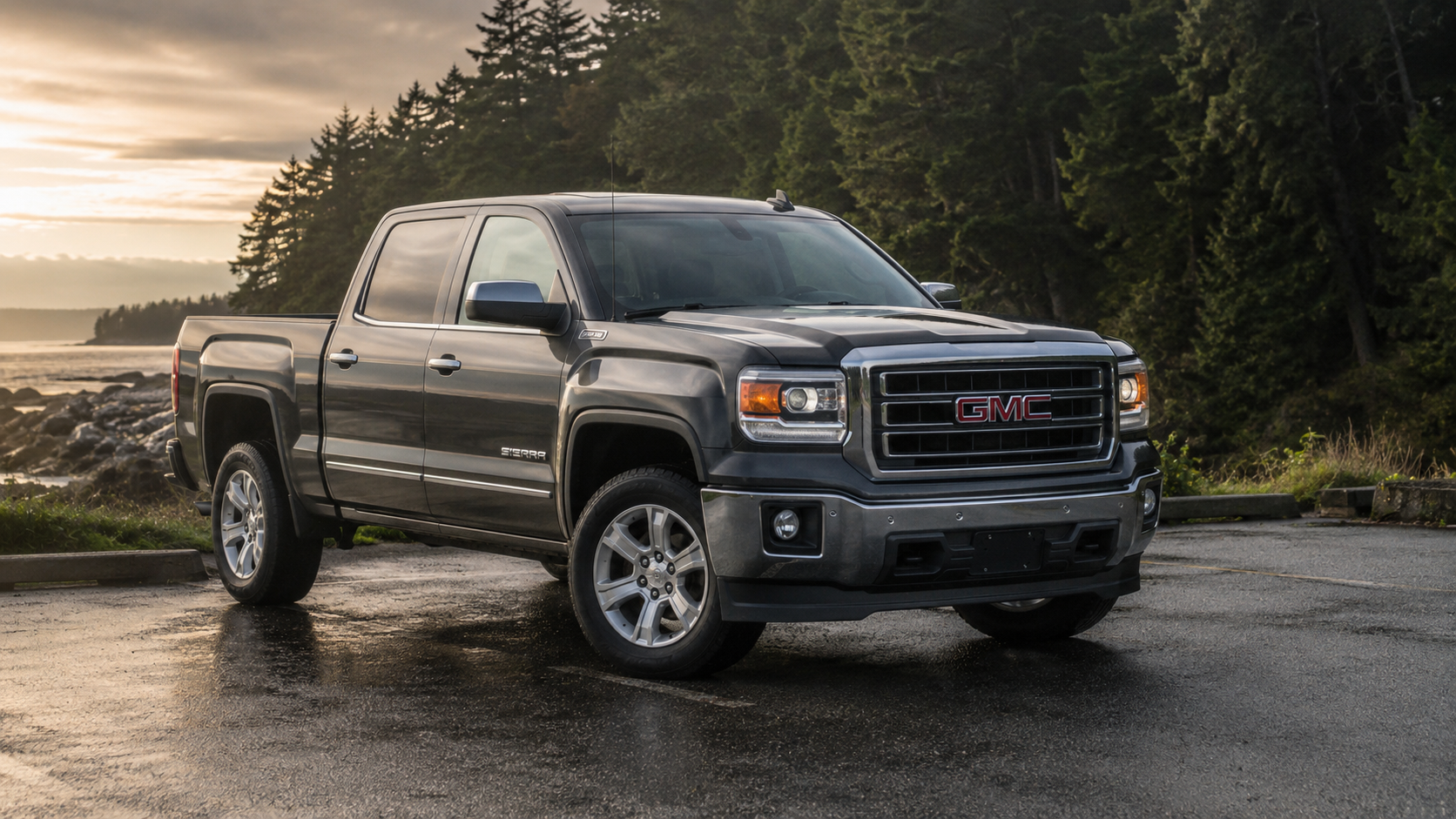
The 2014–2018 GMC Sierra has reached that moment.
These trucks are suddenly old enough to be affordable, new enough to feel modern and still good-looking enough to make me forget everything I’ve ever said about keeping vehicles simple.
That is a dangerous combination.
I love our 2003 Yukon Denali. I’ve spent plenty of time explaining why the GMT800 might be the best truck platform GM ever built. It’s comfortable, useful, relatively simple and powered by a 6.0-litre V8 that has never once decided it would rather become a four-cylinder to save three tablespoons of fuel.
But I keep looking at newer GMC Sierras.
Not because I need one. Need left this conversation a long time ago.
I want a bed for bikes, paddleboards, kayaks and all the other crap that currently gets stuffed inside the Yukon. I want a proper crew cab, a nice interior and something that still feels like a truck rather than a rolling software agreement.
And, most importantly, I think the 2014–2018 GMC Sierra is a genuinely good-looking bastard.
Unfortunately, being attracted to a vehicle and trusting it are two very different things.
What the Hell Is a K2XX?
GM’s internal platform name for this generation is K2XX.
That includes the 2014–2018 Chevrolet Silverado and GMC Sierra 1500, along with the related 2015–2020 full-size SUVs and several HD applications. There were also 2019 Silverado LD and Sierra Limited holdovers after the newer generation arrived.
That information is useful if you’re searching forums, parts catalogues or technical bulletins.
Normal people just call them 2014–2018 Sierras and Silverados.
I’m already deep enough into GM nonsense that “GMT800” sounds completely normal to me, but even I didn’t immediately identify these trucks as K2XX. I just knew them as the newer GMCs I’ve always liked.
So we’ll use the platform name where it helps. We’re not going to make anybody pass a GM internal-code examination before they can read about a used truck.
This Might Be the Best-Looking Modern Sierra
The styling is the main reason I keep coming back to them.
The K2XX Sierra still looks like a proper GMC. It has a square front end, strong body lines and enough chrome to remind you that GM was involved without looking like the truck drove through an entire aisle at Princess Auto.
Even the lower trims look decent. Move into an SLT or Denali and they still feel expensive inside, despite now being old enough to appear beside seventeen broken lawnmowers on Facebook Marketplace.
They also landed in a sweet spot before every dashboard became an enormous tablet mounted above a row of touch-sensitive bullshit.
You get a backup camera, heated seats, Bluetooth, a more modern interior and significantly more power than an old GMT800—but it still has physical controls and generally feels like a truck.
Visually, I think they have aged extremely well.
Mechanically, I have questions.
They’re Becoming Cheap Enough to Be Tempting
At the time of writing, British Columbia listings include K2XX Sierras in the teens and low twenties, depending on trim, mileage and condition. A higher-mileage 2015 SLE Crew Cab 4x4 has recently been advertised below $15,000, while cleaner or better-equipped examples still sit considerably higher.
That is nowhere near GMT800 money, but it is no longer new-truck money either.
A truck that once represented a large monthly payment is becoming something a person might buy outright—or at least finance without agreeing to remain employed until death.
That changes the conversation.
At $40,000, I’m not especially interested in gambling on a ten-year-old GM truck.
At $15,000 to $20,000, I start zooming in on the photos.
At $12,000, I’m checking whether the seller lives close enough that I could “just go look at it.”
Nothing financially responsible has ever followed that sentence.
The problem is that depreciation only reduces the purchase price. It doesn’t reduce the cost of the parts buried inside it.
A $15,000 Sierra can still generate repair bills from a truck that once cost several times that amount.
The 5.3 Is the One I’d Consider
The realistic engine for me would be the 5.3-litre L83 V8.
It makes considerably more power than the older 5.3s, offers decent fuel economy for a full-size truck and is far more common than the 6.2. Finding parts, service information and complete used trucks isn’t going to be difficult.
I would specifically be interested in a 5.3 paired with the six-speed automatic.
That doesn’t mean the 6L80 is immortal. No automatic transmission dragging around a full-size pickup for a decade should be approached with blind faith. But if I’m shopping this generation, that is the powertrain combination I’d be most comfortable investigating.
The 4.3-litre V6 exists too. I’m sure it adequately moves the truck.
I also know myself well enough to understand that buying the engine I didn’t want would result in me shopping for another truck six months later.
So, 5.3 it is.
I Would Stay the Fuck Away From the 6.2
On paper, the 6.2-litre L86 sounds like the obvious enthusiast choice.
It makes 420 horsepower. It has piles of torque. It sounds excellent. It turns a full-size truck into something unnecessarily quick, which is generally a quality I appreciate.
I still wouldn’t buy one.
In the automotive circles I travel in, the 6.2 has earned a reputation as a notorious piece of shit. That may upset owners who have driven theirs for 300,000 kilometres without a problem, but I’m not spending my money based on the happiest exception in a Facebook group.
The 6.2 combines Active Fuel Management, direct injection and—in many configurations—the eight-speed automatic. That is an impressive collection of things I don’t particularly want packaged around an engine with more performance than I actually need.
I’m not saying every 6.2 explodes.
I’m saying I know enough people in and around automotive repair that I would not personally gamble on one. More horsepower does not make a repair estimate more enjoyable.
The 5.3 isn’t free from the same general concerns, but it’s the version I would be prepared to consider at the right price.
The 6.2 can be somebody else’s adventure.
Active Fuel Management Would Be Gone Immediately
The 5.3-litre L83 uses Active Fuel Management, which shuts down four cylinders under lighter loads.
The idea is simple: when full V8 power isn’t required, the engine runs in four-cylinder mode to reduce fuel consumption.
I hate it.
I don’t want a V8 spending half its time trying to convince me it’s an economy car. I especially don’t want the added lifters, oil-control system and failure points required to make that happen.
GM’s own technical information describes AFM lifters becoming mechanically collapsed or stuck, sometimes accompanied by misfires, ticking, bent pushrods and camshaft damage. That doesn’t mean every AFM engine is doomed, but it confirms the problem isn’t something invented by angry people in comment sections.
If I bought one of these trucks, AFM wouldn’t survive the first weekend.
Before tint, wheels, lighting or any other unnecessary nonsense, I would have it electronically disabled with a proper tuner and keep the engine operating as a V8.
Would that remove the AFM hardware?
No.
The special lifters and related components would still physically exist inside the engine. Electronic deactivation prevents the system from routinely entering four-cylinder mode; it does not perform a magical mechanical AFM delete through the diagnostic port.
A complete delete means opening the engine and replacing the relevant camshaft, lifters and supporting components. That is a very different level of commitment.
Disabling AFM doesn’t remove the grenade. It just asks everyone to stop pulling the pin.
Still, I’d do it immediately.
Direct Injection Is Another Thing I Never Asked For
The K2XX introduced GM’s EcoTec3 engines with direct injection, variable valve timing and cylinder deactivation.
That helped produce more power and better fuel economy. It also added a high-pressure fuel system and moved the injectors directly into the combustion chamber.
Technically, it is better.
Emotionally, I remain unconvinced.
Port injection has been quietly and reliably putting fuel into GM V8s for decades. It isn’t glamorous, but it works, parts are relatively inexpensive and just about every competent shop knows how to deal with it.
Direct injection adds performance and efficiency, but it also adds complexity to a truck I would be buying specifically because it has become affordable.
That’s the entire K2XX argument in miniature: it gives you more of everything, including more things that can eventually send you a bill.
Then There’s the Transmission Question
Depending on the year and configuration, K2XX trucks came with six- or eight-speed automatic transmissions.
The six-speed is the one I would target.
The eight-speed 8L90 has a documented history of shudder complaints. GM issued technical bulletins describing a shake or shudder under light throttle that owners often compared with driving over rumble strips. Diagnostic and repair procedures included fluid changes, further testing and, in some cases, torque-converter replacement.
That is not the sort of rumble-strip simulation I’m looking for in a used truck.
A transmission bulletin does not mean every eight-speed is bad. It does mean I would pay very close attention during a road test, particularly after the truck reaches operating temperature.
No ten-minute loop around the block. No radio turned up. No seller explaining that “they all do that.”
If a truck shudders, flares, bangs into gear or behaves strangely, I don’t care how good it looks in the photos. It can continue its journey with somebody else.
It Even Had a Brake-Assist Recall
Certain 2014–2018 K2XX trucks and SUVs were also recalled because the engine-driven vacuum pump could lose output over time, reducing power-brake assist and increasing pedal effort.
GM’s repair involved updated electronic brake-control programming to improve the secondary hydraulic brake assist when vacuum dropped.
That doesn’t automatically make these trucks unsafe today. It means I would check the VIN and verify that all applicable recalls were completed.
This is the difference between buying a GMT800 and buying something a decade newer.
The GMT800 tries to kill you with rusted brake lines.
The K2XX has a software update to help compensate for a vacuum pump.
Progress.
Is It Actually the Next GMT800?
This is where I struggle.
The K2XX has several ingredients that could eventually make it the next great affordable GM truck platform:
There are millions of them.
Parts and technical knowledge are widely available.
They still look good.
The interiors are modern enough for everyday use.
The 5.3 has plenty of power.
They can tow, haul and function as real trucks.
Depreciation is finally dragging them into interesting territory.
But the GMT800 became legendary partly because of what it doesn’t have.
It doesn’t have direct injection. It doesn’t need to deactivate half its cylinders. It doesn’t have an eight-speed transmission trying to recreate a road-surface feature. Its electronics are crude enough that many problems can still be diagnosed without consulting a software engineer.
The K2XX is a better truck when everything works.
The GMT800 may be a better old truck when things stop working.
That is an important distinction.
Would I Actually Buy One?
Yes—but not just any one.
I would look for a clean 2014–2018 GMC Sierra Crew Cab with the 5.3, six-speed automatic, four-wheel drive and a decent trim level. Ideally an SLT, because if I’m spending money on a truck I don’t technically need, I at least want the version I actually like.
I’d want service records.
I’d listen carefully for valvetrain noise. I’d scan it for current, pending and history codes. I’d drive it long enough to properly evaluate the transmission. I’d check the recall history, inspect the frame and look closely for evidence that the truck had spent its life being abused, neglected or modified by someone whose primary tool was an impact gun.
Then I’d disable AFM immediately and continue worrying about it anyway.
That last part is important.
A tuner, maintenance history and careful inspection can reduce risk. They cannot turn a complicated ten-year-old truck into a 2003 Yukon with fewer kilometres.
Cheap Enough to Tempt Me—Not Cheap Enough to Trust Blindly
The 2014–2018 GMC Sierra is entering the most interesting stage of its life.
It is no longer new enough to be financially terrifying, but it isn’t yet old enough for the market to have decided which examples deserve to survive.
Some will become excellent used trucks.
Some are already one warning light away from becoming somebody else’s Marketplace problem.
I’m drawn to them because they look fantastic, have useful crew cabs and beds, and provide enough modern comfort without feeling like current trucks overloaded with enormous screens and unnecessary technology.
I’m wary of them because the 5.3 still has AFM and direct injection, the eight-speed has baggage, and the 6.2 is not coming anywhere near my driveway.
Are they the next GMT800?
Probably not in the same simple, nearly indestructible sense.
But they may be the next generation of GM trucks to become cheap enough, common enough and good-looking enough that idiots like me start trying to save them.
And if the right 5.3-litre SLT shows up at the right price, I may eventually become one of those idiots.
Related Reads
The Best GMT800 Upgrades: What’s Worth Doing—and What I’d Skip
From suspension and brakes to cooling, tuning, CarPlay and the popular modifications I’d probably leave on the internet.
Is the GMT800 Still the Smartest Vehicle to Own in 2026?
Why a paid-for old GM truck or SUV can still make more sense than replacing it—fuel bill, repair list and all.
The GMT800 Duramax: Why These Old Diesel Trucks Became Legends
LB7, LLY and LBZ engines, Allison transmissions, rust, Canadian scarcity and why these old diesel trucks earned their reputation.
The Best GMT800 Upgrades: What’s Worth Doing—and What I’d Skip
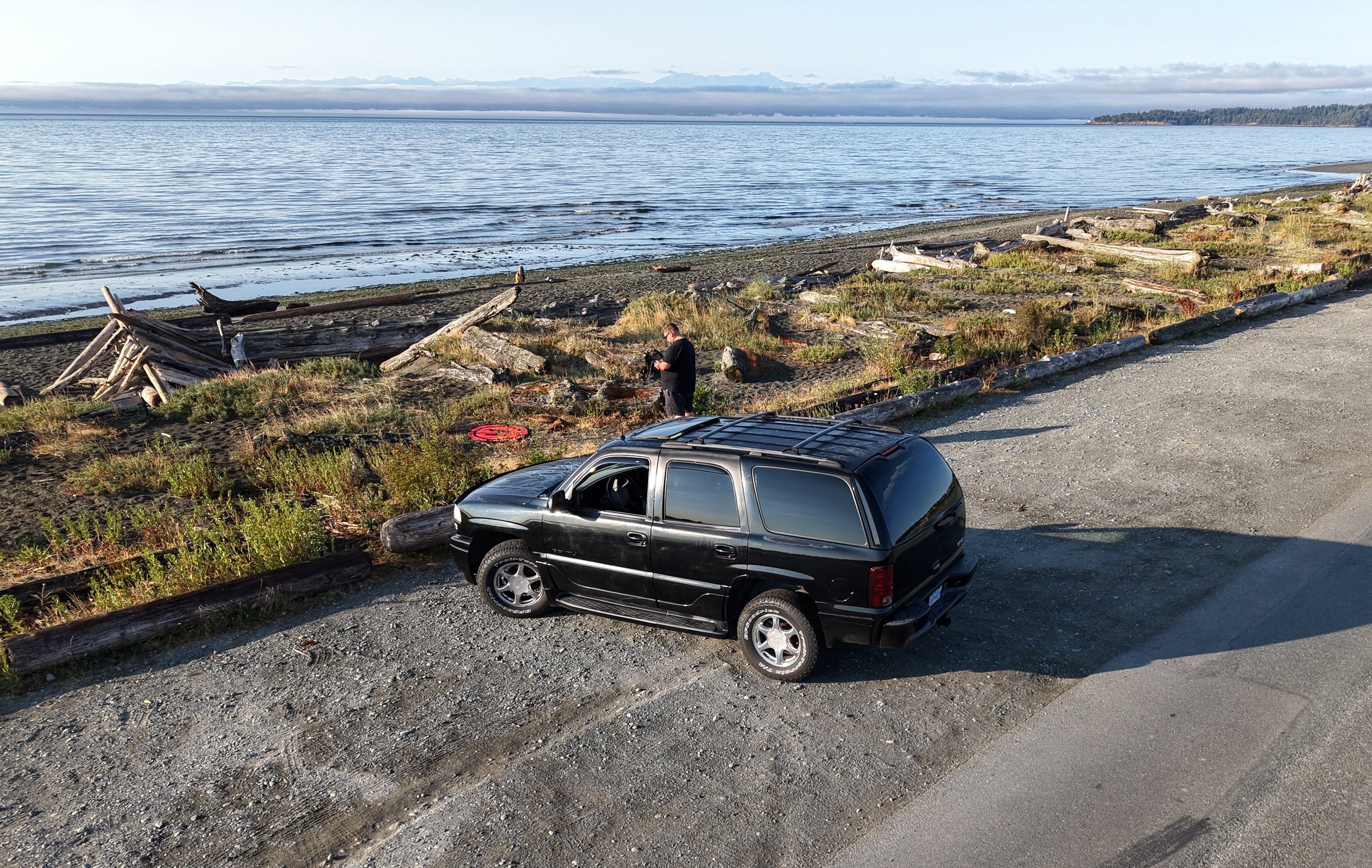
The GMT800 platform has now reached the stage where almost every surviving example has been modified somehow.
Some have tasteful factory-style improvements. Some have been lifted, tuned and turned into genuinely capable trucks. Others have received smoked headlights, enormous tow mirrors and enough poorly installed LED lighting to be visible from space.
That is part of the fun.
The GMT800 platform covers Chevrolet and GMC trucks and SUVs built in several different configurations, including half-tons, HD trucks, two-wheel drive, four-wheel drive, all-wheel drive and Autoride-equipped SUVs. There is no universal shopping cart that fits all of them.
But after more than two decades, a few upgrades consistently make sense—and several popular ones deserve a little more scrutiny.
This isn’t a definitive instruction manual. It’s a look at the upgrades I think genuinely improve an old GM truck or SUV, the ones that depend entirely on how you use it, and the ones I would probably leave on the internet.
First, Fix the Damn Truck
This is the boring answer nobody wants.
Before installing a lift, cold-air intake or touchscreen stereo, make sure the truck underneath it is actually healthy.
A GMT800 with worn ball joints, tired shocks, sloppy steering, questionable brake lines and twenty-three-year-old fluids doesn’t need more horsepower. It needs an intervention.
Replacing worn factory parts isn’t exciting, but bringing the vehicle back to the way it was supposed to drive can feel like the biggest upgrade of all.
That means checking things like:
ball joints, tie rods and idler and pitman arms;
wheel bearings;
shocks and suspension bushings;
brake and fuel lines;
cooling-system condition;
transmission fluid and temperature;
engine and transmission mounts;
differential and transfer-case fluids;
tires that aren’t old enough to have their own driver’s licence.
Our 2003 Yukon Denali has more than 276,000 kilometres on it. At that age, “upgrade” and “deferred maintenance” can become suspiciously difficult to tell apart.
Start with a solid truck. Then make it better.
1. Quality Shocks and Steering Parts
If I had to choose between a cold-air intake and a complete suspension refresh, I’d take the suspension every time.
An intake might add some noise when you put your foot down. Fresh shocks and tight steering improve the truck every second you’re driving it.
Old GMT800s are known for developing a slightly nautical relationship with the road. The steering wheel makes suggestions, the body considers them, and eventually the vehicle changes direction.
Quality replacement shocks, fresh steering components and a proper alignment can remove a shocking amount of that twenty-year-old-truck behaviour.
Bilstein markets its B6 4600 shocks as stock-height replacements, while the B8 5100 line is aimed at trucks with added ride height. That distinction matters. Buying a shock because the internet said it was “better” without matching it to the vehicle’s actual suspension setup is how upgrades become downgrades.
This is also where I’d avoid the cheapest possible front-end kit containing every steering component known to man for $189. A large box of new parts is not automatically better than a smaller box of parts that won’t need replacing again next year.
2. Leveling Kits—Because Apparently Factory Rake Is a Personal Insult
Leveling a GMT800 is one of the most common modifications, and I understand why.
These trucks and SUVs often sit noticeably lower at the front. Raising the nose by an inch or two gives them a tougher stance and can create room for a slightly larger tire.
It can also affect suspension travel, alignment and front-end geometry if you get greedy.
Companies still sell GMT800-specific forged torsion-key kits offering roughly 1.5 to 2 inches of front lift. That doesn’t mean every vehicle should immediately receive the maximum possible crank.
The cheapest version of this modification is essentially winding the front suspension upward until the truck looks level. The more intelligent version considers shock length, available droop, upper-control-arm angles, CV angles on four-wheel-drive and all-wheel-drive models, tire clearance and whether the truck still drives properly afterward.
I like a mild level. I do not like the front end cranked so high that every pothole gets transmitted directly through the seat and into your dental work.
Make it look better. Just don’t make it drive worse.
3. A Proper Suspension Lift—or a Proper Lowering Kit
GMT800 culture goes in both directions.
Some owners build lifted four-wheel-drive trucks on large tires. Others turn regular-cab short-box trucks into low street machines. Both can look fantastic when the entire setup makes sense.
A proper lift is very different from simply installing keys and pretending suspension geometry no longer exists. Once you start chasing serious height and larger tires, you need to think about control arms, steering, shocks, brake hoses, gearing and the extra stress placed on old components.
The same applies to lowering. Randomly removing height is not a suspension design. A good lowering kit should preserve useful travel and keep the truck aligned and controllable.
My preference is mild. A little more stance, a sensible tire and no need for a stepladder to check the oil.
But if you’re building something more extreme, build the entire truck for it. Don’t spend thousands on wheels and tires while asking twenty-year-old factory steering parts to deal with the consequences.
4. Better Brakes
Making a heavy old truck accelerate harder is fun. Making it stop better is generally more useful.
The easiest route is a quality stock-size brake package with good pads, rotors and properly functioning calipers. Companies such as PowerStop sell complete truck-and-tow packages intended for heavier vehicles, towing and larger tires.
Then there are the larger factory-parts conversions.
Owners have adapted later-model GM calipers, brackets and larger rotors to certain GMT800 applications, including newer four-piston setups. Done correctly, an OEM-style big-brake conversion can increase heat capacity and provide a more confident pedal without bolting on an exotic race system.
But this is not one universal bolt-on recipe for every GMT800.
The correct parts depend on the year, hub, drivetrain, wheel size and exact vehicle. Some conversions also create clearance problems with factory 17-inch wheels. Before ordering an internet shopping list, verify the entire combination—not just the calipers somebody found at a wrecking yard.
We’ll eventually give the GMT800 big-brake conversion its own article because it deserves more than three paragraphs and a prayer.
5. Transmission Cooling and Temperature Monitoring
Nobody posts glamour shots of their auxiliary transmission cooler.
That’s unfortunate, because it may be one of the smartest upgrades available for an older automatic truck—especially one used for towing, hauling, mountain driving or larger tires.
Heat is hard on automatic transmissions. An appropriately sized auxiliary cooler can help control it, while a transmission-temperature gauge lets you see what is actually happening instead of relying on positive thoughts.
Some GMT800 instrument clusters included a factory transmission-temperature gauge, and cluster upgrades or rebuilds can add that functionality to certain vehicles. There are aftermarket gauge options as well.
This is the kind of modification I like: not especially exciting, almost invisible and potentially far more valuable than whatever horsepower your chrome intake tube claims to have discovered.
Just remember that cooler installation, line routing and transmission application matter. More equipment is only useful when it is installed correctly.
6. The Factory-Style Electric-Fan Conversion
Earlier GMT800s commonly used an engine-driven mechanical fan. Later versions received factory electric cooling fans, creating a popular OEM-style conversion for earlier trucks and SUVs.
The appeal is understandable.
Electric fans reduce the mechanical drag and noise associated with the clutch fan, provide more controllable cooling and clean up the front of the engine bay. Using later factory-style components also feels more appropriate than zip-tying universal fans to the radiator and hoping for the best.
But the conversion involves more than attaching two fans and finding a convenient wire that becomes hot with the ignition.
Radiator dimensions, fan assemblies, proper relays, wiring and PCM programming all matter. The computer needs to know when and how to command the fans, particularly if you want them working properly with the air conditioning.
It’s a clever upgrade. It just needs to be completed as a system.
7. A Proper Tune
A tune doesn’t have to mean chasing maximum horsepower or turning the truck into an undriveable science project.
On a mostly stock GMT800, tuning can improve throttle response, transmission behaviour and shift scheduling. It can also correct for changes in tire size or gearing and support modifications such as an electric-fan conversion.
That may not sound as impressive as a claimed fifty-horsepower bolt-on, but improving the way an old four-speed automatic behaves can change the entire character of the vehicle.
The key is using someone who actually understands the GM powertrain and your specific combination.
Turning off every protection strategy and making the transmission slam into gear because hard shifts feel “built” is not sophisticated tuning. It’s mechanical abuse with a laptop.
8. Cold-Air Intakes
Cold-air intakes are popular, widely available and extremely good at making you feel like you modified something.
They can improve induction sound. They can clean up the appearance of an engine bay. Well-designed enclosed systems may reduce restriction and deliver measurable gains in certain applications.
They can also cost several hundred dollars and produce a lot more noise than usable performance on an otherwise stock truck.
Manufacturers have published dyno gains for certain GMT800 applications, but those results apply to specific vehicles and test conditions. They should not be interpreted as a promise that every tired 5.3 will suddenly behave like somebody installed another litre of displacement.
My problem isn’t with every aftermarket intake. My problem is with the cheap open filter sitting in a hot engine compartment while its owner explains that it is definitely ingesting “colder” air.
If you want the sound, buy it for the sound. If you want actual performance, start thinking about the entire combination.
9. Exhaust
A GMT800 with a GM V8 should sound like it has a GM V8.
That does not mean it needs to wake the neighbourhood, drone through the cabin or make a five-hour road trip feel like you’ve been trapped inside a bass drum.
A sensible cat-back exhaust or quality muffler can improve the sound without turning the vehicle into a punishment. Exhaust is also one of the few modifications you can enjoy every time you drive—provided you choose something appropriate for how the vehicle is actually used.
If it’s a weekend truck, you might tolerate something louder. If it’s the family SUV carrying your wife and five-year-old, perhaps don’t build the exhaust around what sounds impressive during a twelve-second parking-lot video.
I want to hear the 6.0. I just don’t need it shouting directly into the cabin at 1,800 rpm.
10. Wheels and Tires That Actually Fit the Vehicle
Nothing changes the appearance of a truck faster than wheels and tires.
Nothing can ruin the way it drives quite as efficiently either.
Enormous wheels, extremely heavy tires and aggressive offsets can increase steering effort, worsen braking, add stress to wheel bearings and steering components, create rubbing and make a comfortable old SUV ride like construction equipment.
The stock-size Costco tires on our Yukon may not win an internet build competition, but the truck rides properly, replacement tires are readily available and we didn’t need to redesign the suspension around them.
That doesn’t mean every GMT800 should remain completely stock. A tasteful wheel, slightly more tire and the right stance can make one of these trucks look excellent.
Just remember that the coolest wheel in the advertisement isn’t carrying your family down a wet Vancouver Island highway. You are.
11. CarPlay and a Backup Camera
This might be the single best modernization upgrade for someone who regularly drives a GMT800.
The driving position, visibility and general comfort of these trucks still hold up remarkably well. The factory stereo and lack of a backup camera feel considerably more dated.
A good double-DIN CarPlay or Android Auto receiver adds navigation, music, podcasts and hands-free calling without changing the fundamental character of the vehicle. A backup camera makes a large SUV or pickup easier to live with every day.
Installation becomes more complicated on trucks with Bose audio, steering-wheel controls, OnStar or factory warning chimes. Those vehicles typically require the correct data interface rather than a generic wiring harness and optimism.
Done properly, it makes the truck feel ten years newer.
Done badly, it leaves you with electrical noise, missing warning chimes and a touchscreen that looks like it was won at a carnival.
12. Lighting That Helps You See
Twenty-year-old headlight housings are often cloudy, yellowed or full of bargain-bin aftermarket decisions made by previous owners.
Fresh housings can improve both appearance and usable light output. Good bulbs, properly aimed headlights and clean lenses matter far more than buying the brightest LED product description on Amazon.
LED conversions can work poorly in housings that were never designed around them. A scattered beam pattern may look incredibly bright from behind the steering wheel while blinding everybody coming toward you.
We installed clear housings with C-shaped LED accents on our Yukon because they modernized the front end without completely changing its identity. That is the kind of upgrade I enjoy: noticeable, affordable and still appropriate for the vehicle.
Upgrade the lighting. Don’t start a personal war with every other driver on the road.
13. Interior Restoration
A new seat bottom might improve your enjoyment of the vehicle more than another engine modification.
GMT800 interiors wear in predictable places. Seat foam collapses, leather tears, switches wear out, door handles break, bulbs fail and headliners begin considering retirement.
Repairing those things isn’t as exciting as installing a lift kit, but the interior is where you spend all your time.
Seat foam, replacement covers, heating elements, restored steering-wheel controls, working door lights and fresh floor mats can make an old vehicle feel cared for again.
We’ve already made several inexpensive changes to our Yukon, including LED door lights, new hatch struts, window visors and smooth Escalade-style D-pillar covers. None transformed the vehicle, but together they made it look and function better.
Restoration is still an upgrade—even if it doesn’t come with a dyno chart.
14. Helper Air Springs for Towing and Hauling
For owners carrying heavy loads or towing regularly, rear helper air springs can reduce sag and help keep the vehicle level.
Air Lift, for example, offers coil-spring helper systems for applicable Yukon models with up to 1,000 pounds of load-leveling capacity. That figure does not increase the vehicle’s legal payload or towing rating. It helps manage the load already within the vehicle’s limits.
That distinction matters.
Airbags do not turn a half-ton into a three-quarter-ton. A transmission cooler does not rewrite the manufacturer’s tow rating. Tow mirrors do not mean you should immediately buy the largest trailer visible on Marketplace.
Upgrades can help a vehicle perform its intended job. They do not repeal physics.
15. Running Boards: Remove, Replace or Hide Them
Our Yukon’s factory running boards are useful, especially with a five-year-old climbing in and out.
They also visually drag the body downward and make the truck look lower and heavier than it really is.
Removing them cleans up the side profile immediately. Fixed low-profile steps can offer a compromise, while powered retractable boards provide access when the doors open and disappear when closed.
The powered option is attractive, expensive and mechanically more complicated—which means it fits perfectly into my tradition of considering modifications for six months before doing anything.
This is where usage matters more than appearance. If passengers genuinely need the step, deleting it because the truck looks tougher in photographs may not be much of an upgrade.
What Would I Actually Do to Our Yukon?
If money and time cooperated, my order would probably look like this:
Finish repairing and refreshing worn components.
Improve the shocks and tighten anything contributing to vague steering.
Upgrade the brakes when replacement is due.
Add transmission-temperature monitoring and review the cooling setup.
Install CarPlay and a backup camera.
Consider a very mild level with properly matched shocks.
Decide whether the running boards stay, disappear or become retractable.
Add a restrained exhaust so the 6.0 sounds better without making family trips miserable.
Continue overthinking wheels and tires indefinitely.
Probably leave the cold-air intake on the store shelf.
That wouldn’t create the wildest GMT800 on Instagram.
It would create a tighter, safer, more useful and slightly meaner version of the Yukon we already love—which is what an upgrade is supposed to accomplish.
The Best Modification Is the One That Improves Your Truck
There is no single correct GMT800 build.
A lowered regular-cab street truck, a Duramax tow rig, a lifted Z71 and an all-wheel-drive Yukon Denali have completely different jobs. The modification that makes perfect sense on one could be useless—or actively terrible—on another.
The GMT800’s greatest strength is that it can still be shaped into almost anything.
Just make sure you’re improving the vehicle you actually own, not building the truck an algorithm convinced you to want.
And maybe fix the ball joints first.
Related Reads
The Best GMT800 Upgrades: What’s Worth Doing—and What I’d Skip
From suspension and brakes to cooling, tuning, CarPlay and the popular modifications I’d probably leave on the internet.
Is the GMT800 Still the Smartest Vehicle to Own in 2026?
Why a paid-for old GM truck or SUV can still make more sense than replacing it—fuel bill, repair list and all.
The GMT800 Duramax: Why These Old Diesel Trucks Became Legends
LB7, LLY and LBZ engines, Allison transmissions, rust, Canadian scarcity and why these old diesel trucks earned their reputation.
Why Does Everyone Have a Tent on Their Roof?
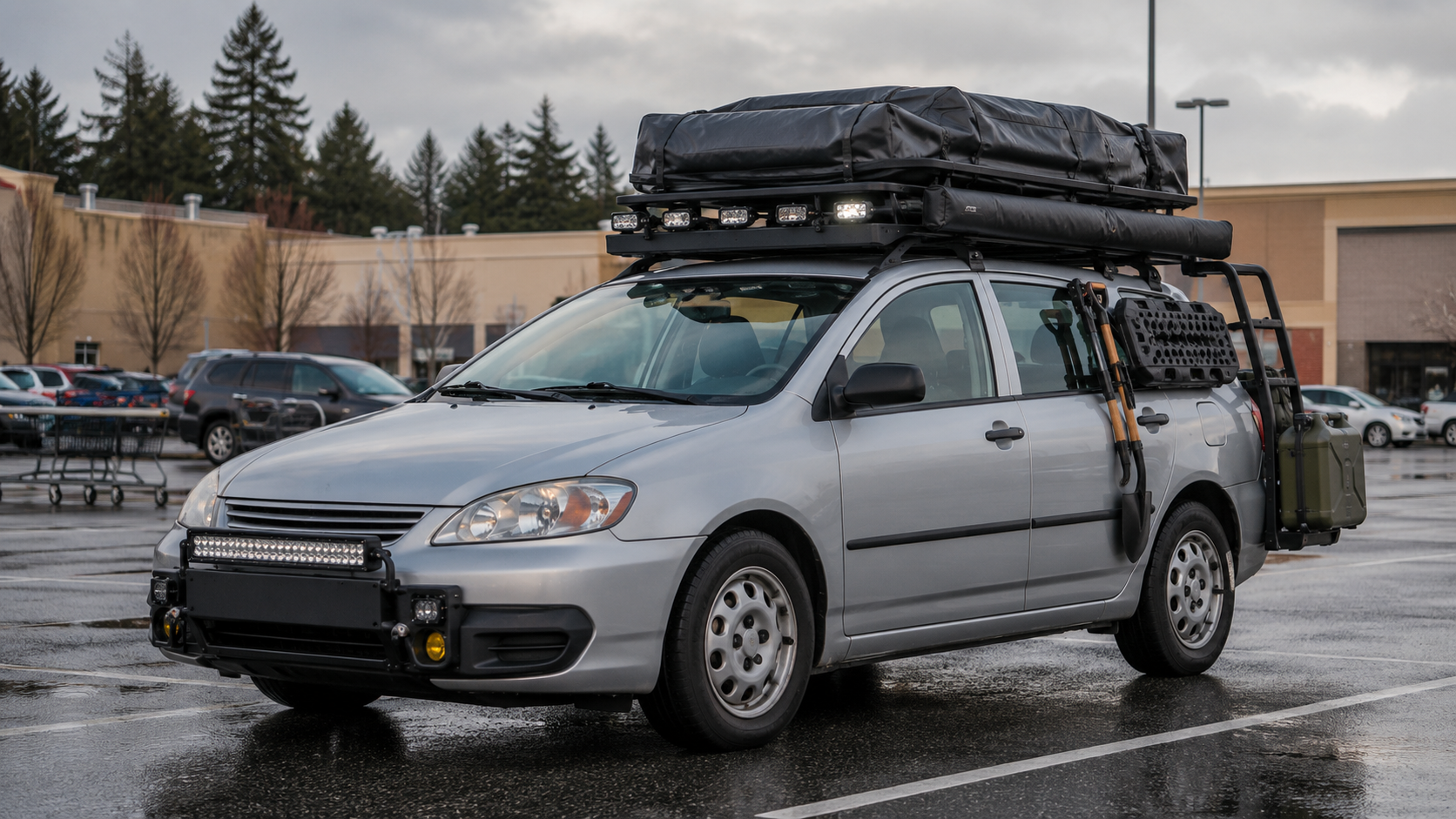
I have a question for the overlanding community.
What the fuck are most of you actually doing?
Not what you’re preparing to do. Not what your truck would theoretically be capable of doing if civilization collapsed next Thursday. What are you honestly doing with it?
Because from where I’m sitting, a surprising number of people have spent thousands of dollars equipping perfectly good trucks and SUVs for expeditions they’re never going to take.
There’s the mandatory roof rack. The rooftop tent. The awning. The recovery boards that have never recovered anything. A shovel that has never touched dirt. Fuel cans that presumably contain fuel, although I’m not convinced. And, of course, enough auxiliary lighting to illuminate a small airport.
Then they drive the whole operation to work every day.
What Is the Light Bar For?
I keep seeing trucks with enormous light bars mounted across the bumper or roof. Sometimes both, because apparently one artificial sun wasn’t enough.
Why?
Where are you driving that requires three thousand dollars’ worth of lighting?
If you’re regularly travelling logging roads in the dark, working somewhere remote or genuinely heading into the backcountry, fair enough. Proper lighting can be extremely useful.
But most of these trucks aren’t doing that.
They’re driving through well-lit suburbs to Costco. They’re commuting to an office. They’re sitting in traffic behind a Corolla while carrying enough forward-facing candlepower to communicate with passing aircraft.
The light bar is never turned on because there’s nowhere legal or appropriate to use the bloody thing. It just sits there collecting bugs and announcing that the owner may theoretically leave pavement one day.
Maybe.
Why Is the Tent Living on the Truck?
The rooftop tent confuses me even more.
I understand the idea if you’re actually overlanding. You travel somewhere remote, set up for the night, sleep and move on the next morning. Your gear stays organized, you’re off the wet ground and the tent becomes part of a genuinely mobile camping setup.
That’s cool. I’m not making fun of that person.
I’m making fun of the person who bolts a tent permanently to the roof in March, drives around with it for eight months and uses it twice—both times at a provincial campsite with a picnic table, bathrooms and a perfectly flat patch of ground specifically intended for a tent.
Why does the tent need to live on your vehicle all year?
You’re carrying it to work. You’re carrying it to the grocery store. You’re carrying it through every drive-through and parking garage. It’s up there making noise, adding weight and presumably hurting fuel economy so that twice a year you can sleep six feet above the exact patch of ground where everybody else puts a tent.
Congratulations. You’ve built a second floor for no reason.
I Don’t Want to Sleep on My Truck
Maybe this is an age thing.
I’m 51 years old and I still happily sleep in a tent. But I like a large cabin tent—something with room to stand up, change clothes and move around without crawling over another human being.
Modern tents are fantastic. For two or three hundred bucks, you can buy an enormous instant cabin tent with the poles already attached. You unfold it, extend everything until those strange little joints lock into place, and the thing is standing.
Folding it back up feels like you’re deliberately hyperextending all of its knees, which is mildly disturbing, but apparently that’s how it works.
Either way, it takes a few minutes.
You can put down a proper mattress. You can stand up. You can bring chairs inside. You can have room for your bags, your kid and all the unnecessary camping crap every family somehow brings along.
You can glamp your ass off without mounting a studio apartment to the roof of your vehicle.
A rooftop tent generally gives you less space, costs several thousand dollars and requires climbing a ladder every time you get in or out.
Who decided this was progress?
When I wake up at two in the morning needing to take a leak, I don’t want to locate a tiny ladder in the dark and climb down from the roof like a drunk firefighter. I want to unzip the door, step onto the ground and take care of business while introducing as little gravity as possible.
The Overlanding Costume
This isn’t really about tents. It’s about honesty.
People like the overlanding look. That’s fine. Trucks with racks, awnings, aggressive tires and expedition gear can look cool. I understand the appeal.
But let’s stop pretending every modified Tacoma, 4Runner, Jeep or Bronco is preparing to cross the Darien Gap.
Most of us are not explorers. We’re going camping.
We’re loading up some chairs, a cooler, sleeping bags and far too much food. We’re driving to a numbered campsite that we reserved online three months ago. We might take a kayak or a paddleboard. We may drive down a gravel road that a 2007 Honda Civic could survive without spilling its coffee.
That doesn’t require an expedition build.
It requires a tent.
The maddening part is that people will spend thousands outfitting a vehicle for imaginary adventures, then leave all that equipment bolted to it every day because removing it would expose the fact that it isn’t being used.
The gear becomes the identity.
It says, “I could disappear into the wilderness at any moment,” even though Saturday’s schedule includes Home Depot, soccer practice and picking up a rotisserie chicken.
If You Actually Use It, This Isn’t About You
There are people who genuinely use this equipment.
They travel into remote places. They camp away from established sites. They need recovery equipment because getting stuck is a legitimate possibility. They use auxiliary lighting because they’re actually driving in darkness where there are no streetlights. Their rooftop tent gets opened regularly somewhere beyond the reach of a reservation system.
That’s awesome.
Frankly, I’m jealous.
But those people know who they are—and they’re probably not feeling defensive right now.
If you’ve had a rooftop tent mounted for two years and can still remember both occasions when you opened it, perhaps this article is about you.
You could have bought a very nice ground tent, an excellent mattress, a ridiculous cooler and several weekends’ worth of campsite fees for considerably less money. You’d have more room, an easier midnight bathroom trip and a roof that wasn’t permanently carrying a small furnished shed.
Buy the truck you like. Modify it however you want. Strap half of an outdoor-equipment store to the roof if it makes you happy.
Just be honest about it.
You’re probably not an overlander.
You’re a camper with an expensive costume.
Related Reads
I Like Every Toyota 4Runner. The Fifth Generation Is the One I’d Buy
The official vehicle of rooftop tents, recovery boards and perfectly clean shovels—and still one of the older SUVs I’d genuinely consider buying.
The Best GMT800 Upgrades: What’s Worth Doing—and What I’d Skip
Suspension, brakes, cooling, tuning, CarPlay and the modifications that improve an old GM truck without turning it into an off-road costume.
I Love My GMT800. So Why Do I Keep Looking at Tundras?
Our Yukon does almost everything we ask of it. Unfortunately, wanting a pickup bed has never been particularly interested in logic.
I Like Every Toyota 4Runner. The Fifth Generation Is the One I’d Buy
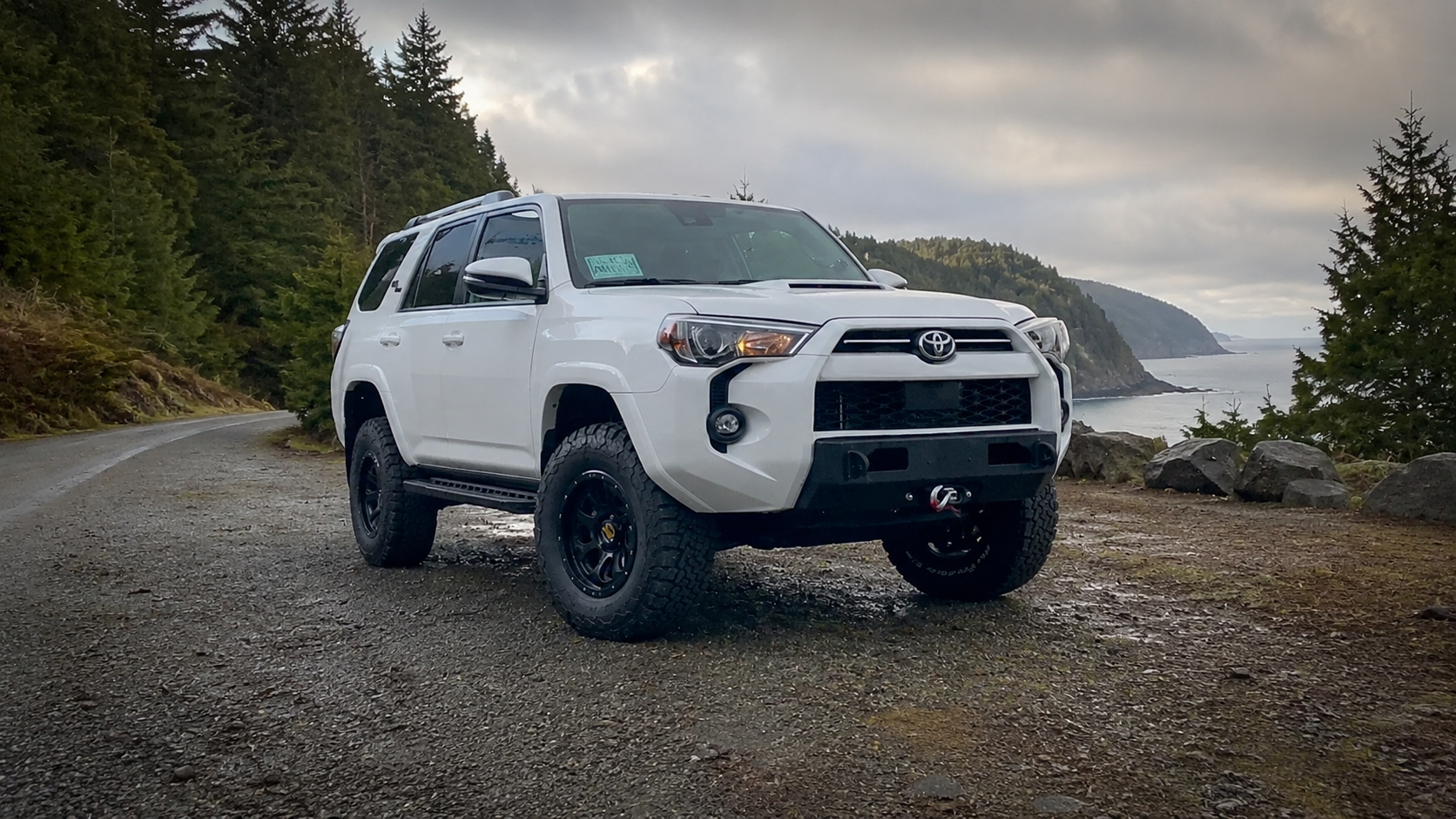
My dad drives a Toyota 4Runner TRD Off-Road.
He’s 75 now, and I’m reasonably confident he has absolutely no idea what he owns.
He knows it’s a Toyota. He knows it’s a 4Runner. He presumably knows how to turn the radio on.
Beyond that, I’m not sure.
His 4Runner has an electronic locking rear differential, Crawl Control, Multi-Terrain Select and enough off-road equipment to negotiate terrain normally associated with documentary film crews.
I don’t think he has ever put it into four-wheel drive.
He may not know how.
Again, the man is 75, still driving and perfectly happy with his truck. He doesn’t need to understand how Crawl Control works. The most hostile terrain his TRD Off-Road regularly encounters is probably a crowded Costco parking lot.
But if a boulder field ever appears between his house and the pharmacy, my father is spectacularly prepared.
And I’m jealous.
Because I like 4Runners.
Pretty much all of them.
Every 4Runner Generation Has Something Going for It
The first-generation 4Runner was essentially a Toyota pickup with rear seats and a removable fibreglass roof.
It was simple, useful and extremely cool. Naturally, clean ones are now priced like small vacation properties.
The second generation became more practical and more SUV-like.
The third generation is probably the classic older 4Runner sweet spot for a lot of people. It’s usefully sized, has the excellent 3.4-litre V6 and still looks right. Unfortunately, finding a clean one now means sorting through rust, enormous mileage and vehicles carrying enough off-road accessories to qualify as commercial equipment.
Then came the fourth generation.
The fourth-gen V8 4Runner is especially desirable because Toyota put the 4.7-litre 2UZ-FE in it. That’s the same basic engine family that helped build the reputation of the first-generation Tundra, Sequoia, Lexus GX and Land Cruiser.
A V8 4Runner is unquestionably cool.
It’s also old enough now that frame condition and maintenance history matter considerably more than the seller telling you Toyota engines last forever.
I like all those generations.
But the fifth generation is the one that really gets me.
Toyota Built the Fifth Generation for Fifteen Years
The fifth-generation 4Runner arrived for 2010 and stayed until 2024.
Fifteen model years.
Most manufacturers would have redesigned an SUV twice during that period, added three turbochargers, removed four physical buttons and installed a touchscreen visible from space.
Toyota just kept building the 4Runner.
It used the same naturally aspirated 4.0-litre V6, producing 270 horsepower and 278 lb-ft of torque, connected to the same five-speed automatic transmission.
It remained body-on-frame.
It kept a proper transfer case.
It could still tow 5,000 pounds.
It was thirsty, heavy and increasingly ancient.
Excellent.
That drivetrain wasn’t exciting in 2010, and it certainly wasn’t exciting in 2024. The five-speed automatic occasionally feels like it’s waiting for written permission before changing gears. Fuel economy is exactly what you’d expect from a brick powered by a large V6.
But it’s proven.
No turbocharger.
No hybrid system.
No CVT.
No ten-speed transmission having an internal debate every time you touch the throttle.
Just an engine and transmission combination Toyota built for approximately six geological eras.
I appreciate that.
The TRD Off-Road Is Hilariously Overqualified
When the fifth generation arrived, its off-road-focused model was called the Trail.
For 2017, Toyota renamed the Trail and Trail Premium as the TRD Off-Road and TRD Off-Road Premium.
That brought the badge my father sees every day without the slightest curiosity about what it means.
The TRD Off-Road includes Multi-Terrain Select, Crawl Control and an electronic locking rear differential. KDSS was also available, allowing the suspension to provide more articulation off-road while controlling body roll on pavement.
My dad likely hasn’t used any of it.
I would enjoy making fun of him for that, but most people don’t use everything their vehicle can do.
Pickup beds carry groceries. Sports cars sit in traffic. Jeeps with 35-inch tires line up at Starbucks. Most Land Rovers encounter more difficulty connecting to Bluetooth than crossing rivers.
You don’t need to drive the Rubicon Trail every weekend to appreciate owning something capable.
And if my dad ever accidentally activates Crawl Control while backing out of his driveway, I look forward to receiving that phone call.
The Fifth-Generation Technology Cutoff Matters
Toyota gave the 4Runner a substantial styling update for the 2014 model year, creating the more aggressive front end that somehow stayed current-looking for another decade.
I like that version.
More specifically, I think the 2017–2019 TRD Off-Road may be the sweet spot.
You get the later appearance, the TRD Off-Road name and all the desirable mechanical equipment without the larger wave of driver-assistance technology that arrived for 2020.
For 2020, Toyota made Safety Sense P standard on every Canadian 4Runner. That included pre-collision braking with pedestrian detection, lane-departure assistance, automatic high beams and dynamic radar cruise control. It also added CarPlay, Android Auto, push-button start and connected services. Toyota Canada’s 2020 announcement confirms the complete changeover.
I like CarPlay.
Collision avoidance may save you from an accident. Radar cruise can make highway trips easier. I understand why people want these things.
I just don’t particularly want them in the 4Runner I’d buy.
If I’m shopping for an old-school Toyota SUV, I don’t need it tugging at the steering wheel, watching lane markings or deciding whether I’m approaching another vehicle too enthusiastically.
I’ve made it this far without the truck supervising me.
Blind-spot monitoring and rear cross-traffic alert arrived on Canadian models for 2022 and became standard across the lineup by 2023.
Again, none of that ruins the 4Runner.
It just makes a 2017–2019 model more appealing to me.
Unfortunately, everyone else apparently reached the same conclusion.
Then You See What They Cost
This is where the fifth-generation 4Runner argument drives directly into a wall.
The Toyota tax is absolutely insane.
Not slightly high.
Not “they hold their value pretty well.”
Insane.
As I’m writing this, there’s a 2018 TRD Off-Road in British Columbia with approximately 124,000 kilometres listed for nearly $43,000.
Another 2018 TRD Off-Road Premium with roughly 98,000 kilometres is asking almost $48,000.
Forty-eight thousand dollars.
For a nine-year-old SUV.
I know it’s a Toyota. I know the 4.0-litre V6 is proven. I know people drive these things for hundreds of thousands of kilometres.
It’s still nine years old.
Rubber ages. Seals age. Suspension wears. Frames rust. Previous owners do stupid things. Toyota did not develop a method of exempting the 4Runner from time.
At nearly $50,000, I don’t want to hear that it has lots of life left.
It should come with a second 4Runner.
And the truly irritating part is that the ridiculous prices aren’t imaginary. People pay them. The 4Runner earned its reputation, supply remained tight, and enough buyers want the same simple drivetrain that depreciation appears to have become optional.
The Toyota tax used to mean paying a little extra for a vehicle likely to hold its value.
Now it sometimes means paying nearly the original price for a vehicle that has already used up a decade of its life.
Reliability Does Not Make Condition Irrelevant
Toyota people occasionally speak as though reliability removes the need to inspect the vehicle.
It does not.
A 4Runner can still rust.
It can still be neglected.
It can still need brakes, suspension work, bearings, cooling-system parts and every other component attached to its famously reliable engine.
The mechanical things don’t scare me much. I work for a parts company. Parts can be sourced, failed components can be diagnosed and worn pieces can be replaced.
Rust is what bothers me.
Mechanical work has a finish line. Rust hangs around and nags at you every time you crawl underneath. It makes every future repair worse and quietly turns an otherwise good vehicle into a long-term structural concern.
I’d rather buy a clean SR5 than a rusty TRD Off-Road with every desirable button.
The badge won’t hold the frame together.
Neither will a snorkel.
The New 4Runner Isn’t the Answer Either
Toyota finally replaced the fifth generation with the all-new 2025 4Runner.
It now uses Toyota’s newer truck platform, a turbocharged 2.4-litre four-cylinder, an eight-speed automatic and, in upper trims, an available hybrid system. It makes more torque, tows more and carries Toyota Safety Sense 3.0.
It is almost certainly better at most measurable things.
The Canadian price starts above $54,000 before fees, with higher trims sailing past $80,000. Toyota Canada’s current pricing stretches from $54,200 to more than $84,000 before additional charges.
So my options are apparently:
Spend new-vehicle money on an old fifth generation.
Or spend luxury-vehicle money on a new turbocharged one.
Excellent.
So Would I Actually Buy One?
Yes.
But the price would have to make some kind of sense.
My ideal version is probably a clean 2017–2019 TRD Off-Road. It has the styling I like, the drivetrain I trust, the equipment I’d enjoy and less of the electronic supervision I don’t need.
Would I use Crawl Control?
Eventually.
Would I lock the rear differential?
Absolutely, even if I had to deliberately find somewhere to justify it.
Would I spend most of my time carrying a five-year-old, bikes, beach gear, camping equipment and groceries?
Of course.
That’s what makes the 4Runner so appealing. It can be a serious off-road vehicle, family SUV, adventure machine or hilariously overqualified retirement vehicle.
My dad doesn’t know everything his can do.
He may never use four-wheel drive.
He still owns one of the best versions of one of the best Toyota SUVs ever made.
I just wish buying my own didn’t require negotiating with someone who believes his nine-year-old 4Runner is a blue-chip investment.
Related Reads
Why Does Everyone Have a Tent on Their Roof?
Rooftop tents, unused recovery boards, airport-grade lighting and the strange urge to outfit every 4Runner for an expedition to Costco.
I Love My GMT800. So Why Do I Keep Looking at Tundras?
The Yukon is comfortable, capable and already paid for. Naturally, that hasn’t stopped me from shopping for an old Toyota pickup.
Is the GMT800 Still the Smartest Vehicle to Own in 2026?
A paid-for old GM SUV against the temptation of something newer, more efficient and considerably more expensive.
The GMT800 Duramax: Why These Old Diesel Trucks Became Legends
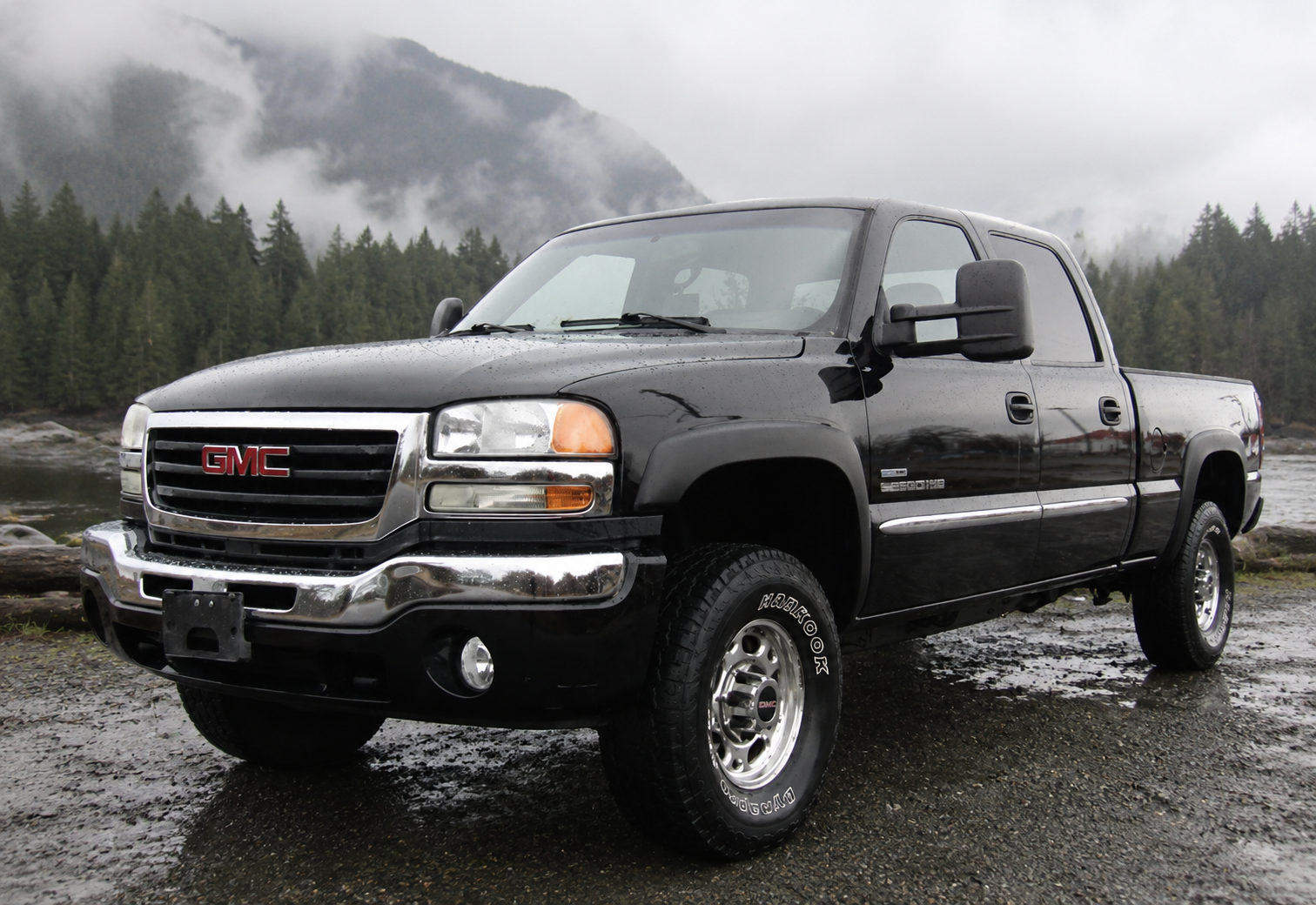
I’ve been looking at trucks lately.
I don’t desperately need one, which naturally makes this the perfect time to spend hours scrolling through used-truck listings.
The Yukon already does nearly everything we ask of it. It carries bikes, kayaks, paddleboards, camping gear, tools and enough assorted family crap to support a small expedition. But I live on Vancouver Island, and a truck bed would be useful for doing truck things without having to load everything into the same carpeted space where my family sits.
So I’ve been looking at first-generation Tundras, newer Sierras, Rams, F-150s and, inevitably, GMT800 pickups.
I already own a GMT800. I know how comfortable they are, how useful they are and how straightforward they are to fix. Buying another one with a bed makes a lot of sense.
The problem is finding one that hasn’t spent the past 20 years being slowly returned to the earth.
And then there are the Duramaxes.
The Diesel That Changed Everything for GM
Bring up the GMT800 Duramax around diesel-truck people and someone will immediately tell you about one with 700,000 kilometres that has only ever needed oil changes and one headlight bulb.
That story is probably missing a few receipts.
Still, there’s a reason these trucks have such a following.
The 6.6-litre Duramax arrived for the 2001 model year in Chevrolet Silverado HD and GMC Sierra HD pickups. More importantly, GM paired it with the Allison 1000 automatic transmission.
That combination became the legend.
The Duramax delivered serious torque and strong power without feeling like an agricultural engine someone had accidentally installed in a pickup. The Allison gave it a transmission people trusted. Together, they helped pull GM’s diesel reputation out of the hole it had spent years digging for itself.
More than 20 years later, people still actively hunt for these trucks. Clean examples still bring serious money, and owners talk about LB7s, LLYs and LBZs as though they’re discussing members of the family.
Possibly more fondly than some actual family members.
LB7, LLY and LBZ Without Writing a Diesel Textbook
The first Duramax was the LB7, offered from 2001 into 2004.
It established the basic formula and earned a reputation for strong performance, good fuel economy and very long life. It also became known for injector problems, with the injectors inconveniently buried under the valve covers because apparently GM wanted replacement to be memorable.
A properly maintained LB7 with documented injector work can still be an excellent truck. The important word is documented. “The previous owner did them” is not documentation. Neither is “my buddy looked at it.”
The LLY arrived partway through 2004 and carried the Duramax into the middle GMT800 years. Its injectors were easier to access, but the LLY developed its own reputation for cooling concerns when towing hard or making additional power.
That doesn’t make every LLY a ticking time bomb. Old-truck shoppers have a habit of memorizing engine-code stereotypes and then ignoring the condition of the actual truck sitting in front of them.
I’d take a clean, maintained LLY over a beaten-to-death LBZ every day of the week.
The LBZ arrived near the end of the GMT800 run, bringing more power, more torque and a six-speed Allison. It also came before diesel particulate filters entered the picture.
That made it the one everyone wants.
The problem with everyone wanting something is that sellers eventually notice.
A clean LBZ crew cab is no longer just an old work truck. It’s now a highly desirable old work truck being sold by someone who has recently looked at every other LBZ listing within 1,000 kilometres.
The Mechanical Stuff Doesn’t Scare Me
People love saying that a Duramax will run forever.
Maybe it will. But the engine isn’t the only thing you’re buying.
You’re also buying a 20-plus-year-old truck with an old cooling system, transfer case, front end, wheel bearings, wiring, steering components and every other part attached to it.
For me, that isn’t necessarily the frightening part.
I work for a parts company. I’ve spent most of my adult life around the automotive industry, and you can still buy practically everything for a GMT800. Front-end parts, brakes, bearings, sensors, cooling-system components, window regulators, interior pieces—it’s all available.
Mechanical problems can be diagnosed. Parts can be ordered. Things can be unbolted and replaced. None of that is free, but it’s understandable.
Even the famously destroyed GMT800 driver’s seat isn’t the crisis people seem to think it is. Replacement leather and foam are readily available and surprisingly affordable. I genuinely don’t understand how someone can drive around for five years with the foam hanging out of the seat when the parts to repair it cost so little.
Fix the damn seat. You spend every kilometre sitting on it.
No, the part that worries me is rust.
Rust Is the Problem You Own Forever
Mechanical work has a finish line.
You replace the failed part, put the truck back together and move on with your life until the next thing breaks. That’s old-vehicle ownership. I’m fine with it.
Rust is different.
Rust nags at you.
It sits underneath the truck quietly getting worse while you pretend the fresh black undercoating applied by the seller is probably completely innocent. It creeps into brake lines, rockers, cab corners, crossmembers, mounts and every fastener you may eventually need to remove.
A rusty truck makes every future repair worse. A simple job becomes a broken-bolt job. A weekend repair becomes a welding project. You stop asking whether a part is worn out and start asking whether there’s enough truck left to attach the new one to.
I don’t mind buying something that needs brakes, front-end work or a cooling-system overhaul. I can deal with that.
What I don’t want is to spend good money on a truck that bothers me every time I look underneath it.
And this is the problem with shopping for GMT800s now. Many of them have lived long, useful truck lives. They’ve towed, hauled, worked, sat outside and endured more than two decades of weather. Even here on the West Coast, trucks move around. Something currently listed on Vancouver Island may have spent its first 15 winters somewhere considerably less friendly to steel.
A shiny body and a freshly detailed interior don’t tell you what’s happening underneath.
Neither does black spray paint.
Clean Trucks Are Getting Hard to Find
I’ve been actively looking for something with a bed, and decent GMT800 pickups are becoming surprisingly difficult to find in my area.
There are trucks for sale. There are always trucks for sale.
Finding one I’d want to own for another ten years is the challenge.
Gas GMT800s are getting thin. Nice Duramaxes are even harder to find, and the clean ones are still bringing around $20,000 to the mid-$20,000s Canadian—sometimes more.
At that price, mileage matters, even if the engine has a reputation for lasting forever.
A Duramax with 400,000 or 500,000 kilometres may still have plenty of life left, but that doesn’t mean I want to start my ownership experience there after handing over $25,000. Especially if the body is already beginning its transformation into iron oxide.
The affordable trucks usually have a reason for being affordable. The clean, lower-mileage trucks are expensive. The rare truck that appears to land somewhere in the middle is either sold immediately or located far enough away to involve ferry reservations, travel costs and a full day of disappointment if the seller’s definition of “mint” turns out to be creative.
Are GMT800 Duramaxes Still Worth Buying?
Absolutely—if you find the right one.
A good GMT800 Duramax still offers enormous capability without the price, complexity and ridiculous physical size of a new diesel HD truck.
The visibility is excellent. The interiors are comfortable. The controls make sense. Parts availability is fantastic, and nearly every independent shop understands how to work on one.
They’re also from an era when trucks were large enough to do serious work without needing their own postal code.
But I wouldn’t buy one based solely on the engine code.
I’d rather have the cleanest, most honest truck I could find. Give me a solid body, a clean frame and decent maintenance records. I can replace mechanical parts. I can fix a seat. I can rebuild a front end.
I don’t want to spend the next ten years chasing rust.
GM Should Have Built a Duramax SUV
General Motors had the Duramax. It had the Allison. It had the GMT800 Tahoe, Yukon and Suburban, including heavy-duty 2500-series versions of the Suburban and Yukon XL.
Yet somehow, GM never sold us a factory Duramax–Allison SUV.
That feels like an oversight bordering on negligence.
Imagine a GMT800 Suburban 2500 with an LBZ and six-speed Allison: proper towing capability, massive enclosed cargo space and room for the family and all their gear.
Or forget being responsible and imagine a standard-length Yukon Denali with that drivetrain.
That would be magnificent.
People have built Duramax Suburbans and Yukons, of course. Given enough money, fabrication and disregard for financial planning, people will build anything.
But GM could have done it properly from the factory.
It should have.
And Now I Want One
I started looking at trucks because having a bed would be useful for bikes, kayaks, paddleboards, camping and all the other stuff that comes with living where we do.
That led me to first-generation Tundras.
Then back to GMT800s.
And now, inevitably, to Duramaxes.
A clean LBZ crew cab would be extremely hard to resist. It would provide the truck bed I keep thinking about, enough capability for nearly anything I’d reasonably—or unreasonably—ask it to do, and one of the most respected diesel drivetrains of the past 25 years.
It would also cost more than I originally planned to spend and introduce me to diesel-sized repair bills.
So naturally, I want one.
That’s the hold these trucks still have. More than two decades later, after years of towing, hauling, modifications and abuse, good GMT800 Duramaxes remain genuinely desirable.
They’re harder to find.
They’re definitely not cheap.
And GM still owes us a factory Duramax Yukon.
The shop is currently imaginary. Apparently, so is the perfect truck.
Related Reads
Why the GMT800 Might Be GM’s Best Truck Platform
The gas engines get most of the attention, but the Duramax and Allison helped turn GM’s turn-of-the-century truck platform into a genuine high-water mark.
The Best GMT800 Upgrades: What’s Worth Doing—and What I’d Skip
Suspension, brakes, cooling, tuning and the upgrades that can make an old GM truck better without emptying an entire parts catalogue into it.
2014–2018 GMC Sierras Are Getting Cheap. Are They the Next Great Old GM Truck—or Just More Trouble?
They’re handsome, comfortable and becoming dangerously affordable. Unfortunately, GM also brought more technology—and more ways to ruin your afternoon.
I Love My GMT800. So Why Do I Keep Looking at Tundras?
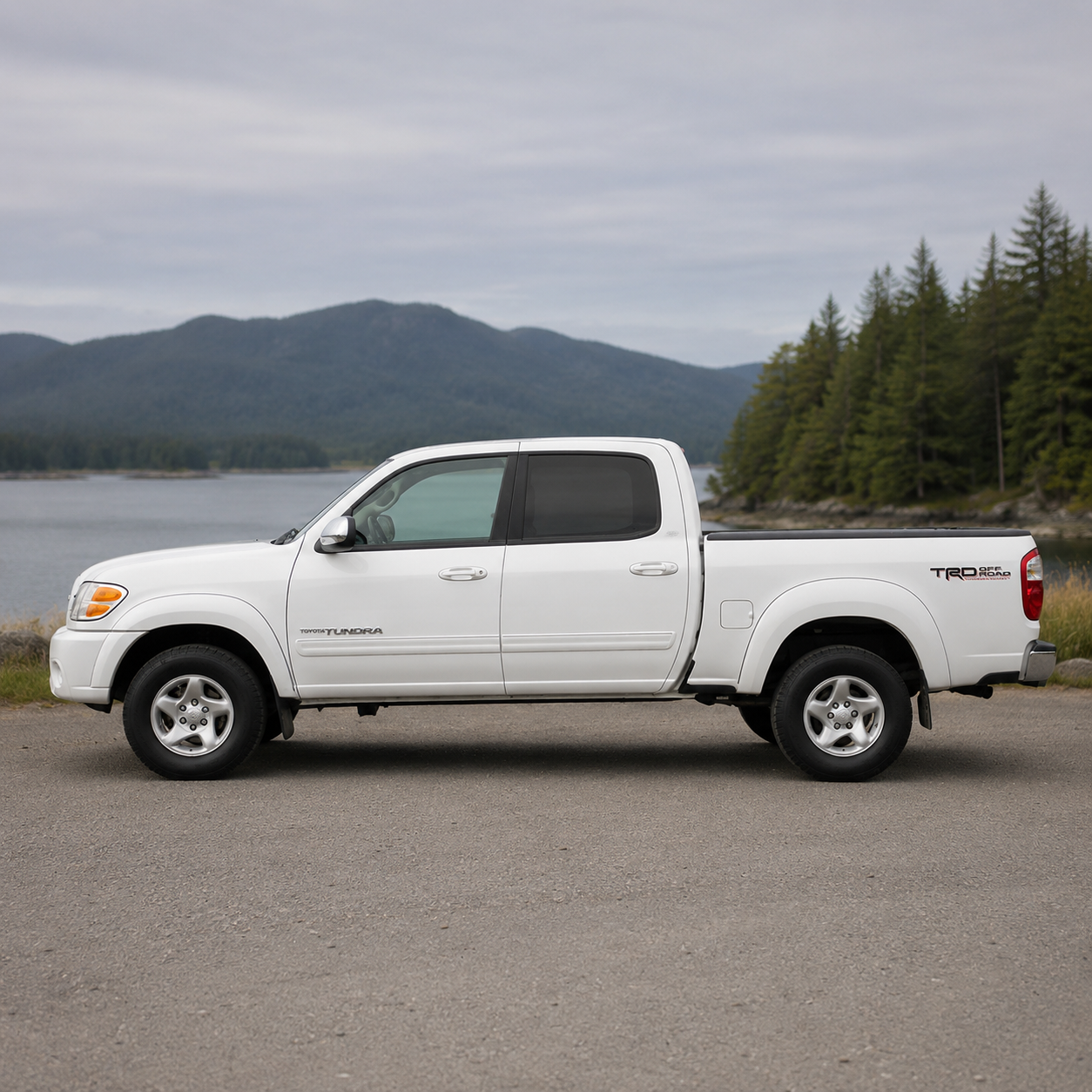
I love my Yukon.
Not in the fake internet way where somebody says they love their old truck right before explaining why they’re replacing absolutely everything on it.
I genuinely love it.
It’s a 2003 Yukon Denali with the 6.0, it’s comfortable, it still feels nice enough inside, it sounds good, it hauls the family, and it has proven itself to be exactly the kind of old vehicle I’ve grown to appreciate more as I’ve gotten older.
Which is funny, because I wasn’t always like this.
There was a stretch of my life where I had a new lease every year.
I worked at a dealership. Buying cars there didn’t bother me because I could basically do it while I was working. If the salesman needed something, he could come find me at my desk. I wasn’t spending my Saturday sitting under fluorescent lights waiting for somebody to “go talk to the manager.”
Now?
I fucking hate buying cars at dealerships.
Nothing against salespeople. I’ve spent enough time around the business to know how it all works.
I just don’t want to lose an entire day of my life buying something.
And maybe that’s part of why my taste in vehicles has changed too.
I used to like new.
Now I like proven.
The Yukon Does Everything I Need
The Yukon is our toy vehicle.
Technically, it’s my third vehicle.
I have a company vehicle for work. My wife has her own car.
The Yukon is the thing we take when we’re doing something.
Beach.
Road trip.
Car show.
Paddleboard.
Kayak.
Bikes.
Random family nonsense.
My five-year-old is into basically everything, and I’m assuming that’s going to continue for the foreseeable future.
The Yukon will tow our trailer.
Full disclosure: our trailer is currently imaginary.
It’ll tow our boat too.
Also full disclosure: depending on which boat we’re referring to, that one is either imaginary or inflatable.
So no, I’m not exactly pushing the limits of the 6.0 V8.
But I still like having it.
I like knowing there’s a dependable V8 under the hood.
I like the sound of a V8.
I like the simplicity.
I like that it feels like a machine instead of a software platform with tires.
The Yukon is more than capable of handling our life.
There’s just one problem.
I want a bed.
A Bed Would Make Life Easier
This is not some grand towing-capacity decision.
I am not suddenly hauling excavators.
I am not starting a landscaping business.
I just keep realizing how much easier life would be with a pickup bed.
My e-bike is huge.
My son has his bike.
We have a kayak.
We have a paddleboard.
We have beach gear, life jackets, chairs, tools and whatever other crap somehow accumulates every time we leave the house.
The Yukon can carry all of this.
Believe me.
I have tested its limits.
But there’s something very appealing about throwing dirty, wet, awkward stuff in a bed and closing the tailgate.
No folding seats.
No careful packing.
No worrying about soaking the carpet.
No trying to figure out whether a bicycle pedal is about to punch a hole in an interior panel.
Just throw it in the back.
That sounds pretty good.
So I started looking at pickups.
Which is always how bad financial decisions begin.
Then I Found a First-Gen Tundra
I’ve always liked first-generation Tundras.
I like the way they look.
I like the size.
And I really like the 4.7.
The 2UZ-FE has one of those reputations that makes otherwise reasonable people say completely ridiculous things like:
“270,000 kilometres? That’s not bad.”
On a 20-plus-year-old truck.
And somehow they’re not wrong.
That engine has earned its reputation.
It’s simple.
It’s naturally aspirated.
It’s a V8.
It’s proven.
All things I apparently care about more now than I did when I was younger and swapping into a new lease every twelve months.
There’s also something weirdly perfect about the size of the first-gen Tundra today.
When they were new, people complained they weren’t really full-size enough.
Now everything has gotten so fucking enormous that the old Tundra suddenly looks just right.
Especially the Double Cab.
It’s big enough for the family.
Big enough to be useful.
But it doesn’t look like I need a commercial driver’s licence to park it at Save-On-Foods.
Of Course, the One I Found Isn’t Quite Right
The one currently tempting me is around eight grand.
Double Cab.
4.7.
Decent kilometres.
Exactly the general formula I want.
And it’s about two hours away.
If it were local, I would have already been crawling underneath it and embarrassing myself in the parking lot.
But I’m not driving two hours just to find out the pictures were flattering.
And even in the pictures, it needs work.
Cosmetically, it’s tired.
That doesn’t scare me.
Honestly, part of the fun is bringing an old vehicle back.
Fix the ugly stuff.
Catch up on maintenance.
Replace worn bits.
Make it nicer.
Drive it.
Repeat.
That sounds far more appealing to me now than handing over a stupid amount of money for something new and then being scared to scratch it.
But if I can already see a bunch of stuff wrong in the photos, I assume there’s more waiting in person.
There always is.
Old vehicles don’t surprise you by being better than expected very often.
If It Were a Limited, This Article Might Be About My New Truck
This whole search has taught me something else.
Apparently I’m fancier than I thought.
The Yukon is old.
But it’s a Denali.
It has leather.
Heated seats.
Automatic climate control.
Wood trim.
Comfortable seats.
All the ridiculous luxury stuff GM could cram into a truck in 2003.
And I like it.
I like getting into an old vehicle that still feels nice.
I don’t need a giant touchscreen.
I don’t need massaging seats.
I don’t need 14 different ambient lighting colours.
But I also don’t want to spend the next ten years sitting on grey cloth in something that feels like a fleet truck.
I thought drivetrain and condition would be everything.
Turns out trim matters too.
Because if that Tundra were a clean Limited?
I’m not sure I’d still be writing this.
I probably would have already been there humping the back bumper and throwing my wallet at somebody.
Which is irritating information to learn about yourself.
Do I Just Buy Another GMT800?
That’s the obvious question.
I already know GMT800s.
I trust them.
I like them.
Parts are everywhere.
I know what goes wrong.
I know how they drive.
I know how comfortable they are.
And the 5.3 and 6.0 are exactly the kind of engines I like.
So the sensible thing might be to find a nice GMT800 Crew Cab and keep going.
But I don’t know if I want to commit to the same platform forever.
I’ve done the GMT800 thing.
I love the GMT800 thing.
Maybe that’s exactly why trying another legendary old platform sounds appealing.
The first-gen Tundra is almost the Toyota version of the same philosophy.
Simple.
Proven.
V8.
Old enough to be affordable.
New enough to still be usable every day.
Not packed with 4,000 computers waiting to get offended because a sensor saw a cloud.
Buy it.
Fix it.
Maintain it.
Enjoy it.
That’s increasingly how I think about vehicles now.
Apparently I’m Becoming an Old Man
Maybe this is just what happens.
You get older.
You stop caring about having the newest thing.
You start caring about whether the thing you own is actually good.
You want it comfortable.
You want it dependable.
You want parts to exist.
You want to be able to fix it.
And if it sounds good when you start it, even better.
I’m not anti-new-car.
If somebody wants to hand me a brand-new truck, I will happily refrigerate my ass in ventilated seats and enjoy every minute of it.
But spending my own money?
I’m increasingly drawn to the idea of buying vehicles that already proved themselves.
The Yukon did.
The first-gen Tundra definitely did.
And I think that’s why I keep going back to the ad.
I don’t need it.
It isn’t exactly the spec I want.
It’s two hours away.
It needs work.
And I already own a vehicle I adore.
So naturally, I’ve looked at it about 900 times.
This is probably going to get worse before it gets better.
Related Reads
Why the GMT800 Might Be GM’s Best Truck Platform
The gas engines get most of the attention, but the Duramax and Allison helped turn GM’s turn-of-the-century truck platform into a genuine high-water mark.
The Best GMT800 Upgrades: What’s Worth Doing—and What I’d Skip
Suspension, brakes, cooling, tuning and the upgrades that can make an old GM truck better without emptying an entire parts catalogue into it.
2014–2018 GMC Sierras Are Getting Cheap. Are They the Next Great Old GM Truck—or Just More Trouble?
They’re handsome, comfortable and becoming dangerously affordable. Unfortunately, GM also brought more technology—and more ways to ruin your afternoon.
Cheap Upgrades That Actually Made Our GMT800 Better
There is a dangerous thing that happens when you own an old vehicle and have access to Amazon.
You start browsing.
Not because anything is necessarily broken. That would at least be responsible.
You just start thinking things like:
That hatch does hit me in the head sometimes.
Those old door lights are pretty pathetic.
The window visors would probably look better black.
And suddenly there are four packages sitting on the front step and you’re explaining that they’re technically “maintenance.”
That’s more or less how this particular afternoon with our 2003 GMC Yukon Denali started.
Except this time I had help.
Blake grabbed the ratchet.
That immediately made the whole thing more entertaining.
This Is Exactly the Kind of Work I Like Doing on an Old Truck
I love big automotive projects in theory.
Engine swaps. Suspension builds. Brake upgrades. Exhaust systems. All the stuff that looks fantastic in a YouTube thumbnail and usually ends with somebody standing in a garage at 1:30 in the morning wondering why there are three bolts left over.
But most actual vehicle ownership isn’t like that.
Most of the time, the things that make you like your vehicle more are stupidly small.
Fix the annoying rattle.
Replace the hatch struts that have developed homicidal intentions.
Put in better lights.
Replace some faded plastic.
Spend forty bucks making something you touch every day work properly again.
That’s the good stuff.
Especially on a vehicle like our GMT800 Yukon, where almost everything is still simple enough that you can walk outside with a basic tool kit, a five-year-old assistant and a completely unjustified level of confidence.
The Rear Hatch Had Declared War on My Skull
Affiliate disclosure: Some links below are Amazon affiliate links. If you buy through one, we may earn a small commission at no extra cost to you. Consider it contributing to the ongoing financial irresponsibility of keeping an old Yukon nice.
We replaced ours with a cheap set of rear glass hatch struts from Amazon, and this is one of those repairs where you immediately wonder why you waited so long.
Ours had reached that stage where they technically still worked.
Mostly.
As long as there wasn’t wind.
Or cold.
Or gravity.
You’d open the rear hatch, start grabbing something out of the cargo area, and suddenly the Yukon would attempt to bonk you directly in the coconut.
Nothing makes you appreciate new hatch struts quite like having a large piece of glass and metal slowly descend toward the back of your head.
The replacement is hilariously simple.
Support hatch.
Remove old strut.
Install new strut.
Repeat other side.
Done.
And because Blake was involved, this became considerably more serious business than it needed to be.
He had the ratchet.
He was turning things.
I was supervising just enough to make sure we didn’t accidentally remove something structural.
That’s a pretty good afternoon.
Five-Year-Olds Love Ratchets
One of the best things about working on older vehicles with Blake is that the jobs are understandable.
There’s a bolt.
The bolt needs to come out.
Here is a ratchet.
Turn it this way.
That’s a much easier concept for a kid than:
“Okay buddy, Daddy needs you to hold the laptop while we recalibrate the forward-facing radar sensor.”
There’s something wonderfully basic about an old truck.
He can see what we’re changing.
He can hold the old part.
He can install something.
Then we can test it and immediately see whether it worked.
That matters to me more than whether we shaved two tenths off our quarter-mile time or gained eleven horsepower.
He doesn’t need to understand the whole mechanical system.
He just knows:
We did something to the truck.
Now it works better.
And he helped.
That’s cool.
LED Door Lights: Completely Unnecessary and Also Excellent
I have an embarrassing affection for cheap LED upgrades.
Not the kind that turn the underside of your truck purple and make it look like a Fast & Furious extra that got lost on the way to a meet.
Just replacing old, dim incandescent lighting with something that actually lets you see.
The door lights on a GMT800 are one of those tiny details you don’t think about until you improve them.
The originals worked.
Technically.
In the same way a candle technically illuminates a cave.
We used these LED door lights, and for such a stupidly inexpensive little upgrade, I like them far more than I probably should.
The LEDs are brighter, cleaner and make the truck feel slightly less like it was assembled during the first Bush administration.
Does this radically transform ownership?
No.
Did I enjoy it far more than the amount of money involved justified?
Absolutely.
That’s basically the entire appeal of cheap vehicle upgrades.
We’ve also been replacing some of the old incandescent bulbs around the truck with LEDs. For anyone doing the same thing, these are the LASFIT 194 LEDs and LASFIT 3157 LEDs we’ve been using.
Nothing revolutionary. Just brighter light from a truck built when flip phones were still impressive.
Window Visors: Because Apparently We’re Styling It Too
The window visors were another inexpensive change.
We went with these in-channel window visors from Amazon, which I prefer because they tuck into the window channel instead of being stuck across the outside of the door with a giant strip of tape.
Again, not revolutionary.
The truck did not suddenly gain resale value.
Nobody from General Motors called to congratulate us.
But they suit the Yukon.
They’re useful when it’s raining—which, around here, is not exactly a hypothetical situation—and I like being able to crack the windows without immediately inviting half the weather inside.
And honestly, I just think they look good on a GMT800.
That’s enough.
This is where I think people sometimes make vehicle modifications way more complicated than they need to be.
Not every upgrade needs measurable performance data.
Sometimes you spend a few bucks because something is useful, looks better, or both.
We are allowed to enjoy things.
I checked.
Then We Did the Smooth Escalade-Style D-Pillars
This video was actually filmed before one of my favourite cheap visual upgrades we’ve done to the Yukon.
The factory rear D-pillar covers on these trucks have those big vented-looking sections running down the rear corners.
They’re very GMT800.
They’re also very early-2000s.
We swapped ours for the smooth Escalade-style D-pillar covers.
About a hundred bucks.
And I absolutely love them.
It’s one of those changes that most people who aren’t into these trucks probably wouldn’t even notice.
But if you know GMT800s, you notice.
And once you see the smooth pillars, the old vented ones suddenly look busy.
The smooth covers clean up the entire rear of the truck. They make it look newer, simpler and a little more upscale without making it look modified for the sake of being modified.
That’s exactly the kind of upgrade I like.
No fake carbon fibre.
No giant body kit.
No weird aftermarket styling that immediately dates itself.
Just a factory-style part from another version of essentially the same platform.
Cheap.
Simple.
Looks like it belongs there.
And for around a hundred bucks, I think it modernized the back of the Yukon more than almost anything else we’ve done.
Zero regrets on that one.
Cheap Doesn’t Have to Mean Garbage
Amazon automotive parts can be an adventure.
Sometimes you open the box and think:
Wow, this is surprisingly decent.
Other times you open the box and begin to wonder whether the manufacturer has ever actually seen the vehicle the product supposedly fits.
That’s part of the game.
I’m not replacing steering components or brake hydraulics with mystery parts because a listing had four-and-a-half stars and a picture of an eagle.
There are places where I want proper known-quality parts.
But hatch struts?
Door lights?
Visors?
Trim pieces?
Little convenience upgrades?
That’s exactly where cheap aftermarket stuff can make a lot of sense.
If it works, great.
If it doesn’t, return it and write a mildly angry review while eating breakfast.
This Isn’t a “Build”
And I like that.
YouTube is full of builds.
$20,000 suspension systems.
LS swaps.
40-inch tires.
Fully fabricated everything.
Meanwhile, we changed some lights, prevented the rear hatch from assaulting me and swapped some plastic trim.
And I genuinely think this kind of content is closer to how most people actually enjoy their vehicles.
Most of us aren’t building SEMA trucks.
We’re maintaining something we like.
Fixing annoyances.
Adding little things.
Making it look slightly better.
Making it easier to live with.
Maybe changing the exhaust later because the 6.0 currently sounds far too well behaved.
That’s ownership.
And honestly, it’s probably more relatable than pretending every vehicle needs to become a project with a five-figure parts budget.
The Yukon Is Perfect for This Stuff
The GMT800 platform might be one of the best vehicles ever made for driveway tinkering.
There’s an enormous aftermarket.
Parts are everywhere.
There are twenty years of forum posts explaining almost every possible problem.
YouTube has probably documented every fastener on the truck.
And because these vehicles were produced in enormous numbers, companies still make all sorts of cheap replacement and upgrade parts for them.
That gives you this endless list of little projects.
Some necessary.
Some cosmetic.
Some completely unnecessary but entertaining.
Which is dangerous when you already enjoy car shopping and Amazon delivers to your house.
There’s More Coming
We’re nowhere near done with the Yukon.
Some upcoming work is considerably less glamorous.
Inner tie rods.
Sway-bar end links.
Transmission cooler lines.
An oil leak.
Rear brakes eventually.
The normal joys of owning something old enough to legally drink in the United States.
Then there are the fun things.
A better driver’s seat, because ours leans slightly and has almost certainly absorbed the ghosts of a thousand farts.
I’ve already got a replacement driver’s seat leather cover sitting on the list for when I finally deal with it.
A little more exhaust noise.
Possibly some brake upgrades using later GM parts.
Maybe eventually doing something about the running boards, assuming I can decide whether looking cooler is worth making it harder to get into my own truck.
There will always be something.
That’s half the fun.
The Best Upgrade Was Probably the Kid With the Ratchet
The truck was better at the end of the day.
The hatch stayed up.
The lights were brighter.
The visors looked good.
The smooth rear pillars came later and cleaned up the whole back of the truck.
Nothing cost very much.
But the part I’ll actually remember is Blake standing there with a ratchet working on Dad’s Yukon.
Not because I’m trying to manufacture some emotional father-son automotive story.
He’s five.
He was mostly excited because tools are fun and ratchets make noises.
That’s enough.
Maybe he grows up obsessed with cars.
Maybe he doesn’t.
Right now he likes helping.
I like having him there.
And our old Yukon provides an almost endless supply of small jobs for both of us to screw around with.
Seems like a pretty good arrangement.
Under $100 Can Actually Make a Difference
That’s what I like about these upgrades.
None of them individually sounds impressive.
Nobody is going to walk around the truck at a car show saying:
“Holy shit, are those aftermarket hatch struts?”
But every time I open the rear hatch and it doesn’t attack me, I notice.
Every time I open the door at night, I notice the better lighting.
Every time it rains and I crack the window, I use the visors.
Every time I walk up behind the Yukon, I notice those smooth D-pillars and think they look a hell of a lot better.
Small improvements add up.
You don’t need to spend thousands of dollars to make an old vehicle better.
Sometimes you just need a couple of cheap parts, an afternoon in the driveway and a five-year-old who refuses to give the ratchet back.
I’ll take that over a software update any day.
Parts We’ve Used on the Yukon
Some of these are already installed, some are on the current to-do list, and all of them are parts or upgrades we’ve actually bought, used, or seriously plan to use on the Yukon.
Rear glass hatch struts — Amazon
LED door lights — Amazon
LASFIT 194 LED bulbs — Amazon
LASFIT 3157 LED bulbs — Amazon
In-channel window visors — Amazon
Driver’s seat leather replacement — Amazon
Driver’s rear window regulator — Amazon
WeatherTech floor mats — Amazon
WeatherTech cargo floor mat — Amazon
Clear headlight lenses with C-shaped LED strip — Amazon
Affiliate disclosure: Some links above are Amazon affiliate links. If you buy through one, we may earn a small commission at no extra cost to you. Consider it contributing to the ongoing financial irresponsibility of keeping an old Yukon nice.
Related Reads
Why the GMT800 Might Be GM’s Best Truck Platform
The gas engines get most of the attention, but the Duramax and Allison helped turn GM’s turn-of-the-century truck platform into a genuine high-water mark.
The Best GMT800 Upgrades: What’s Worth Doing—and What I’d Skip
Suspension, brakes, cooling, tuning and the upgrades that can make an old GM truck better without emptying an entire parts catalogue into it.
2014–2018 GMC Sierras Are Getting Cheap. Are They the Next Great Old GM Truck—or Just More Trouble?
They’re handsome, comfortable and becoming dangerously affordable. Unfortunately, GM also brought more technology—and more ways to ruin your afternoon.
Is the GMT800 Still the Smartest Vehicle to Own in 2026?
I’m going to start with an absolutely ridiculous statement:
A 23-year-old GMC Yukon might be one of the smartest vehicles you can own in 2026.
There. I said it.
Now, before the Toyota people start sharpening their keyboards and somebody sends me a photograph of a rusty GMT800 frame held together by hope and spray foam, I’m not saying everybody should immediately run out and buy the first $4,500 Tahoe they find on Marketplace.
That would be terrible advice.
I’m saying that our 2003 Yukon Denali makes an increasingly compelling argument for keeping an older, proven vehicle instead of automatically replacing it just because the calendar says you should.
Because lately, buying new to avoid repairs feels a little bit like buying a boat to avoid getting wet.
We Bought Old Specifically Because I Didn’t Want Another Payment
Our Yukon is a 2003 Denali with the 6.0-litre Vortec V8, all-wheel drive, three rows of seats and roughly 276,000 kilometres.
It’s old.
It’s thirsty.
It smells vaguely like 2003.
And it has buttons.
Glorious, physical buttons.
We’ve had money into it over the years. Including buying the thing and maintaining it, we’re somewhere around the $10,000 mark over roughly five years.
That isn’t free transportation.
Old vehicles cost money.
They need brakes. Suspension parts wear out. Fluids leak. Rubber gets old. Things that have been travelling down Canadian roads for more than two decades eventually become tired of doing so.
But here’s the problem with the argument that I should replace it:
Replace it with what?
Something that does what this does is going to cost real money.
A newer three-row SUV with decent towing capability, actual cargo space, comfortable seats and enough vehicle underneath it to deal with family trips, beach gear and whatever else we throw at it is not $20,000 anymore.
And I don’t particularly feel like spending $60,000, $70,000 or more because I’m frightened that my old truck might someday need $1,000 worth of repairs.
That math makes my head hurt.
“I Bought New Because I Didn’t Want Repairs”
I understand this argument completely.
I spent years working in automotive service.
People would bring an older vehicle in, we’d inspect it, and suddenly there would be a list.
Brakes.
Tie rods.
A leaking water pump.
Maybe a wheel bearing.
Some suspension work.
The estimate gets to a few thousand dollars and you can see the expression changing on the customer’s face.
“Maybe it’s time to get something newer.”
Fair enough.
There is absolutely a point where an old vehicle stops making financial sense.
But what makes me laugh now is the idea that buying new somehow guarantees you’ll stay away from the dealership.
Have you met modern vehicles?
You might not be there for ball joints.
You’re there because the infotainment system needs an update.
Or some module has stopped communicating with another module.
Or your forward-facing camera is upset.
Or the manufacturer has released a recall.
Or there’s a software campaign.
Or your wireless CarPlay has decided today is a personal-growth day and would prefer not to participate.
Or some connected service needs to be reset because apparently your truck is now part vehicle, part laptop and part needy houseplant.
You bought new because you didn’t want to visit the service department.
Congratulations.
Now you’re drinking dealership coffee while somebody updates the operating system on your fucking pickup truck.
At Least My Problems Make Sense
Our Yukon needs some work right now.
I know.
Shocking.
The 23-year-old truck with 276,000 kilometres has some worn parts.
We have inner tie rods coming up. Sway-bar end links. Some transmission cooler line work. An oil leak that needs attention. The rear brakes are getting lower.
None of that fills me with existential dread.
Tie rod worn out?
Put another tie rod in it.
Sway-bar link worn out?
Replace it.
Brake pads getting low?
I have some extremely advanced technology for that called new brake pads.
The beauty of an old GMT800 is that most of its problems have already happened to approximately nine million other GMT800s.
There is almost nothing you can discover underneath one of these trucks that somebody hasn’t already fixed in a driveway, a farm shop, an independent garage or behind a Canadian Tire with questionable lighting.
Parts are everywhere.
People understand them.
The aftermarket is enormous.
And you don’t generally need to book a teleconference between three control modules to diagnose a clunk.
The Monthly Payment Argument Is Getting Stupid
This is where keeping an older vehicle gets really interesting.
Suppose I put another $1,000 into the Yukon.
That sounds like a lot when you say it by itself.
“A thousand dollars in repairs.”
Oooh.
Scary.
But then compare it to someone making a $1,000 vehicle payment.
Every.
Single.
Month.
My thousand dollars buys actual parts and labour.
Their thousand dollars gets them approximately four weeks closer to eventually owning the vehicle.
And depending on what they bought and how they financed it, they may be doing that for six, seven or eight years.
I’m not suggesting nobody should ever finance a vehicle. Most people don’t have seventy grand sitting between the sofa cushions.
But we have completely normalized absurd monthly payments because we’ve become conditioned to think of a vehicle as something that should always have one.
I hate that.
A paid-off vehicle is beautiful.
Not always literally.
Sometimes it has rust.
But financially? Gorgeous.
And Then There’s All the New Shit I Don’t Want
This is probably where I become Old Man Yells at Cloud.
I’m okay with that.
I don’t need most of the technology being forced into modern vehicles.
Apple CarPlay?
Absolutely.
Love it.
Backup camera?
Yep.
Very handy.
Heated seats?
I live in Canada. Pry them from my warm dead ass.
But there’s a point where I’m good.
I don’t need lane-keep assist tugging the steering wheel.
I don’t need adaptive cruise deciding that someone 200 metres ahead of me requires an immediate strategic reduction in speed.
I don’t need the engine shutting off every time I stop at a traffic light.
I don’t need a giant television occupying half the dashboard.
And I definitely don’t need basic functions buried three menus deep because somebody decided physical buttons weren’t sufficiently futuristic.
Maybe you love all that stuff.
Cool.
Enjoy it.
I genuinely mean that.
But I wish manufacturers would stop acting like everybody was desperately waiting for their vehicle to become a smartphone with cupholders.
Some of us just want to drive the damn thing.
“But Your Yukon Doesn’t Even Have CarPlay”
Correct.
You know what I can do about that?
Buy a stereo.
The aftermarket is there for you, man.
That’s one of the things I love about buying the previous generation of almost anything.
You keep the proven mechanical platform and add the modern features you actually care about.
My Yukon doesn’t need 74 electronic systems and a subscription service so I can listen to Spotify.
I can install CarPlay.
I can install a better backup camera.
I can improve the stereo.
I can even add modern lighting and other useful conveniences.
What I cannot do is buy a brand-new vehicle and delete 900 pounds of technology I never asked for.
The GMT800 Is Old, Not Primitive
This is another reason I think this particular era hits such a sweet spot.
A GMT800 isn’t a 1972 pickup.
I love old cars, but I also enjoy arriving places without smelling like gasoline.
The Yukon has fuel injection.
Four-wheel disc brakes.
ABS.
Airbags.
Power everything.
Excellent heat.
Air conditioning.
Cruise control.
Comfortable seats.
A ridiculously good 6.0-litre V8.
It starts when it’s cold.
It idles properly.
It can sit in traffic without requiring me to adjust anything with a screwdriver.
It’s modern enough to use every day without making ownership a hobby.
But it was built before the industry collectively decided every vehicle needed an IT department.
That’s the sweet spot I keep coming back to.
Previous generation.
Modern enough.
Proven.
Still repairable.
Yes, It Burns Fuel
This is where every GMT800 discussion eventually arrives.
Fuel economy.
No.
It isn’t good.
The 6.0-litre V8 does not sip gasoline.
It does not gently sample gasoline.
It arrives at the fuel tank with a ladle.
If your commute is 120 kilometres a day, perhaps a 6.0-litre AWD Yukon should not be your environmentally questionable soulmate.
But fuel is only one part of the cost of owning a vehicle.
People get obsessed with saving $100 or $150 a month in gasoline while voluntarily taking on an $800 payment.
I understand the psychological appeal. You see fuel expenses constantly. The payment just quietly escapes your bank account every month like a financial carbon monoxide leak.
The Yukon costs money to feed.
But it doesn’t require my bank’s permission to exist in my driveway.
I like that.
It Still Does Everything We Bought It to Do
This is probably the biggest reason I haven’t replaced it.
The Yukon still works.
Not philosophically.
Literally.
We take it on road trips.
It carries our family comfortably.
It swallows luggage.
It gets filled with beach chairs, life jackets, tools, paddleboards, kayaks and enough random shit that opening the rear hatch occasionally requires risk assessment.
It’s comfortable on the highway.
The seats are better than a lot of newer vehicles I’ve driven.
It has enough power.
It tows.
It works in bad weather.
And I don’t have to treat the interior like a museum exhibit.
There is enormous freedom in owning a vehicle that is nice enough to enjoy but old enough that a five-year-old climbing into it with sandy shoes doesn’t trigger a small emotional crisis.
Is It Actually the Smartest Vehicle to Own in 2026?
Obviously not for everybody.
If you drive enormous distances every year, fuel economy matters.
If you don’t work on vehicles, don’t know a good independent shop and get physically ill when a check-engine light appears, owning something twenty years old may not bring joy into your life.
And some old GMT800s are complete garbage now.
Rust.
Neglect.
Bad modifications.
Twenty-three years of owners fixing electrical problems using household wire nuts and optimism.
Condition matters enormously.
But a good one?
One that has been maintained?
One that you know?
I’d have a very hard time convincing myself that replacing it with a massive monthly payment represents financial progress.
Especially when the supposed reward for buying new is increasingly a vehicle filled with complicated systems, recalls, software updates and technology I didn’t ask for.
I Don’t Want to Stay Out of the Repair Shop at Any Cost
That’s really the point.
People talk about repairs like they represent failure.
They don’t.
Machines require maintenance.
Eventually things wear out.
The goal shouldn’t be to never repair a vehicle.
The goal should be to own something where the repairs remain understandable and financially sensible.
I would rather occasionally spend $800 fixing a paid-off vehicle I like than spend $1,000 every month avoiding the possibility of occasionally spending $800 fixing a vehicle.
Especially when the brand-new one might end up back at the dealership anyway.
At least when my Yukon goes into the shop, there’s usually something physically wrong with it.
Nobody has ever called me to say:
“Good news, Ryan. We’ve updated your tie rod’s firmware.”
Yet.
So Yeah, I Think the GMT800 Still Makes a Hell of a Lot of Sense
Our Yukon isn’t perfect.
It needs some work.
The driver's seat leans slightly and remains haunted by the ghosts of a thousand farts.
It needs to sound more like the 6.0-litre V8 it actually has.
There are a few upgrades coming.
There will undoubtedly be more repairs.
At some point I’ll probably stare at another estimate and question every decision that led me here.
That’s old-car ownership.
But when I look at what replacing it would cost—and what I’d actually gain—I keep arriving at the same answer.
Fix the Yukon.
Drive the Yukon.
Enjoy the Yukon.
Add CarPlay.
Maybe make it rumble a little more.
And let somebody else spend eight years making payments while their brand-new truck downloads an update.
I think we’re good.
The shop is currently imaginary. The automotive obsession is not.
Related Reads
The Best GMT800 Upgrades: What’s Worth Doing—and What I’d Skip
From suspension and brakes to cooling, tuning, CarPlay and the popular modifications I’d probably leave on the internet.
Is the GMT800 Still the Smartest Vehicle to Own in 2026?
Why a paid-for old GM truck or SUV can still make more sense than replacing it—fuel bill, repair list and all.
The GMT800 Duramax: Why These Old Diesel Trucks Became Legends
LB7, LLY and LBZ engines, Allison transmissions, rust, Canadian scarcity and why these old diesel trucks earned their reputation.
A Love Letter to Our 23-Year-Old GMT800 — With a Few Repairs Pending
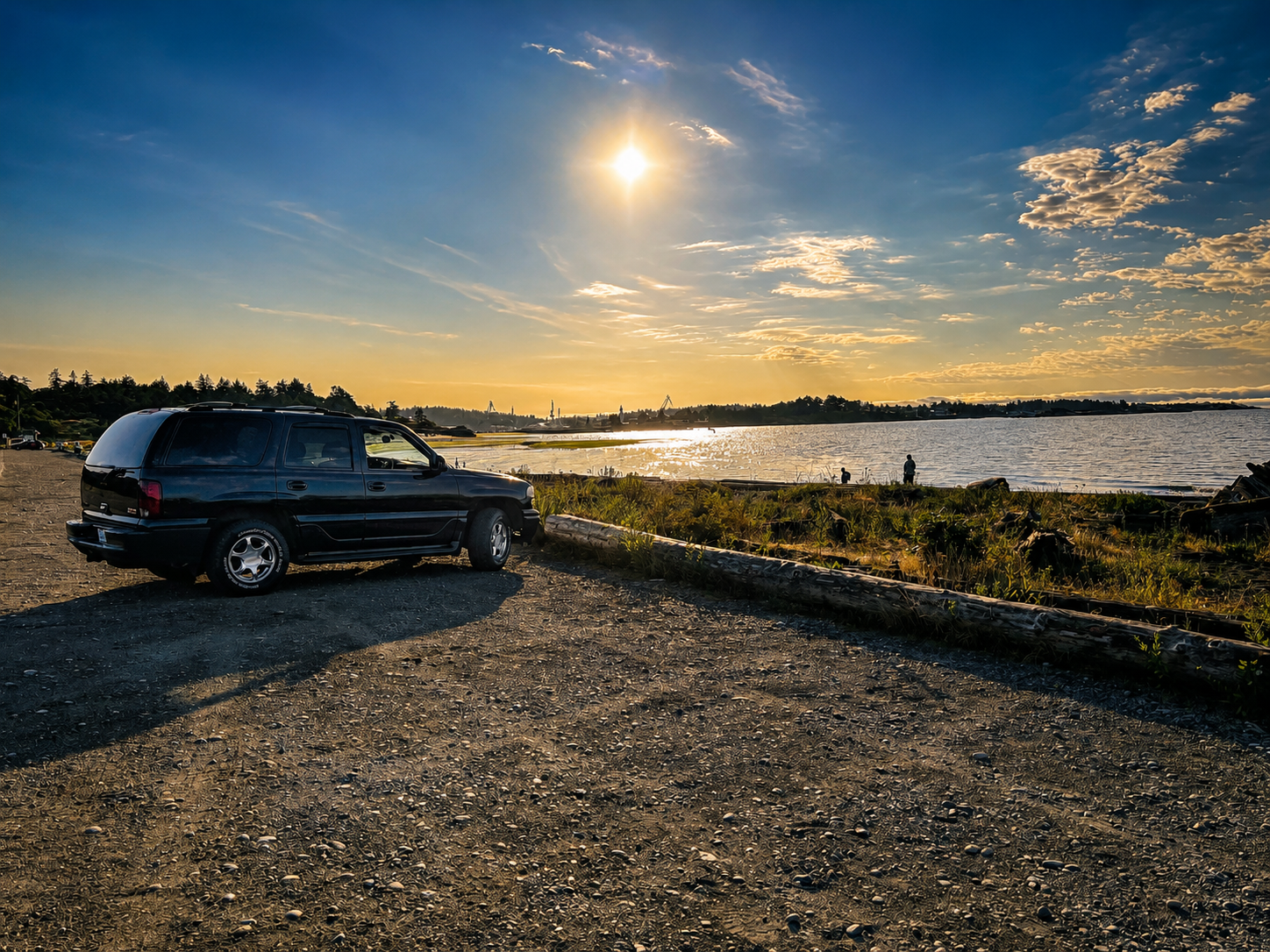
I accidentally made a commercial for my 2003 GMC Yukon Denali.
GM didn’t pay me. Nobody sent me a press vehicle. There was no closed road, camera crew, helicopter or suspiciously attractive family loading designer camping gear into the back.
It was just me, our old Yukon, a DJI Air 3S and a ridiculously nice morning on Vancouver Island.
I sent the drone up over Ocean Boulevard at Esquimalt Lagoon, told it to follow the truck and started driving.
And holy shit.
The old girl looked good.
Water on both sides. Sunrise coming across the lagoon. Olympic Mountains in the distance. The truck rolling along while the drone smoothly moved from behind it to beside it like somebody had actually budgeted money for this production.
For about 57 seconds, our 23-year-old, 276,000-kilometre Yukon looked like the star of a GMC commercial.
Which got me thinking.
Maybe it deserves one.
This Is Not a Restoration
I should probably establish that before somebody sees the pretty drone footage and assumes we’re six months away from a frame-off restoration and a $40,000 build.
Absolutely not.
This is our family truck.
It goes to Costco.
It carries tools.
It hauls paddleboards, kayaks, life jackets, beach chairs and whatever other shit has accumulated in the back because apparently unloading a vehicle after an adventure is optional.
It gets driven.
It gets dirty.
It gets fixed when things wear out.
And occasionally I stand beside it staring thoughtfully at something completely functional while wondering how much better it would look if I removed it.
That’s basically the Driftwood Motoring modification process.
This Yukon isn’t being built to win trophies.
I just want to make an already good old truck a little bit better.
And probably a little louder.
Definitely a little louder.
The GMT800 Just Got a Lot Right
There’s a reason people still love these things.
Our Denali has the 6.0-litre Vortec V8, AWD, comfortable leather seats, three rows, a ridiculous amount of usable space and absolutely no illusion that it’s trying to be something other than a big American SUV.
There’s no turbocharger hiding behind the engine waiting to ruin my afternoon.
There’s no twelve-inch tablet controlling the heater.
It doesn’t pull the steering wheel because I dared move slightly within my own lane.
It doesn’t shut the engine off at every traffic light in a desperate attempt to save six tablespoons of gasoline.
Although, in fairness, this particular vehicle could probably stand to save six tablespoons of gasoline.
The 6.0 has many strengths.
Fuel economy is not among them.
But the entire vehicle has this wonderfully straightforward feeling that I increasingly appreciate.
Push button.
Thing happens.
Turn knob.
Temperature changes.
Step on accelerator.
V8 consumes an environmentally insensitive amount of fuel and Yukon moves forward.
We used to call that operating a vehicle.
It’s Old Enough to Have Earned Some Problems
Now, before this becomes another old-truck internet fantasy where somebody claims a 23-year-old vehicle costs fourteen dollars a year to maintain, ours needs some work.
Because of course it does.
It has travelled more than 276,000 kilometres.
It would actually be slightly concerning if nothing had worn out.
We’ve got inner tie-rod ends coming up. Sway-bar end links. Transmission cooler lines need attention. There’s an oil leak to deal with. The rear brakes are getting down there—not panic-button territory yet, but enough that they’re now on the radar.
All together, I’m expecting roughly another thousand bucks worth of mechanical love in the near future, give or take.
And this is where people sometimes look at an older vehicle and say:
“See? That’s why I bought new.”
Okay.
Except a thousand dollars worth of repairs is less than one monthly payment on a lot of new trucks.
Let that marinate for a minute.
I can replace worn steering and suspension components, fix some leaking lines, address an oil leak and start dealing with the brakes for roughly what someone else might send the bank every month just for permission to continue owning their truck.
I’m not pretending repairs are free.
I’m saying perspective matters.
The Driver’s Seat Is Haunted
The seat also needs some attention.
It’s actually not destroyed the way a lot of GMT800 driver’s seats are. The leather is decent enough.
But it leans.
Not dramatically.
Just enough that after a while you start wondering whether one of your legs has secretly become shorter than the other.
So a replacement seat is on the list.
Probably something nicer, because I spend enough time sitting in this thing that comfort matters.
And after 23 years, I also have to assume the existing driver's seat is haunted by the ghosts of a thousand farts.
There are things upholstery cleaner simply cannot undo.
Sometimes you have to honour the past and move forward.
It Sounds Far Too Responsible
The exhaust is another problem.
Not mechanically.
Emotionally.
It sounds too stock.
You cannot put a 6.0-litre V8 in a large black GMC Yukon Denali and have it whisper around town like it’s embarrassed about itself.
I don’t want something obnoxious.
I’m nearly fifty. I have neighbours. I occasionally enjoy conversation inside my own vehicle.
I do not want a highway drone that slowly drills through my skull during a road trip.
But it needs some rumble.
A little more V8 on startup.
A little more noise when you put your foot into it.
Something that reminds you there are six litres of old-school GM displacement under the hood instead of making the truck sound like it’s apologizing for being there.
That upgrade is coming.
I haven’t decided exactly what yet.
But stock is not the final answer.
The Running Boards Are Currently in Court
Then there are the running boards.
I recently made the mistake of seeing what the Yukon looks like without them.
Now I can’t unsee it.
Removing them makes the truck look taller, cleaner and considerably more like something that belongs near a logging road instead of parked outside a suburban dentist’s office.
The problem?
I use them.
Apparently GMC engineers were aware that not everyone buying a Yukon Denali would have the legs of an NBA forward.
So I’m currently caught between aesthetics and the continued functionality of my knees.
Retractable steps would solve the problem beautifully.
They would disappear when the doors close and give me the cleaner look I want.
They also cost enough that putting them on an $8,000, 23-year-old Yukon starts becoming one of those financial decisions that requires you to avoid eye contact with your spouse.
So the factory boards remain.
For now.
They should not get comfortable.
Bigger Brakes With GM Parts Sounds Interesting
The rear brakes are going to need attention eventually anyway, which naturally means my brain has gone directly past:
“Replace the worn brake parts.”
And arrived at:
“Can I make the brakes bigger?”
Because apparently this is how owning an old vehicle works.
Instead of simply replacing things, you begin asking whether another generation of the same manufacturer made a better version that can somehow be bolted on.
I’m looking into using later-generation GM brake components—calipers, rotors and pads—to get more braking capability while staying largely within factory-style parts rather than buying some enormous shiny aftermarket brake kit.
I wouldn’t start at the rear.
If we do a brake upgrade, the front is where I’d want to make the meaningful improvement first and make sure the whole combination actually makes sense.
But I love this type of upgrade.
Factory parts.
Available replacements.
Nothing exotic.
Nothing requiring me to remember the name of a small brake company in Arizona ten years from now when I need pads.
Just taking advantage of improvements GM made later.
That is exactly the sort of modification that suits this truck.
That's the Plan: Make It Better, Not Different
I don’t want to transform the Yukon into something it isn’t.
No giant lift.
No 24-inch wheels.
No angry headlights.
No enormous touchscreen glued onto the dashboard like somebody mounted an iPad using construction adhesive.
I want it to still feel like a GMT800.
Just my version of one.
Fix the steering.
Tighten up the suspension.
Stop the leaks.
Give it better brakes.
Replace the slightly crooked haunted-fart seat.
Let the V8 actually sound like a V8.
Maybe remove those running boards once I develop either longer legs or worse judgment.
Possibly a mild level eventually.
Nothing crazy.
This isn't a build designed around an Instagram reveal.
It's just what happens when you really like an old vehicle and have no intention of leaving it alone.
And Then I Saw It From the Air
That’s what I liked so much about the drone footage.
From ground level, I see everything that needs doing.
I know where the oil leak is.
I know the steering needs attention.
I notice the seat leaning.
I hear an exhaust that should sound better.
I stare at those running boards every time I walk toward the truck.
You own something long enough and eventually you stop seeing the whole vehicle.
You see the list.
Then I watched the Air 3S footage.
There was our old black Yukon rolling down Ocean Boulevard at sunrise with the water reflecting beside it and the mountains across the Strait.
And for a minute, I didn’t see the list.
I just saw the truck.
And it looked fucking fantastic.
This Is Why We Keep It
Could we replace it?
Absolutely.
There are newer SUVs that use less fuel.
They have better crash technology.
They have CarPlay.
They have more gears than some bicycles.
They'll happily monitor my lane position, following distance, eyelids and probably general emotional wellbeing.
Our Yukon doesn't have Apple CarPlay.
That one I actually want.
Thankfully, the aftermarket exists.
Problem solved.
What the Yukon does have is space, comfort, a proven 6.0-litre V8, an enormous parts supply and a platform that basically every mechanic in North America has seen before.
And it’s ours.
We know it.
We know what has been done.
We know what still needs doing.
It carries our family and all our junk.
It takes us to beaches and car shows and road trips.
It gives me things to fix with my son.
And when you point a drone at it during a Vancouver Island sunrise, the damn thing still looks good enough to sell new trucks.
That counts for something.
So Here’s the Commercial
The 2003 GMC Yukon Denali.
Six litres.
All-wheel drive.
Three rows.
Approximately seventeen litres per hundred kilometres if the wind direction, planetary alignment and mood of the fuel injectors are favourable.
Available with worn tie rods, leaking lines and one lightly haunted driver's seat.
Apple CarPlay sold separately at your nearest aftermarket stereo shop.
Running boards included until the owner finally makes up his mind.
Twenty-three years old.
276,000 kilometres.
Still useful.
Still comfortable.
Still worth fixing.
Still ours.
And apparently still photogenic as hell.
I think we’ll keep it.
Related Reads
The Best GMT800 Upgrades: What’s Worth Doing—and What I’d Skip
From suspension and brakes to cooling, tuning, CarPlay and the popular modifications I’d probably leave on the internet.
Is the GMT800 Still the Smartest Vehicle to Own in 2026?
Why a paid-for old GM truck or SUV can still make more sense than replacing it—fuel bill, repair list and all.
The GMT800 Duramax: Why These Old Diesel Trucks Became Legends
LB7, LLY and LBZ engines, Allison transmissions, rust, Canadian scarcity and why these old diesel trucks earned their reputation.
Why People Don’t Trust New Trucks Anymore
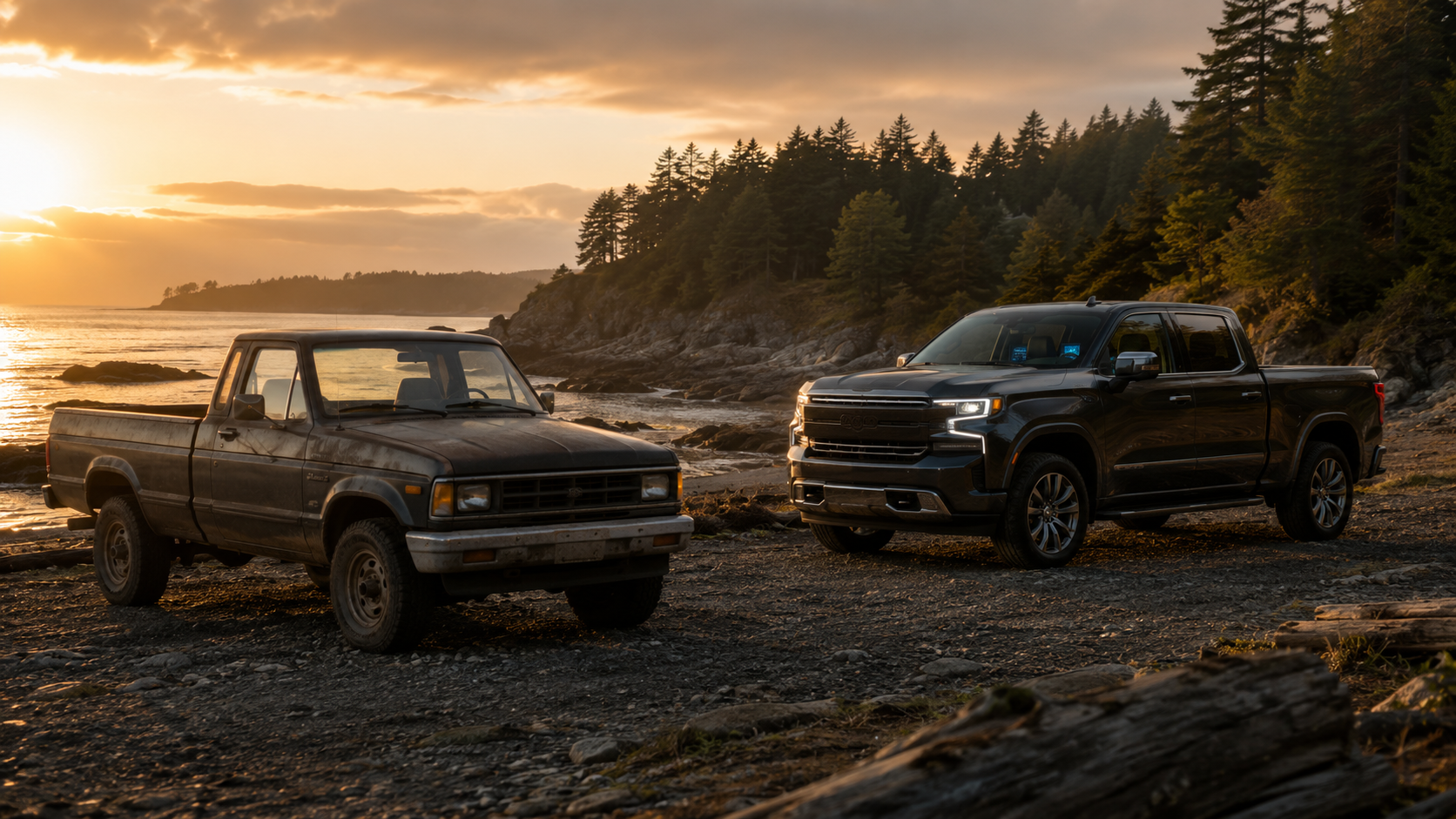
People don’t trust new trucks anymore.
Not because everyone suddenly became an old bastard yelling about carburetors and manual locking hubs.
New trucks are faster, safer, quieter and more capable than the trucks many of us grew up with. They can tow ridiculous amounts of weight while cooling your ass, watching the trailer, reading road signs and politely warning you that you’re drifting toward the ditch.
They’re technological achievements.
They’re also expensive enough to require financing terms normally associated with municipal infrastructure.
And after signing up for seven or eight years of payments, you get to find out whether the engine has a manufacturing defect, the transmission needs another software update, the screen has decided to take the morning off or some electronic safety feature is going to fight you for control of the truck you supposedly own.
So yes, people are nervous.
They should be.
You buy new to avoid the repair shop
I spent years working as a service advisor, and I watched the same cycle play out constantly.
Someone had an older vehicle that needed brakes, suspension work, an oil leak repaired or some other collection of entirely predictable old-car problems. The estimate scared them.
They didn’t want to keep coming back to the shop. They wanted dependability. They wanted peace of mind.
So they traded the old vehicle and bought something new.
That logic makes sense.
At least it used to.
The problem is that many newer vehicles still come back to the shop. They just come back for different reasons.
Warning lights. Software updates. Infotainment problems. Driver-assistance faults. Communication errors between modules. Recalls. Intermittent problems nobody can reproduce until the customer is forty minutes away from the dealership.
The old truck came in because a ball joint had worn out after fifteen years.
The new one comes in because twelve computers had a disagreement about the steering wheel.
Progress.
They cost way too much
A new truck payment can easily reach four figures.
One thousand dollars a month.
Twelve hundred.
Fifteen hundred.
For a truck.
Not a beachfront condo. Not a private aircraft. A pickup with a bed you’re afraid to scratch because it cost more than your parents’ first house.
And manufacturers know the sticker price has become ridiculous, so the solution is not necessarily to make the truck cheaper.
They stretch the loan.
Six years. Seven years. Eight years.
The Consumer Financial Protection Bureau points out the obvious problem: longer terms can lower the monthly payment, but they increase total interest and raise the risk of owing more than the vehicle is worth.
That’s the magic trick.
The truck isn’t affordable.
The debt has simply been spread across enough of your remaining natural life to make the monthly number look survivable.
Then somebody at the dealership asks what payment you’re comfortable with, which is roughly the automotive equivalent of a magician asking you to look away while he steals your watch.
I don’t care whether the payment fits the budget if I’m still paying for the damn thing when it begins needing serious repairs.
An eight-year loan on a complicated modern truck is not peace of mind.
It’s a race between the warranty, the depreciation and whichever expensive component decides to shit itself first.
You pay more and somehow trust it less
That’s the part that has broken people’s confidence.
Paying more used to suggest you were buying something better.
Today, buyers can spend an absurd amount of money and still wonder whether the engine will make it through the loan.
GM recalled certain newer trucks and SUVs equipped with the 6.2-litre V8 because connecting-rod or crankshaft defects could cause engine damage and failure. The remedy began with an engine inspection, with further action depending on what dealers found.
Toyota, the company whose entire reputation was built on making vehicles that would continue running long after the owner stopped caring, has also recalled newer Tundras over machining debris that could lead to knocking, rough running, failure to start or loss of power.
Those are manufacturing defects, not proof that every modern engine is inherently garbage.
But try explaining that distinction to the person making a massive monthly payment on the truck.
They didn’t buy new because they wanted an interesting relationship with the warranty department.
They bought new because they didn’t want problems.
And now the truck may need its engine inspected because some important metal inside it was manufactured incorrectly.
That does not inspire confidence.
The old formula was crude, but it worked
Truck engines used to rely more heavily on displacement.
Need more torque?
Use a larger engine.
Need it to pull something heavy?
Give it some cubic inches, decent cooling and a transmission with enough metal inside it to affect local tides.
Was it efficient?
Not particularly.
But there was mechanical breathing room.
A naturally aspirated V8 or V6 wasn’t necessarily extracting every last possible unit of power from every cubic centimetre. It wasn’t leaning on turbochargers, high boost, complicated thermal management and a transmission with ten gears desperately searching for the precise ratio that would save half a teaspoon of fuel.
A bigger engine could do ordinary work without constantly feeling like it was trying to qualify for something.
Now we’re told smaller displacement and forced induction give us the same power with better efficiency.
That is true on paper.
It can also mean more heat, higher pressure, more plumbing, intercoolers, turbo oil lines, wastegates, high-pressure fuel systems and considerably more shit packed into an engine bay.
Turbochargers are not new, and plenty of turbo engines last.
I’ve owned a tuned twin-turbo V6. It was an absolute blast.
Put your foot down, wait a moment and suddenly every responsible decision you made that week felt unnecessary.
I’m not anti-turbo.
I’m anti-paying-for-two-turbos-after-180,000-kilometres.
Fun for three years and confidence for fifteen years are completely different requirements.
Efficiency has become the excuse for everything
Smaller boosted engines.
Cylinder deactivation.
Stop-start systems.
Ultra-thin oil.
Ten-speed transmissions.
Complicated emissions hardware.
All of it is sold under efficiency.
And yes, improving fuel economy and reducing emissions are legitimate goals. I’m not going to claim burning more gasoline is secretly good because I like the sound of a V8.
But there’s a point where efficiency becomes the shiny wrapper around a product that is more complicated, less forgiving and potentially much more expensive to own long term.
You save a litre or two per hundred kilometres.
Great.
How long does it take those savings to pay for a turbocharger?
A high-pressure fuel pump?
A cylinder-deactivation failure?
A complicated transmission repair?
People see fuel economy every time they fill up. The number is right there on the dashboard, congratulating them.
The repair bill sitting six years in the future is invisible.
Until it isn’t.
Then every dollar you saved at the pump gets summoned back to the service department in one afternoon.
With tax.
I think planned obsolescence is part of this
Can I prove there’s a secret meeting where executives write, “Make sure the engine fails immediately after the final payment” on a whiteboard?
No.
I don’t think they need to.
Look at the incentives.
Manufacturers make money selling vehicles.
Lenders make money financing vehicles.
Shareholders like growth, repeat customers and recurring revenue.
Nobody in that chain gets particularly excited about me driving the same paid-off truck for twenty years and buying a set of tie rods every once in a while.
So build vehicles around smaller hard-working engines, expensive integrated components, software dependency and repair costs that become frightening outside warranty.
Load them with features that may require subscriptions.
Finance them for eight years.
Then start reminding the owner about the exciting new model before the first one is even paid off.
Call it innovation.
Call it efficiency.
Call it progress.
The result still looks a hell of a lot like planned obsolescence.
Maybe they aren’t engineering an exact expiry date into every part.
They don’t have to.
They only need the vehicle to become complicated, undesirable or financially uncomfortable enough that trading it seems easier than fixing it.
Then the payment starts again.
Exactly as intended.
The technology often doesn’t work properly
Modern automotive technology can be brilliant.
Apple CarPlay is excellent. I like plugging in my phone and immediately escaping whatever infotainment system the manufacturer designed during a committee meeting.
Backup cameras are useful.
A forward-collision warning is useful. I’m generally supportive of being told that I am about to drive into something.
After that, my enthusiasm drops off a cliff.
Adaptive cruise control can fuck off.
Lane-keep assist can stop tugging at the wheel because I moved around a pothole.
Automatic stop-start can quit shutting the engine down every time I pause long enough to contemplate my terrible financial decisions.
I don’t need my truck correcting me, steering for me, braking unexpectedly or flashing warnings because I drove in a way the algorithm found emotionally difficult.
Maybe other people love all of it.
Fine.
My issue is that it increasingly isn’t optional.
You aren’t choosing a truck and then adding the technology you want. You’re buying a package full of systems because that’s how the vehicle is built.
The manufacturer calls it safety.
The sales department calls it value.
The owner calls the dealership because the dashboard says one of the cameras is unavailable due to weather.
The truck has been defeated by rain.
Excellent.
Screens are not automatically progress
Some screens are useful.
A proper backup-camera display is great. Navigation can be useful. CarPlay is useful.
But putting climate control, seat heating, lighting, drive modes and half the vehicle settings into one giant centre screen isn’t innovation.
It’s cost reduction wearing a turtleneck.
Physical controls cost money to design, manufacture and install. A screen lets the manufacturer bury everything in software and call the result minimalist.
Then the screen freezes and you can’t adjust the fan speed.
My 2003 Yukon has buttons.
Some of them are worn. Some of them occasionally require a firm conversation.
But I can change the heat without waiting for the dashboard to finish booting.
I can operate the controls by touch.
I don’t need to take my eyes off the road and navigate through a submenu labelled “Comfort Environment.”
That matters more to me than another three inches of display area.
You’re paying to become the test fleet
This may be the greatest source of distrust.
New technology reaches customers before it has developed a long-term track record.
A manufacturer can test a drivetrain for millions of kilometres, but that still doesn’t perfectly recreate fifteen years of Canadian winters, missed oil changes, towing, overheating, short trips, three owners and one teenager who believes the accelerator is an on-off switch.
Dependability takes time to prove.
You can announce horsepower immediately.
You can publish fuel-economy numbers immediately.
You can film a beautiful commercial showing the truck pulling a trailer through a mountain pass immediately.
You cannot prove twenty-year durability until twenty years have passed.
So the first owners become the real-world validation program.
Except they don’t get paid.
They pay $1,300 a month for the privilege.
Previous generation might be the sweet spot
This is why I increasingly like vehicles that are one generation behind.
Not ancient.
Not carbureted.
Not something that requires an archaeological dig to locate replacement parts.
Just modern enough.
Fuel injection. Airbags. Good brakes. Decent crash protection. Comfortable seats. Functional climate control. Reliable electronics. Maybe a factory backup camera if you’re lucky.
But before things got completely carried away.
Before every engine needed forced induction.
Before every control moved into a giant screen.
Before the vehicle started monitoring your eyelids and suggesting you take a break because you blinked in a suspicious manner.
You can always add Apple CarPlay.
The aftermarket is there for you, man.
A quality head unit can give an older vehicle CarPlay, Android Auto, Bluetooth and a backup camera without requiring you to purchase the rest of the modern bullshit attached to a brand-new truck.
That’s the beauty of it.
You can take a proven older platform and add the handful of modern features you actually value.
You don’t need to finance seventy thousand dollars’ worth of technology to get Spotify on the dashboard.
Buying used has risks too
I’m not going to pretend every previous-generation truck is a genius purchase.
Some are rusty.
Some have been beaten like rented farm equipment.
Some have six previous owners, four accidents and wiring installed by somebody whose electrical education consisted of watching half a TikTok.
An old truck can absolutely ruin your life.
You need an inspection. You need maintenance records where possible. You need to look for rust, modifications, neglect and evidence that the previous owner considered warning lights decorative.
But a good used truck with a known drivetrain, available parts and an established repair history can be a much easier risk to understand.
We already know what tends to fail.
Shops know how to fix it.
The aftermarket exists.
Wrecking yards have parts.
Some guy named Darren has two transmissions behind a shed and will answer Marketplace messages at midnight.
That ecosystem matters.
A new truck may be covered by warranty, but a proven older truck can be covered by human knowledge.
I value that more than manufacturers seem to realize.
I just want to drive the truck
That’s really what this comes down to.
I don’t want a mobility platform.
I don’t want an integrated ownership ecosystem.
I don’t want a connected digital experience.
I don’t need my truck to learn my habits, download new features or remind me that a subscription is about to expire.
I want to get in, start it, put it in gear and drive the fucking truck.
I want an engine with enough displacement that it isn’t constantly fighting for its life.
I want a conventional transmission.
I want buttons.
I want parts that can be replaced individually.
I want a competent independent shop to work on it without requesting permission from a server in another country.
And I want to own it long enough that the payments become a distant, unpleasant memory.
That shouldn’t be a radical position.
It used to be the basic product.
New trucks have to earn the trust back
New trucks are incredible in many ways.
They tow more. They make more power. They stop better. They protect occupants better. They’re quieter, more comfortable and more efficient.
But buyers no longer automatically believe that paying more means getting something more dependable.
That trust has been spent.
It was spent on recalls.
It was spent on software problems.
It was spent on complicated drivetrains, giant payments and features people didn’t ask for.
It was spent every time an owner bought new to stay out of the shop and ended up back at the dealership for another update, warning light or campaign.
Manufacturers want us to believe all the complexity is progress.
Maybe some of it is.
But progress should make ownership better, not just make the brochure more impressive.
Until new trucks prove they can survive long enough to justify their prices, I’ll keep looking backward.
Give me the previous generation.
Give me the proven engine.
Give me the normal transmission.
I’ll add CarPlay myself.
Then I’ll maintain the damn thing and keep driving it while somebody else pays $1,500 a month to beta-test the future.
Why the GMT800 Might Be GM’s Best Truck Platform
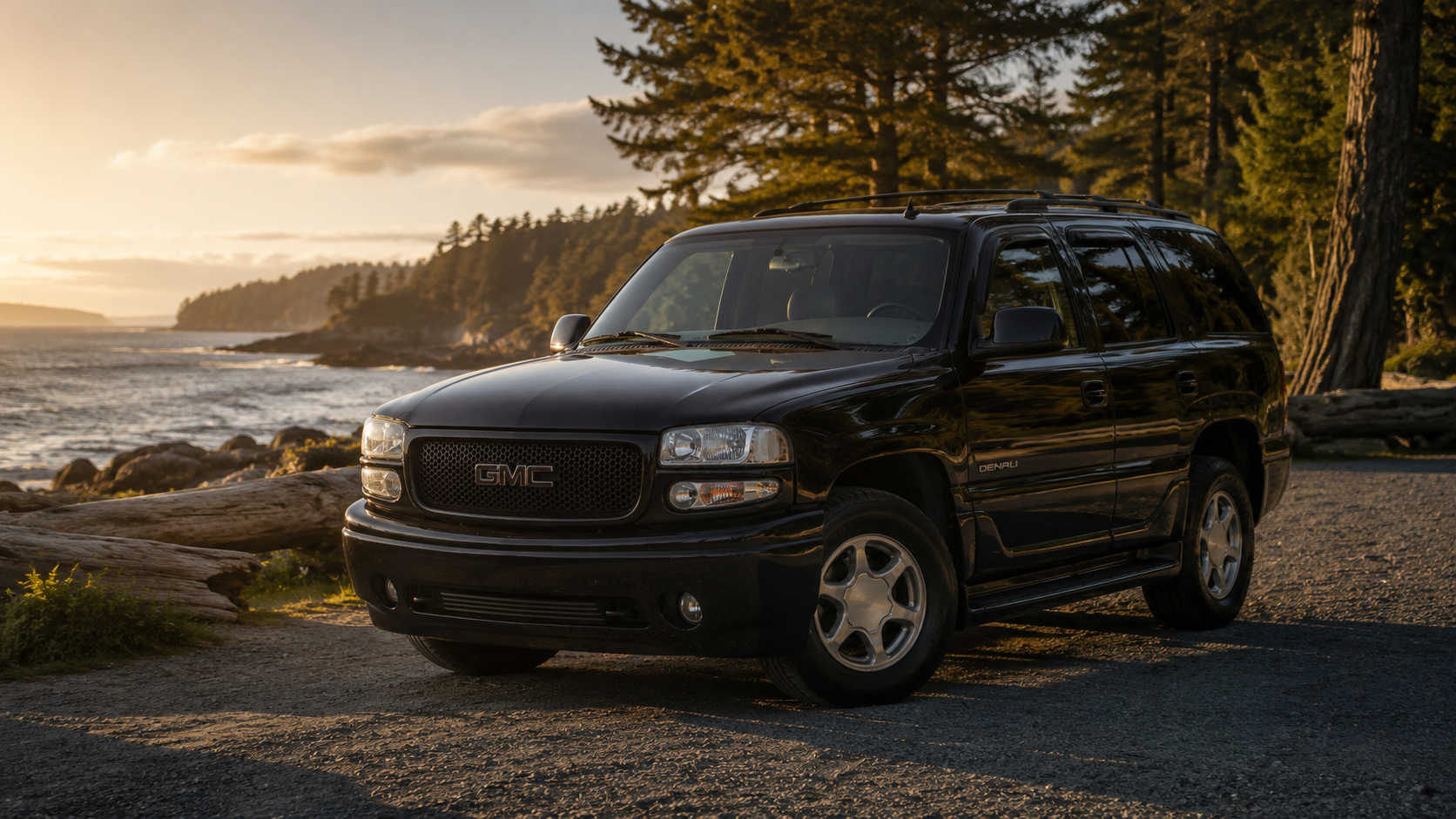
I’m going to say something that will immediately piss off at least three generations of General Motors truck owners:
The GMT800 might be the best truck platform GM ever built.
Not the fastest. Not the most powerful. Not the most luxurious. Definitely not the most fuel-efficient. My 2003 Yukon Denali can turn a quick run for milk into a minor petroleum-industry stimulus package.
But when you combine comfort, capability, simplicity, repairability, drivetrain choices and the frankly ridiculous number of them still driving around more than twenty years later, the GMT800 landed in a sweet spot that GM may never find again.
The GMT400 crowd is already typing that their trucks were simpler.
They were.
The new-truck crowd will point out that their trucks tow more, stop better, make more power, burn less fuel and have enough cameras to document their own eventual repossession.
Also true.
But the GMT800 arrived at exactly the right moment. Trucks had become comfortable enough to serve as daily drivers and family vehicles, but they had not yet become rolling mortgage applications with software updates, subscription features and dashboards designed by someone with a personal vendetta against physical buttons.
They were modern without being exhausting.
That matters.
What the hell is a GMT800?
GMT800 was General Motors’ internal platform designation for the full-size trucks and SUVs it produced from the late 1990s into the mid-2000s.
That family included the Chevrolet Silverado, GMC Sierra, Chevrolet Tahoe, GMC Yukon, Chevrolet Suburban, GMC Yukon XL, Cadillac Escalade and the heavy-duty trucks.
Basically, if you see an older GM truck still hauling landscaping equipment, towing a boat, carrying six children or idling outside Canadian Tire with one headlight slightly dimmer than the other, there is a decent chance you are looking at a GMT800.
Mine is a 2003 GMC Yukon Denali with a 6.0-litre V8, all-wheel drive and roughly 276,000 kilometres.
It carries our family, tools, toys, drone gear, a paddleboard, a kayak, lawn chairs and enough life jackets to satisfy a nervous ferry captain.
It is also still one of the most comfortable vehicles I have ever owned.
That does not mean it is perfect.
The steering offers approximately the same feedback as a strongly worded email. The dashboard contains enough grey plastic to furnish a government office. The fuel gauge moves quickly enough to qualify as animation.
I still love the damn thing.
GM gave buyers an actual choice of engines
One of the biggest reasons the platform became so successful was that GM offered an entire family of drivetrains instead of pretending one turbocharged four-cylinder could meet the needs of every human being with a driver’s licence.
The 4.8, 5.3 and 6.0-litre gas V8s are a huge part of the GMT800 story.
They are simple, durable and supported by an aftermarket so large you could probably assemble an entire 5.3 from parts found within twelve kilometres of any medium-sized Canadian town.
They generally followed a sophisticated maintenance philosophy:
Give them oil occasionally and try not to do anything catastrophically stupid.
They make decent power, produce useful torque and usually sound good doing it. They are naturally aspirated pushrod V8s from a period when an engine could operate without constantly turning cylinders off, changing its own valve timing, adjusting six cooling circuits and consulting a software engineer before deciding whether to idle properly.
That simplicity matters once a vehicle becomes old enough to buy its own alcohol.
Modern engines can produce more power from less displacement while burning less fuel and producing fewer emissions. That is impressive, and I am not going to stand on the beach yelling at direct injection like it parked on my lawn.
But when modern equipment fails, repairs can involve turbochargers, high-pressure fuel systems, emissions hardware, integrated assemblies, software and enough networked modules to make the vehicle feel like an IT department with cupholders.
When an old GM V8 has a problem, your local shop has probably already seen it, the parts store probably has what you need, and somebody on YouTube has filmed the entire repair in a gravel driveway while wearing flip-flops.
That has value too.
Then there’s the Duramax and Allison combination
You cannot talk about GMT800 drivetrains without talking about the heavy-duty diesels, unless your goal is to attract an angry mob of men wearing wraparound sunglasses and shirts with injection-pump company logos.
The Duramax diesel paired with the Allison automatic transmission became one of the defining combinations of this truck generation.
A clean GMT800 diesel is still seriously desirable today. In particular, plenty of diesel enthusiasts view the later trucks from around 2005 and 2006—especially the LBZ-era 2006 models—as something close to the perfect old diesel pickup: strong, usable, still relatively straightforward and built before modern diesel-emissions systems became substantially more complicated. The 2006 Duramax was offered with an Allison six-speed automatic, making 360 horsepower and 650 lb-ft in LBZ form.
I wish I had one.
A crew-cab, four-wheel-drive GMT800 Duramax with an Allison, in good condition and without seventeen questionable tuning devices zip-tied under the dashboard, would be damn close to dream-truck territory.
The problem is that everybody else knows this too.
Clean examples are sought after, and owners often price them as though the glovebox contains a small parcel of waterfront property.
And diesel ownership is not the same cheap-and-simple proposition as running a gas 5.3. Injectors, turbochargers, fuel systems and diesel-specific repairs can become expensive in a hurry.
Still, there is a reason people hunt for these trucks.
The engine makes serious torque. The Allison earned a formidable reputation. Together, they gave the GMT800 heavy-duty lineup an identity that still carries weight two decades later.
Mention “Duramax and Allison” around diesel owners and somebody will immediately begin explaining the differences between LB7, LLY and LBZ engines, whether you asked or not.
That argument could continue until the sun burns out.
I am not stepping directly into that knife fight today.
The point is that GM did not just offer one decent drivetrain. It offered everything from basic gas work trucks to heavy-duty diesels that are still being used, modified, collected, debated and lusted after.
That depth is part of what made the platform special.
GM was also trying weird shit
The GMT800 era was not only about simple engines and sensible trucks.
GM was still willing to occasionally walk into a meeting and say, “What if the rear wheels turned too?”
Enter Quadrasteer.
Developed with Delphi, Quadrasteer used four-wheel steering to turn the rear wheels. At lower speeds they turned opposite the front wheels, tightening the turning circle. At higher speeds they could turn in the same direction to improve stability during lane changes and towing.
It was offered on several GM trucks and long-wheelbase SUVs, including versions of the Sierra, Silverado, Suburban and Yukon XL.
Was it necessary?
Probably not.
Was it expensive and complicated enough that buyers became nervous?
Absolutely.
Was it cool as hell?
Yes.
A GMT800 Quadrasteer truck rolling slowly through a parking lot with the rear wheels visibly turning still looks like someone installed the suspension incorrectly until you realize what you are seeing.
It is one of those strange automotive ideas that probably deserved more success than it got. A long truck that can make tight turns and become more stable while towing is not a stupid concept.
It just arrived during an era when customers apparently looked at four-wheel steering and decided ordinary steering had been working fine since horses.
Now Quadrasteer-equipped trucks are unusual enough to make enthusiasts stop and look.
That is another thing I miss about vehicles from this period. Manufacturers were willing to experiment with genuinely mechanical ideas instead of announcing a new dashboard theme and calling it innovation.
The GMT800 family also gave us everything from basic regular-cab work trucks to Denalis, Escalades, heavy-duty tow rigs, long-wheelbase family barges and specialized configurations that could become entire collector niches on their own.
It was a proper platform.
Not one vehicle wearing six different grille designs.
Parts are absolutely everywhere
GMT800 parts are available from just about every possible source.
Parts stores have them. Wrecking yards have them. Online retailers have them. Marketplace has them.
Some guy named Darren probably has half a Yukon behind his shed and will sell you a transfer case at 9:30 at night if you bring cash and do not ask why the donor vehicle has no doors.
That availability is a huge reason these vehicles remain viable.
When something breaks, you usually have choices.
You can buy the cheapest part available because the truck is already held together with hope and deck screws. You can buy a decent aftermarket replacement. You can buy premium parts. You can upgrade the weak point. You can find used factory pieces.
You are rarely waiting six weeks for a proprietary assembly to arrive so the passenger window can begin acknowledging the switch again.
I work in automotive parts, which gives me an obvious advantage. I can source much of what my Yukon needs affordably, and after twenty years around this business I have a decent idea which brands I trust and which boxes should be gently returned to the shelf.
But even without that advantage, the parts ecosystem around these trucks is enormous.
A vehicle lasts when owners can afford to repair it.
That sounds obvious, but apparently the modern automotive industry needed a reminder.
An engine capable of running 400,000 kilometres is not much use if the first failed electronic module costs more than the vehicle is worth and requires a dealership appointment, two software subscriptions and the blessing of a regional technical representative.
GMT800s remain worth fixing.
That may be their greatest strength.
They were built to do actual truck and SUV things
A lot of modern SUVs are tall cars wearing hiking boots.
GMT800 SUVs were trucks underneath.
They could tow, haul people, carry ridiculous amounts of cargo and survive roads that had not recently been described as “curated.”
The Tahoe and Yukon were large enough to be proper family vehicles without occupying their own climate zone.
The Suburban and Yukon XL could carry a family, luggage, camping equipment, sports gear and whatever deeply unnecessary Marketplace purchase Dad made on the way home.
My Yukon is our family adventure vehicle.
At various times it contains a paddleboard, kayak, chairs, tools, toys, drone equipment and enough random equipment to make it appear we are either camping or quietly leaving the country.
It does not care.
The truck does not need the cargo arranged beautifully for social media. It does not need a roof box that costs more than my first car.
Open the hatch. Throw the shit in. Go somewhere.
That is usefulness.
The interiors were better than people remember
Nobody is going to confuse the inside of a GMT800 with the lobby of a luxury hotel.
There is a lot of grey plastic. The buttons wear. The instrument clusters occasionally decide that displaying accurate information is optional. Seat heaters can become temperamental, and the leather on the driver’s seat often begins surrendering in exactly the same place.
But the basic design was excellent.
The seats were big and genuinely comfortable. Visibility was good. The controls made sense. The buttons were large enough to operate while wearing gloves or while your five-year-old asks seventeen unrelated questions from the back seat.
You could change the temperature or fan speed without opening a menu labelled “Climate Experience.”
You did not need to wait for the infotainment system to finish booting before the defroster became available.
Mine has heated leather seats, power accessories, automatic climate control and enough comfort to make long road trips easy even after twenty-three years.
It does not feel primitive in the ways that matter.
It feels like a vehicle designed when controls were expected to work through touch rather than prolonged eye contact.
I love Apple CarPlay. I love backup cameras. Ventilated seats are glorious and should be protected under international law.
I do not hate modern features.
I hate when every feature gets buried inside an enormous screen because someone decided physical buttons did not photograph well in promotional material.
They are simple without being ancient
This is where the GMT800 really shines.
It has electronic fuel injection, anti-lock brakes, airbags, decent climate control, power equipment and enough technology to remain pleasant in modern traffic.
It is not a carbureted farm truck that requires a weather forecast and a small prayer before starting.
But it also does not have several dozen modules constantly sharing information about whether the cupholder is emotionally prepared to receive a beverage.
That middle ground is becoming harder to find.
The GMT800 was built after trucks became refined enough to live with every day, but before manufacturers became convinced every vehicle needed to function as a smartphone with a towing package.
It was modern before modern became a pain in the ass.
Obviously, they have problems
This is not some misty-eyed love letter claiming every GMT800 is immortal.
These trucks have problems.
Instrument clusters fail. Fuel pumps die. Steering components wear. Window regulators quit. Door hinges sag. Brake lines can rust. Transfer cases can develop issues. Interior plastics crack. Exhaust manifold bolts break. Some leak enough fluids to require their own environmental assessment.
And rust can absolutely murder them.
A mechanically perfect truck is not particularly useful when the frame has developed the structural integrity of wet toast.
They are also old enough that previous owners become one of the largest reliability variables.
A well-maintained GMT800 can be a fantastic vehicle.
A neglected one purchased from somebody who says “easy fix, just don’t have time” may introduce you to entirely new forms of financial and emotional suffering.
Rubber deteriorates. Seals harden. Wiring ages. Repairs get performed with hardware-store fasteners, wire nuts and optimism.
The platform’s durability does not mean every surviving truck is good.
It means a good one is worth preserving.
That is an important difference.
New trucks are better at plenty of things
A new truck will probably make more power, tow more, stop better, use less fuel and protect its occupants better in a serious crash.
That is progress.
New trucks can be incredibly comfortable. Some offer excellent camera systems, advanced driver assistance, ventilated and massaging seats and enough horsepower to embarrass performance cars from the period when the GMT800 was new.
I would happily use many of those features.
The problem is not that modern trucks are bad.
The problem is that they have become unbelievably expensive, increasingly complicated and, in some cases, financially terrifying to own outside warranty.
A truck can perform brilliantly when new and still become a questionable long-term ownership proposition.
Longevity is not only whether the engine can physically keep running.
It is whether the entire vehicle remains economically worth repairing.
Can a normal independent shop diagnose it?
Can the owner buy the part?
Can one component be replaced without purchasing an entire integrated assembly?
Can the vehicle remain useful after the manufacturer stops caring about it?
The GMT800 usually answers yes.
The platform hit the sweet spot
That is why I think the GMT800 might be GM’s best truck platform.
It combined proven gas V8s, the legendary Duramax and Allison pairing, interesting technology like Quadrasteer, proper truck capability, comfortable interiors and an enormous parts supply.
It was sophisticated enough to be pleasant but basic enough to understand.
It could be a work truck, tow rig, luxury SUV, family vehicle, off-road project, diesel monster, lowered street truck or something your uncle has been “almost finished restoring” since 2018.
The platform gave owners choices.
And twenty-plus years later, many are still commuting, hauling, towing, plowing snow, carrying families and showing up at beaches loaded with far too much recreational equipment.
Mine is still doing exactly what I bought it to do.
It is not flawless. It is not cheap to fuel. It does not have a 360-degree camera, ventilated seats or enough computing power to mine cryptocurrency while I drive.
But it is comfortable, capable, repairable and paid for.
I understand it. Local shops understand it. Parts stores understand it.
That relationship between a person and a machine is becoming rarer than it should be.
So yes, I am biased.
I own one. I have spent roughly twenty years working around automotive parts, service departments, dealerships and repair shops. I have seen enough vehicles age to understand that newer does not automatically mean better, and simple does not necessarily mean crude.
The GMT800 got the balance right.
Maybe better than anything GM built before it.
Maybe better than anything GM has built since.
And somewhere, right now, a diesel owner is preparing a four-paragraph response explaining why I should have devoted the entire article to the LBZ.
Honestly, he might have a point.
Related Reads
The Best GMT800 Upgrades: What’s Worth Doing—and What I’d Skip
From suspension and brakes to cooling, tuning, CarPlay and the popular modifications I’d probably leave on the internet.
Is the GMT800 Still the Smartest Vehicle to Own in 2026?
Why a paid-for old GM truck or SUV can still make more sense than replacing it—fuel bill, repair list and all.
The GMT800 Duramax: Why These Old Diesel Trucks Became Legends
LB7, LLY and LBZ engines, Allison transmissions, rust, Canadian scarcity and why these old diesel trucks earned their reputation.
The Last Honest Powertrains Are Becoming a Selling Feature
Somewhere along the way, a naturally aspirated V6 and a normal automatic transmission became exciting.
Not exciting because they’re exotic. Not exciting because they’re fast enough to rearrange your internal organs. Exciting because they aren’t trying to shut off half their cylinders, spool two turbos, simulate eight fake CVT shifts and save half a teaspoon of fuel before the warranty expires.
A regular engine breathing regular air through regular plumbing now feels almost rebellious.
And honestly, I’m here for it.
I’ve owned turbocharged vehicles. I’ve owned a tuned twin-turbo V6 that was an absolute riot. Put your foot into it, wait half a heartbeat and suddenly every responsible decision you’ve ever made feels wildly overrated.
Boost is fun.
Boost after 180,000 kilometres may be less fun.
That’s the distinction people seem determined to miss. A vehicle can be exciting to lease for three years and still be something I wouldn’t want to own for fifteen. Those are two completely different tests.
I’m not afraid of turbochargers. I’m afraid of receiving the invoice for turbochargers after they’ve spent a decade living beside a hot engine, pushing extra air into an already highly stressed collection of expensive parts.
Apparently, simple is premium now
The new Honda Passport caught my attention immediately because it looks fantastic.
It has a proper SUV shape. It looks rugged without looking like a Transformer suffering from unresolved childhood trauma. It has some presence, some width and enough character that you don’t need three different exterior packages just to stop it resembling a rental appliance.
Then I looked under the hood.
A 3.5-litre naturally aspirated V6.
No turbochargers.
No CVT.
A conventional 10-speed automatic.
Honda rates the redesigned 2026 Passport’s V6 at 285 horsepower, paired with its first 10-speed automatic in the model.
That got my attention more than any giant screen or clever drive mode.
Now, this is still a modern engine. It has direct injection, variable valve timing, cylinder-management technology and plenty of computers making decisions behind the scenes. It is not a carbureted tractor motor accidentally installed in a family SUV.
But compared with the industry’s rush toward smaller turbocharged engines and continuously variable transmissions, it feels almost refreshingly normal.
That is how far we’ve gone.
Honda announces a V6 and a real automatic transmission and I react like they’ve rediscovered fire.
The Frontier quietly kept doing truck things
The Nissan Frontier fits into the same conversation.
Nissan has made plenty of decisions over the years that I would not personally frame and hang in the boardroom. I own a Nissan Kicks with a CVT, so my relationship with the company includes a small but persistent sense of mechanical dread.
But the Frontier?
That thing makes sense to me.
The 2026 Frontier still uses a naturally aspirated 3.8-litre V6 making 310 horsepower, paired with a conventional nine-speed automatic.
No turbo four-cylinder screaming for help.
No belt-and-pulley transmission making a prolonged groaning noise while the truck gradually catches up with the engine.
Just a V6 and gears.
Remember gears?
You press the accelerator. The transmission selects one. The truck moves. Nobody needs to simulate a shift to reassure the driver that mechanical events are still occurring.
Nissan even describes the V6 as part of its long-running VQ engine family and specifically promotes the engine’s longevity and reliability. Marketing departments say many things, obviously, but at least this one is advertising the quality I actually give a shit about.
I wouldn’t claim the Frontier is perfect. Every vehicle has problems, and anyone who says otherwise is either selling one or has owned it for twelve minutes.
But I understand why a buyer looking for a long-term midsize truck might stop and stare at it.
It isn’t winning the engineering arms race.
That may be the appeal.
Toyota used to understand this better than anyone
Toyota built its reputation on vehicles that were often deeply unexciting right up until you realized they had survived eighteen years of neglect, three owners and an interior permanently scented by old French fries.
That was the magic.
Toyota didn’t always produce the most power. It didn’t always have the best infotainment. It occasionally sold vehicles with acceleration best measured using geological equipment.
But they lasted.
People trusted them because Toyota seemed willing to leave a proven design alone after everyone else had started attaching more shit to theirs.
Then the Tundra lost its naturally aspirated V8 and moved to a twin-turbo V6.
On paper, the newer engine is better. More torque. Better fuel economy. Modern technology. Stronger numbers for people who shop for trucks by comparing PDFs.
And then Toyota had to recall certain newer Tundras because machining debris could remain in the engine and potentially lead to knocking, rough running, failure to start or loss of power. Toyota expanded related engine recalls again in 2025 and 2026.
To be fair, that specific problem involved manufacturing debris. It does not prove turbocharged V6 engines are inherently doomed.
But it still lands badly.
Toyota spent decades building its identity around engines that would outlive the mortgage, the garage and possibly the owner. Then it replaced a well-known V8 with a more complicated twin-turbo drivetrain and immediately gave everyone something new to worry about.
That doesn’t mean the new Tundra is garbage.
It means Toyota gave up some of the simplicity people trusted and now has to prove the replacement deserves the same faith.
That proof takes years.
Horsepower takes one press release.
More power from less engine is not free
Turbocharging lets manufacturers get larger-engine performance from smaller displacement.
That sounds like free power.
It isn’t.
You’re adding turbochargers, oil and coolant lines, wastegates, intercoolers, extra heat, higher cylinder pressures and more plumbing packed into an engine bay already designed by someone who apparently hates mechanics’ hands.
None of that guarantees failure.
Turbocharged engines can last a long time when they are engineered properly, maintained well and operated by someone who doesn’t treat oil-change intervals as loose philosophical suggestions.
But the simple truth remains:
More parts create more possible failures.
More heat creates more stress.
More pressure leaves less room for neglect.
That may be worth it in a performance car. My tuned twin-turbo V6 was stupid fun. I knew what I had. I enjoyed it for what it was.
But for a family vehicle I want to keep for fifteen years?
My priorities change.
I don’t need every traffic-light departure to feel like the opening scene of a police documentary.
I need it to start on a wet Tuesday morning in 2039.
The CVT is where I become less diplomatic
I understand why manufacturers use CVTs.
They can keep the engine operating in an efficient range. They’re often lighter. They can help improve fuel economy. They make the numbers on the window sticker look a little prettier.
Wonderful.
I still hate the fucking things.
I hate the way most of them drive. I hate the disconnect between engine noise and vehicle speed. I hate the prolonged droning sound that makes it seem like the engine is holding a note while the rest of the vehicle searches for motivation.
Then manufacturers started programming fake shifts into them because apparently even the people building CVTs realized customers preferred the sensation of having an actual transmission.
That’s a hell of an admission.
We invented a gearbox without gears, then programmed it to pretend it had gears because people found the gearless experience annoying.
Progress.
And yes, there are important exceptions. Toyota’s hybrid e-CVT system is mechanically different from the belt-and-pulley CVT found in vehicles like our Nissan Kicks. They share a name, not necessarily the same operating design or reputation.
But our Kicks has exactly the kind of CVT that keeps a little question mark floating in the back of my mind.
The car is currently fine.
That is how anxiety works.
You don’t worry because it has exploded. You worry because you’ve read enough, worked around enough vehicles and know that if the transmission does eventually fail, nobody is going to say, “Excellent news, Ryan. This will be cheap and emotionally painless.”
I’m not demanding ancient technology
I’m not asking manufacturers to stop improving vehicles.
I like modern features.
Ventilated seats are glorious. Apple CarPlay is excellent. Backup cameras are useful. A warning that I’m about to drive into something because I was distracted by my five-year-old asking why birds don’t wear shoes is appreciated.
I like good crash protection. Better emissions matter. Fuel economy matters.
But I reject the idea that every improvement on a laboratory test automatically creates a better ownership experience.
A smaller engine making more power is impressive.
A transmission extracting another fraction of efficiency is impressive.
Cylinder deactivation, stop-start and ultra-thin oil all make sense when you examine the specific engineering goal.
Then you put all of it together, age it for twelve years, add Canadian winters, missed maintenance, towing, overheating, software problems and three owners, and ask whether the vehicle is still economically worth repairing.
That is the test I care about.
Not whether it saved twelve dollars during an official fuel-economy cycle when everything was new.
Efficiency can become a very expensive bargain
Imagine two vehicles.
One has a naturally aspirated V6 and uses slightly more fuel.
The other has a smaller turbo engine, complicated emissions equipment and a CVT, but saves a litre or two per hundred kilometres.
The second vehicle wins the fuel-economy argument.
No question.
But does it win the ownership argument?
Not automatically.
How much fuel do you actually save in a year?
How many years does it take before those savings equal one major drivetrain repair?
What happens when the turbo fails?
What happens when the CVT fails?
What happens when a high-pressure fuel-system component fails?
A person can save a couple hundred dollars a year at the pump and lose every dollar of it in one afternoon at the repair shop.
With tax.
Efficiency is visible. The number appears on the dashboard every day.
Future repair risk is invisible.
That makes efficiency much easier to sell.
I want the vehicle they forgot to ruin
The 2026 Passport appeals to me because it looks like somebody designed a genuinely modern SUV and then forgot to ruin the drivetrain.
The Frontier appeals to me because Nissan kept a V6 and a conventional automatic while other manufacturers looked for more creative ways to turn a pickup into a fuel-economy demonstration.
That doesn’t make either vehicle perfect.
The Passport still has modern engine-management technology. The Frontier still uses direct injection. The days of truly simple new vehicles are mostly gone.
But there are levels to this shit.
A naturally aspirated V6 with a normal automatic starts with fewer long-term question marks than a highly boosted little engine attached to a transmission I already dislike.
That matters to me.
I have spent about twenty years around automotive dealerships, parts, service departments and repair shops. I’ve watched customers buy new vehicles because they wanted reliability and peace of mind, then discover that “new” and “simple” stopped meaning the same thing a long time ago.
I’ve seen technology make vehicles better.
I’ve also seen it make them expensive as hell to fix.
So when a manufacturer introduces something that looks good, works well and still uses a drivetrain I can imagine owning after the warranty expires, I notice.
That shouldn’t be unusual.
But apparently, in 2026, a naturally aspirated V6 and a regular automatic transmission are enough to make me emotional.
The bar is on the floor.
At least the Passport and Frontier managed not to trip over it.
Modern Cars Are More Efficient. But Are They Built to Last?
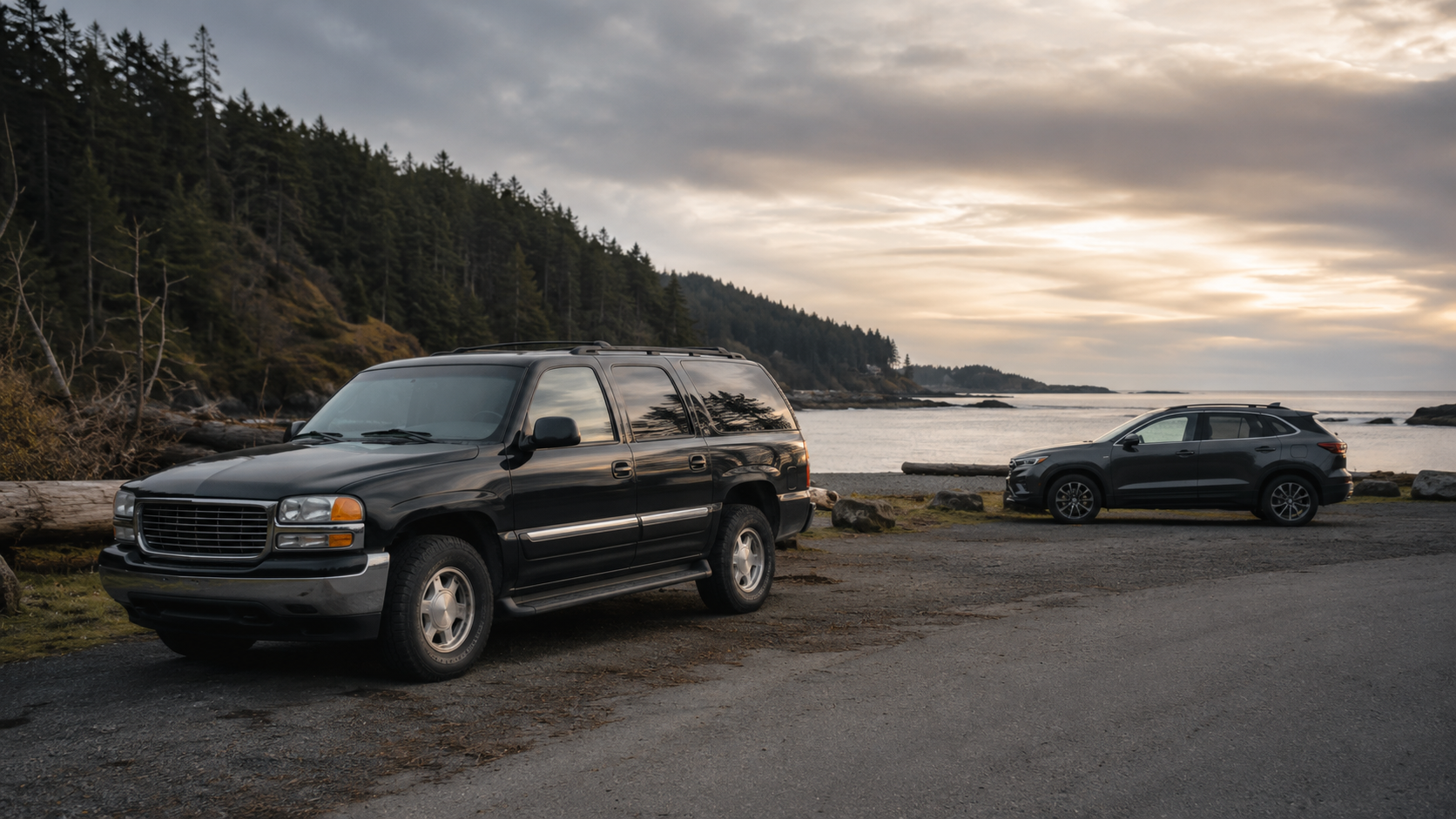
Modern cars are more efficient than old ones.
There. I said it.
They use less fuel, make more power from smaller engines, produce fewer emissions and can squeeze an extra kilometre or two out of every litre through a combination of direct injection, turbocharging, ultra-thin oil, cylinder deactivation, stop-start systems, CVTs and enough computer control to manage a small airport.
That’s impressive.
But here’s the question nobody seems nearly as excited to ask:
How long is all this shit supposed to last?
Because saving a little fuel is great. Replacing a turbocharger, high-pressure fuel pump, CVT, direct-injection component or complicated cylinder-deactivation system after the warranty expires is slightly less great.
I spent years working as a service advisor. I watched people trade perfectly serviceable vehicles because they were terrified of repair bills. They wanted something new, dependable and covered by warranty.
Fair enough.
But over time, I also watched new vehicles become more complicated in the name of efficiency while the customer was still being sold the same comforting story:
Buy new. Avoid repairs. Enjoy peace of mind.
Except many modern vehicles are no longer simple machines with fewer old, worn-out parts. They’re brand-new collections of expensive future problems.
Efficiency has become the answer to everything
Need better fuel economy?
Use a smaller engine.
Need the smaller engine to make the same power as the old larger engine?
Add a turbocharger.
Need even more efficiency?
Add direct injection, variable valve timing, cylinder deactivation, a ten-speed transmission, automatic stop-start and engine oil with roughly the consistency of warm disappointment.
The EPA openly describes turbocharging as a way to replace a larger engine with a smaller, more fuel-efficient one without giving up power. Gasoline direct injection and turbocharging have become major tools for improving efficiency and meeting emissions targets.
None of that means the technology is automatically bad.
Turbochargers have existed forever. Direct injection can work well. Thin synthetic oils are engineered products, not tap water with a convincing label. Modern engines can produce excellent power and economy.
But every added system introduces more parts, more heat, more pressure, more software and more opportunities for the vehicle to eventually ask for your credit card.
A naturally aspirated V6 has fewer expensive things attached to it than a small turbocharged engine working hard to produce the same output.
That isn’t nostalgia.
That’s counting.
I don’t trust anything called “lifetime fluid”
The automotive industry loves the word lifetime.
Lifetime transmission fluid.
Lifetime coolant.
Sealed components.
No service required.
Whose lifetime?
The transmission’s?
Because once the transmission dies, technically the fluid did last its entire life.
That feels less like engineering and more like a clever legal argument.
When I worked in service, preventative maintenance still mattered. Fluids aged. Heat mattered. Driving conditions mattered. Machines wore out because machines are rude like that.
Now we increasingly see drivetrains marketed as low-maintenance units that owners are discouraged from touching. Then, years later, the whole assembly may be treated as one giant replaceable component.
That is efficient for manufacturing and warranty administration.
It is not necessarily efficient for the person who plans to own the vehicle for fifteen years.
The CVT can eat a bag of dicks
I know CVTs can improve fuel economy by keeping an engine operating within a more efficient range.
I understand the theory.
I still hate them.
I hate the way they feel. I hate the engine droning while the vehicle gradually catches up to the noise. I hate that many drivers have absolutely no idea what is happening because the transmission is pretending to shift in order to feel more like the transmission it replaced.
And more importantly, I don’t want my long-term ownership plans resting on a transmission that may be economically disposable when it fails.
Traditional automatic transmissions aren’t immortal. Plenty of them have been complete pieces of shit.
But I would still rather own a conventional, proven automatic than spend years wondering whether my fuel-saving belt-and-pulley box is quietly preparing a five-figure surprise.
Maybe your CVT will run forever.
Fantastic.
Mine won’t, because I’m not buying one.
Ultra-thin oil didn’t happen because engines suddenly became relaxed
Modern engines use oils such as 0W-20, 0W-16 and, in some applications, 0W-8. These oils are designed for modern tolerances, cold-flow performance and reduced internal friction. Lower-viscosity oil is part of the broader push toward efficiency.
Again, that does not mean the oil is automatically failing to protect the engine.
But it illustrates the larger engineering direction.
Everything is being optimized.
Less friction. Less pumping loss. Smaller clearances. Lower emissions. Better test-cycle fuel economy.
An engine designed around extremely thin oil may operate perfectly when everything is new, clean and exactly within specification.
But vehicles don’t stay new.
They overheat. They miss oil changes. They accumulate deposits. Seals age. Clearances change. Owners tow things they shouldn’t tow and ignore warning lights because the light “usually goes away.”
Older engines often had a little more mechanical forgiveness built into them. They weren’t as efficient, but they could tolerate abuse, neglect and questionable life choices in a way that many highly optimized modern systems may not.
Efficiency is about reducing waste.
Unfortunately, some of that “waste” may have been margin for error.
Toyota is the warning that gets everyone’s attention
Toyota built its reputation on dependability.
That reputation was not created by making the most exciting vehicles in every segment. It was built by producing machines that would generally start every morning long after the owner stopped appreciating them.
The old Toyota Tundra used a naturally aspirated 5.7-litre V8. For 2022, Toyota replaced it with twin-turbo V6 powertrains, promoting more torque, more power and greater efficiency.
On paper, the new drivetrain is better.
That’s how this always starts.
Then Toyota issued recalls involving certain Tundra and Lexus models because machining debris could remain inside the engine and lead to rough running, failure to start or loss of power. Toyota Canada announced recalls covering thousands of affected vehicles, and further Tundra engine recalls continued into 2026.
To be fair, machining debris is a manufacturing problem. It does not prove that turbocharged V6 engines are inherently unreliable.
But the entire situation still hits differently because it happened to Toyota after it replaced a simple, well-known V8 with a more complicated twin-turbo system.
Toyota spent decades training customers to believe boring was beautiful.
Then even Toyota decided boring needed intercoolers.
That should make people pay attention.
Not panic. Not declare every new Toyota garbage.
Just pay attention.
Are we saving enough fuel to justify all this?
This is where the argument gets uncomfortable.
A newer vehicle might use seven litres per hundred kilometres while an older, simpler version uses nine.
That difference matters if you drive an enormous distance every year.
But for many average drivers, how much money does it really save?
Enough to offset the higher purchase price?
Enough to offset financing interest?
Enough to offset depreciation?
Enough to offset one major repair to the complicated equipment that helped create the fuel savings?
Saving two litres per hundred kilometres sounds meaningful because fuel consumption is visible. You watch the number change every time you fill up.
The repair waiting somewhere beyond the warranty is invisible.
Until it isn’t.
Then the service advisor gets to explain that the money you saved at the pump for six years has been summoned back to the dealership all at once.
With tax.
New vehicles are dependable—until they aren’t
One of the biggest reasons people buy new vehicles is to avoid repairs.
I saw it constantly in service.
A customer would have an older car that needed brakes, suspension work and perhaps an oil leak repaired. The estimate scared them, so they traded the vehicle and committed to years of payments.
They had successfully avoided a $3,000 repair by purchasing $45,000 worth of car.
Problem solved.
New vehicles feel dependable because most of the parts are new and the warranty absorbs early failures. That doesn’t necessarily tell us how the vehicle will behave at twelve or fifteen years old.
We won’t truly know which current engines and transmissions are durable until enough of them have accumulated years, kilometres, poor maintenance and three owners.
That is the annoying thing about dependability.
You can’t download it in a software update.
It has to be proven.
.
A basic naturally aspirated engine with a conventional transmission starts with fewer unknowns. It may use more fuel. It may produce less horsepower. It may not win a specification-sheet argument.
But it has less shit to go wrong.
That is still a feature, even when it doesn’t appear on the window sticker.
I believe disposability is part of the business model
Can I prove that every manufacturer sits in a boardroom and deliberately designs each vehicle to die at eight years and one day?
No.
And I’m not going to invent evidence because the rant sounds better that way.
But I can look at the direction of the industry.
Long financing terms.
Expensive integrated components.
Software-dependent features.
Increasingly complicated powertrains.
Subscription services.
Vehicles that may become economically unreasonable to repair long before they become physically impossible to repair.
Manufacturers make money when vehicles are sold.
Lenders make money when vehicles are financed.
Shareholders like predictable growth and recurring revenue.
Nobody in that chain makes much money from a person driving the same paid-off V6 for eighteen years.
So perhaps the industry isn’t stamping an exact expiry date on the firewall.
It doesn’t need to.
Build a vehicle that is complicated, expensive to diagnose and financially frightening outside warranty, then offer the owner a shiny new replacement with another eight-year payment.
The result looks a hell of a lot like planned obsolescence, even if the marketing department calls it innovation.
Manufacturers used to need loyal customers.
Now they need captive ones.
What about the environmental argument?
More efficient cars use less fuel and produce fewer tailpipe emissions.
That is good.
I’m not going to pretend burning more gasoline is secretly wonderful for the planet because I like V8 noises.
But environmental impact is bigger than the number on a fuel-economy display.
Vehicles require raw materials, factories, transportation, batteries, plastics, electronics and energy to produce. Then the old vehicle has to go somewhere.
If we save fuel by building cars that are financially disposable after a relatively short life, have we actually solved the problem?
Keeping an existing vehicle operating safely for a long time avoids manufacturing its immediate replacement.
That does not mean every old gas-guzzler is automatically greener than every new car. The calculation depends on use, fuel consumption, emissions and many other factors.
But vehicle lifespan should be part of the conversation.
A car that uses slightly less fuel but gets scrapped years earlier should not receive automatic sainthood because its window sticker had a prettier number.
Durability is environmental too.
We just don’t advertise it as aggressively because “keep your old car” is a terrible sales campaign.
Simple engines still make sense
Give me a dependable naturally aspirated V6.
Give me a simple V8.
Give me conventional fuel injection, a normal automatic transmission and an engine that does not shut half of itself off while cruising down the highway.
I will accept slightly worse fuel economy.
I will accept fewer horsepower.
I will even accept that the engine may not represent the absolute cutting edge of thermodynamic achievement.
What I want is a vehicle that can reach old age without becoming an economic hostage situation.
I want independent shops to repair it.
I want replacement parts to exist.
I want the vehicle to remain useful after the manufacturer stops sending me cheerful emails about upgrading.
That used to be normal.
Now it sounds like an unreasonable list of demands from a grumpy old bastard.
Cars aren’t necessarily garbage. The priorities are.
Modern cars can be remarkable.
They are safer, cleaner, faster and more efficient than the vehicles we had twenty or thirty years ago.
The engineering talent involved is incredible.
My problem is where that talent is being directed.
It is being directed toward emissions targets, fuel-economy tests, performance numbers, manufacturing efficiency, shareholder returns and ways to keep customers financially attached to the product.
Long-term repairability feels like it is somewhere much lower on the list.
Maybe modern cars will prove me wrong.
Maybe today’s tiny turbo engines, CVTs, ultra-thin oils and highly integrated electronics will routinely survive twenty years of Canadian winters, missed services and family abuse.
I genuinely hope they do.
But I’ve spent too long around automotive service to automatically believe every new efficiency technology is also an ownership improvement.
Sometimes efficiency benefits the driver.
Sometimes it benefits the manufacturer.
And sometimes it saves you nine cents at the pump while quietly preparing a $7,000 repair.
That isn’t progress.
That’s a payment plan with better fuel economy.
Stop Charging Me to Use Features Already Installed in My Car
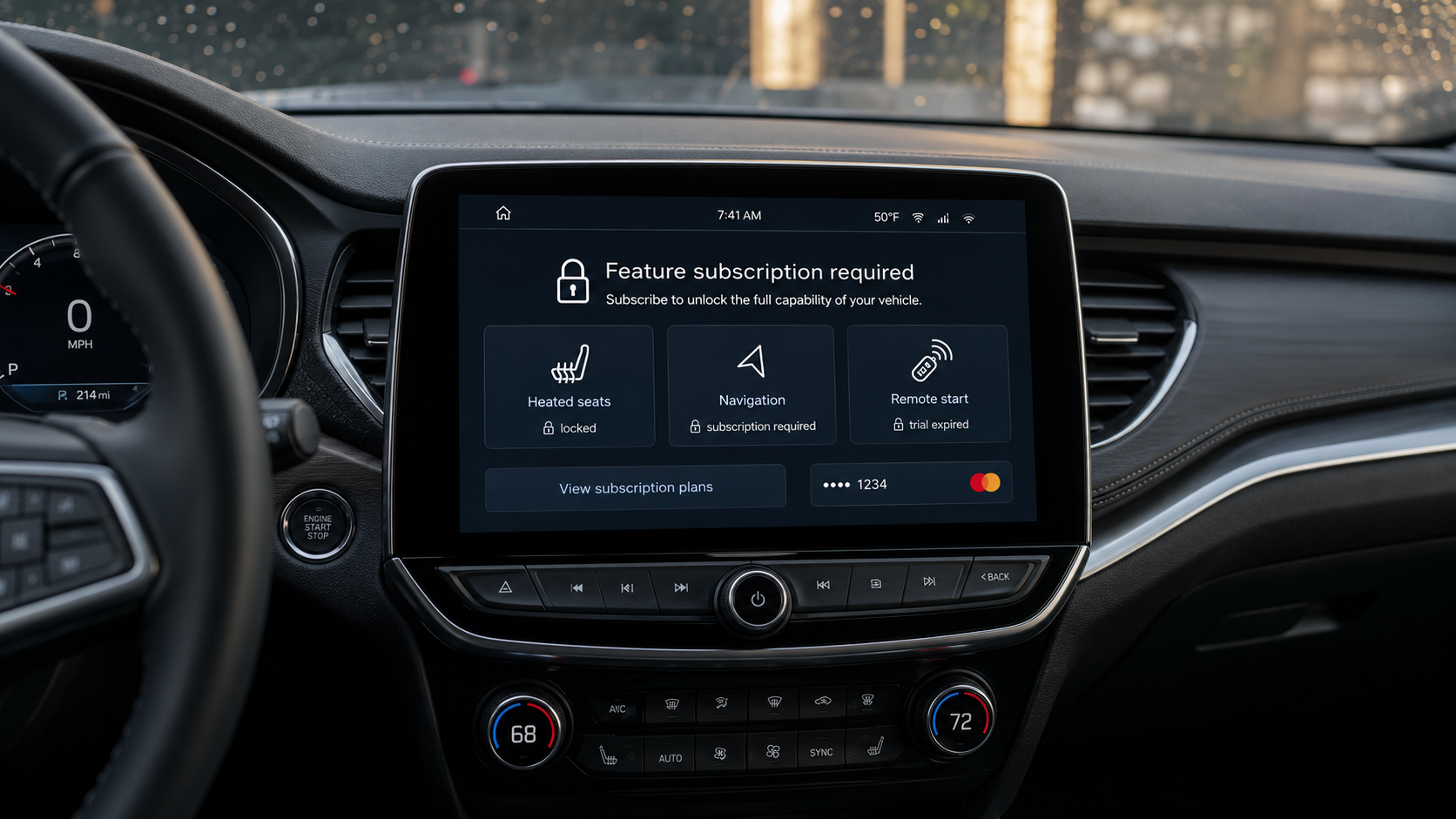
I don’t hate modern cars.
I hate several of the things modern cars do, which is different.
Ventilated seats are glorious. Backup cameras are useful. Apple CarPlay is excellent because it lets my phone replace whatever half-assed infotainment system the manufacturer thought I should be grateful for. A warning that something has stopped unexpectedly in front of me is also appreciated. I enjoy not crashing.
Adaptive cruise control can fuck off.
Lane-keep assist can stop tugging at the steering wheel because I moved six inches within my own lane to avoid a pothole. And the starter does not need to shut the engine off at every red light like we’re desperately trying to preserve one final teaspoon of gasoline for future generations.
I can accept that modern cars are complicated. What I cannot accept is paying a substantial amount of money for one and then discovering that some of the features are only visiting for the complimentary trial period.
Apparently, the new automotive ownership model goes something like this:
You buy the car. You finance the car. You insure the car. You pay interest on the car. You pay the dealer’s collection of mysterious fees.
Then, just when you think the transaction is over, the manufacturer reaches back into your pocket and asks for another monthly payment so the car will continue doing some of the shit it did when you drove it off the lot.
No.
Absolutely not.
BMW tried renting people their own heated seats
BMW became the poster child for this nonsense when it offered subscriptions in some countries to activate heated seats that were already physically installed in the vehicle.
The widely reported price was roughly $18 a month, with longer-term and permanent-purchase options available. The heating elements, wiring and electronics were already sitting inside the car. The subscription simply granted the owner permission to use them. Customers reacted about as warmly as you would expect, and BMW dropped the heated-seat subscription model in 2023.
Let’s walk through that slowly.
I bought the seat.
I bought the heating element inside the seat.
I bought the wiring running from the seat.
I bought the module controlling the seat.
I bought the entire goddamn car wrapped around the seat.
But I’m renting permission to make my ass warm?
That isn’t a connected service. It’s a hostage situation with leather upholstery.
BMW argued that installing hardware broadly and allowing customers to activate features later offered flexibility. There is at least some logic there. Standardizing production can simplify manufacturing, and a second owner might decide they want an option the original buyer skipped.
Fine.
Sell them the option once.
What people hated was not the ability to add a feature later. It was the idea that a physical component already sitting inside a vehicle could become another recurring bill.
BMW abandoned that particular fight, but it did not abandon digital add-ons and connected products altogether. Its ConnectedDrive ecosystem still offers digital services and features tied to the vehicle.
So the heated-seat disaster was not the end of the idea.
It was the industry learning which part of the idea made customers reach for torches and pitchforks.
Some subscriptions are actual services
There is an important distinction here.
Not every automotive subscription is automatically bullshit.
Satellite radio costs money to operate. Cellular connectivity costs money. Live traffic data, emergency response centres, cloud storage and regularly updated mapping all require infrastructure after the vehicle leaves the factory.
I may not choose to pay for those things, but I understand why the bill exists. Someone is still providing something.
A heated seat does not require a communications network.
There is no employee at BMW headquarters personally warming my backside.
The seat is not downloading weather data to determine the appropriate temperature for my arse.
It is a wire that gets hot.
The problem is that once manufacturers established the screen, the cellular connection and the phone app, they also created a convenient little tollbooth between drivers and their own vehicles.
And just about everyone appears interested in collecting.
Your free trial has ended
Toyota Canada offers Remote Connect features through the Toyota app on compatible vehicles. Those features can include starting and stopping the engine, locking and unlocking the doors, checking vehicle status and locating the vehicle. Toyota provides complimentary trials on eligible vehicles, but says continued use after the trial requires a paid monthly subscription.
So the vehicle may have remote start.
Your phone may have the app.
The cellular hardware may be built into the car.
But at some point, your ability to use the whole arrangement can expire like a streaming-service promotion.
Now, to be fair, phone-based remote access uses a cellular network and back-end systems. That has an operating cost. This is not exactly the same as BMW switching off a seat heater.
But from an owner’s perspective, it still feels strange to buy a modern vehicle full of connectivity, use those features for several years, and then have the car politely explain that your relationship has moved to the payment stage.
Toyota is far from alone.
Ford Canada charges $120 per year for Connected Navigation after the included or trial period on equipped vehicles. Ford’s BlueCruise hands-free highway system is offered at $64.99 a month, $650 a year or, on eligible vehicles, a one-time purchase priced at $3,295.
I personally wouldn’t pay sixty-five bucks a month for my truck to drive while I remain legally and morally responsible for everything it does.
I already dislike adaptive cruise control when it changes speed because a car two postal codes ahead touched its brakes. Paying monthly for an even more involved driver-assistance system is not high on my list.
But at least Ford offers a permanent-purchase option.
That feels more like buying a feature and less like leasing another tiny piece of your own dashboard forever.
Mercedes-Benz has also embraced what it calls Digital Extras. Its Canadian app promotes downloadable features and connected services, including an Acceleration Increase for certain electric models. Mercedes announced that the upgrade could add up to 80 horsepower and improve the zero-to-100-km/h time by as much as one second on eligible EQE and EQS vehicles. Its current Canadian terms describe some upgrades as permanent enhancements purchased with a one-time payment.
Think about that for a second.
The motors are already in the car.
The battery is already in the car.
The car is physically capable of producing the extra power.
You are paying to have the software stop holding it back.
That is not quite the same as renting heated seats every month. A permanent software upgrade is closer to buying a factory tune after purchase.
But it still shows where this is all heading.
Manufacturers are no longer limited to selling you whatever configuration rolled off the assembly line. They can keep a catalogue of dormant capabilities inside the vehicle and offer to wake them up later—for a fee.
From a business perspective, it is brilliant.
From a customer perspective, it feels like finding out your refrigerator has a second shelf that requires a licence key.
The phone app is becoming the new dealership finance office
The old model was straightforward.
You selected the trim and options you wanted. You paid for them. The car came with those features, and they worked until something broke or the vehicle returned to the earth.
Now the vehicle can arrive with a collection of software-controlled functions, trial periods and connected packages that vary by model, trim and year.
Some features are included for one year.
Some for three years.
Some for longer.
Some depend on which package was bundled into the original purchase.
Eventually, you may have to visit an app, check which subscriptions are active and decide which parts of the ownership experience you would like to continue receiving.
I can already picture the future Marketplace ad:
Fully loaded. Leather. Panoramic roof. All subscriptions expired. Bring a credit card.
The phone app is convenient. I get it.
Being able to locate your vehicle, check whether the doors are locked or start it from far away can be genuinely useful. I’m not arguing that the technology should not exist.
I’m arguing that car buyers need to pay attention to which advertised features belong to the car and which ones are merely included for the first few years.
Because “equipped with remote start” and “includes temporary access to remote start through an app” are not the same sentence.
One describes a feature.
The other describes a free sample.
Cars already cost enough
This entire trend would be irritating on a cheap appliance.
It is infuriating on a vehicle that costs $50,000, $70,000 or considerably more.
New vehicles have become expensive enough that six-, seven- and eight-year financing terms are now treated as normal ways to make the monthly number look less terrifying.
You can spend most of a decade paying for the vehicle itself, then stack connected services, navigation, driver assistance, entertainment and feature upgrades on top.
The car payment comes out.
The insurance comes out.
The app subscription comes out.
The navigation subscription comes out.
The hands-free-driving subscription comes out.
At some point the vehicle stops being transportation and becomes a collection of recurring billing opportunities with cupholders.
Automakers love recurring revenue for the same reason every other business loves it.
Selling you something once is good.
Charging you for it repeatedly is better.
That may be excellent news for shareholders.
I do not own enough shares to give a shit.
What happens when these cars get old?
This is the part that concerns me most.
What happens when today’s connected vehicle is fifteen or twenty years old?
Will the app still support it?
Will the cellular hardware still work on whatever networks exist then?
Will the digital store remain open?
Will a second or third owner be able to activate the same features?
Will the manufacturer still care enough to maintain the servers?
Mercedes-Benz’s own Canadian terms say fee-based services may depend on availability, technical compatibility and continued offering for the vehicle. New Mercedes material also notes that limited-term Digital Extras may be extended for a fee provided they are still offered for that vehicle.
That last part matters.
Provided they are still offered.
My 2003 Yukon’s heated seats do not need GM to remember my truck exists.
The switches may fail. The elements may burn out. The wiring may need repair. But the system is physically mine, and a competent shop can diagnose it without asking a remote server whether I still deserve warmth.
That is ownership.
A modern connected feature can be mechanically perfect and still disappear because the supporting service, software or corporate interest went away.
We are building vehicles whose long-term usefulness may depend not only on parts availability, but on whether somebody keeps the digital lights on.
That is a hell of a thing to discover after the warranty is gone.
I don’t need my car to become Netflix
We have already accepted subscriptions for television, music, software, cloud storage, food delivery and apparently the privilege of receiving printer ink before the printer decides I am unworthy.
I do not need my vehicle joining the pile.
Sell me the car.
Sell me the optional equipment.
Charge me for genuine ongoing services when there is a real continuing cost.
But do not install functioning hardware in my vehicle and then ask me to rent access to it.
Do not advertise app-based features without making it painfully clear that they may expire.
And do not tell me this is somehow more convenient because I can activate features whenever I want.
I could also activate them by purchasing them once and then owning them.
We had already invented that system.
It was called buying shit.
I know this probably makes me sound like the grumpy old bastard I am rapidly becoming.
That’s fine.
I have spent roughly twenty years around dealerships, service departments, repair shops and automotive parts. I have watched vehicles become safer, faster, cleaner, more comfortable and more capable.
I have also watched them become more complicated, more expensive and increasingly dependent on software ecosystems that owners do not control.
There are plenty of modern features I enjoy.
Give me the ventilated seats.
Give me the backup camera.
Give me Apple CarPlay and a forward-collision warning.
Lane-keep assist can release the steering wheel. Adaptive cruise can mind its own business. Automatic stop-start can quit shutting off the engine every time I pause long enough to consider my life choices.
And the subscriptions can eat a bag of dicks.
Because when I buy the car, I would like to buy the whole fucking car.
Your Fuel-Efficient Car Isn’t Saving You Money
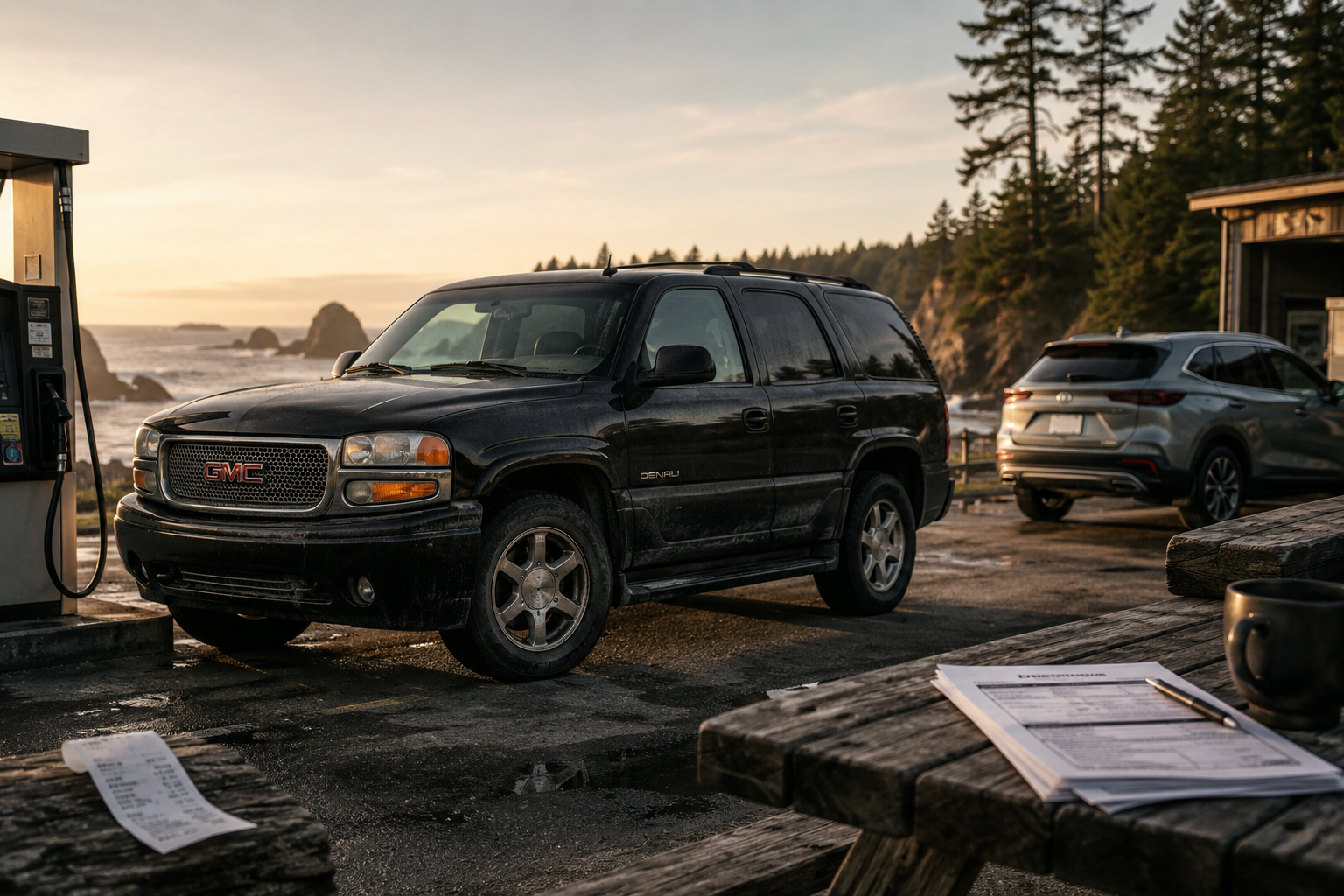
Every time somebody tells me their new crossover is saving them a fortune because it gets six litres per hundred kilometres, I have the same question:
What’s the payment?
Because fuel economy is apparently the only vehicle expense we’re allowed to talk about anymore. People will stand beside a brand-new SUV with a $700 monthly payment, higher insurance, years of interest and the depreciation curve of a falling piano, then look at my 23-year-old Yukon and tell me I’m wasting money on gas.
Sure. My Yukon drinks fuel.
It has a 6.0-litre V8, all-wheel drive, the aerodynamics of a garden shed and absolutely no interest in pretending otherwise. I’m not going to insult your intelligence by claiming it’s economical. Every trip past a gas station is a meaningful financial event.
But it’s also paid for.
That part seems to get left out of the conversation.
A $700 monthly payment is $8,400 a year before you buy a single litre of fuel. Before insurance. Before interest. Before winter tires, dealer service packages or whatever monthly subscription now allows the steering wheel to remain connected to the front tires.
You can buy a hell of a lot of gas for $8,400.
I’m not saying everyone should immediately sell their new vehicle and buy a 23-year-old truck from Marketplace with four warning lights and a mysterious smell. That would be irresponsible advice, even by internet standards.
I’m saying fuel economy is only one part of the cost of owning a vehicle, and it’s probably the easiest number for people to obsess over because it appears right in front of them at the pump.
The car payment quietly leaves the bank account every month. Depreciation happens invisibly. Interest gets buried in the financing paperwork. Increased insurance becomes another automatic withdrawal. Then somebody saves $120 a month in fuel and acts like they’ve solved personal finance.
Congratulations. You spent $700 to save $120.
That’s not efficiency. That’s a marketing department with excellent lighting.
The old truck isn’t free either
Before somebody starts typing furiously, yes, older vehicles need repairs.
My Yukon is 23 years old and has around 276,000 kilometres on it. Things wear out. Rubber gets old. Steering components develop play. Oil and transmission lines eventually decide they would rather lubricate the underside of the vehicle than remain sealed.
I recently spent about $700 having the oil changed, coolant flushed, brake fluid serviced, the air conditioning diagnosed and recharged, and the whole truck inspected properly.
The inspection found more work. It needs some steering and suspension pieces, leaking transmission cooler lines and rear brakes eventually. That is real money.
But here’s the difference: I can decide when to spend it.
I’m not automatically committed to another $700 next month, and the month after that, and every month until my five-year-old is old enough to borrow the damn thing.
A repair bill is annoying. A large car payment is scheduled annoyance.
There is also a point where fixing an old vehicle stops making sense. Engines fail. Transmissions fail. Rust can turn a perfectly good vehicle into a structural suggestion. Nobody should pour endless money into a lost cause just because the loan is paid off.
But there is an equally stupid idea at the other end of the argument: that an older vehicle should automatically be replaced because it needed a repair.
People will trade a paid-off vehicle because it needs $2,000 worth of work, then proudly sign up for $30,000, $40,000 or $60,000 of debt so they can avoid repair bills.
That is not avoiding an expense. That is replacing one expense with a much larger, shinier expense that smells better for the first six months.
I don’t hate modern vehicles
This is probably where people assume I’m about to claim that every vehicle made after 2006 is garbage and we should all return to crank windows.
Not quite.
Modern vehicles have some fantastic features. Ventilated seats are glorious. Apple CarPlay and Android Auto are genuinely useful. Backup cameras are great, especially when you have kids, bicycles, toys and half the contents of your garage scattered behind the vehicle.
Modern safety systems have improved tremendously. New vehicles are quieter, cleaner and more efficient. Some of them are remarkably comfortable.
I can appreciate all of that while still questioning whether the total ownership model makes any sense.
What I don’t love is increasing complexity, expensive integrated components and the idea that every problem should require a laptop, three software updates and a technician who has completed a manufacturer-specific course on door handles.
I especially don’t love subscriptions.
When I buy a vehicle, I would prefer to also buy the features installed in the vehicle. Apparently that is becoming an unreasonable expectation.
There is a fair argument for paying for services that continue to cost money to provide. Cellular connectivity, live traffic information, satellite services and cloud-based features are not free to operate forever.
But charging someone monthly to use hardware already installed in the car is bullshit.
The heated seat is physically inside the seat. I bought the seat. I bought the wiring. I bought the switches, control modules and entire goddamn car surrounding it.
Why am I renting permission to make my ass warm?
Eight-year loans don’t make cars affordable
The price of new vehicles has reached the point where the industry’s solution is not necessarily to make them cheaper.
It’s to make the loan longer.
Six years. Seven years. Eight years.
Stretch the financing far enough and almost anything can be presented as an acceptable monthly payment. Never mind how much interest you pay or whether you’ll still owe money when the vehicle starts needing meaningful repairs.
The monthly number looks manageable. That’s the magic trick.
A vehicle does not become affordable because the debt has been spread across most of a decade. It just means you get to enjoy being upside down for longer.
Meanwhile, the person driving the paid-off older vehicle is treated as financially irresponsible because their fuel bill is higher.
Maybe it is.
But I would rather spend money operating a vehicle I own than spend the next eight years renting money from a bank so I can tell strangers my average fuel consumption.
The Yukon works for our actual life
Our Yukon isn’t a theoretical spreadsheet vehicle.
It’s our family adventure vehicle. It carries our paddleboard, kayak, lawn chairs, tools, toys, drone equipment and a completely unreasonable number of life jackets. It is comfortable on road trips, has room for everybody and does the things we actually need it to do.
Could we replace it with something newer and more efficient? Absolutely.
Would that replacement save enough fuel to offset the purchase price, financing, insurance and depreciation?
Not even close.
That calculation would be different for someone commuting huge distances every day. It would be different for someone whose old vehicle is unreliable, unsafe or rusting into the earth. It would be different for a business that depends on uptime and predictable operating costs.
There is no single correct vehicle for everybody.
But “it uses less gas” is not a complete financial argument.
It’s one line on a much larger bill.
So yes, my Yukon is thirsty. I’m aware. The fuel gauge moves fast enough to be considered an animated feature.
But it’s paid for, useful, comfortable and still in good mechanical condition. I know its history. Parts are widely available. I work in the automotive industry and can source many of them affordably. For my family and the way we use it, keeping the old truck makes sense.
Your six-litre-per-hundred-kilometre crossover may be a great vehicle. It may genuinely suit your life better than mine suits mine.
Just don’t tell me it’s saving you money until we talk about the other $700 leaving your account every month.
Because that number counts too.
GMT800 vs First-Gen Tundra: Which Old V8 Truck Would I Actually Buy?
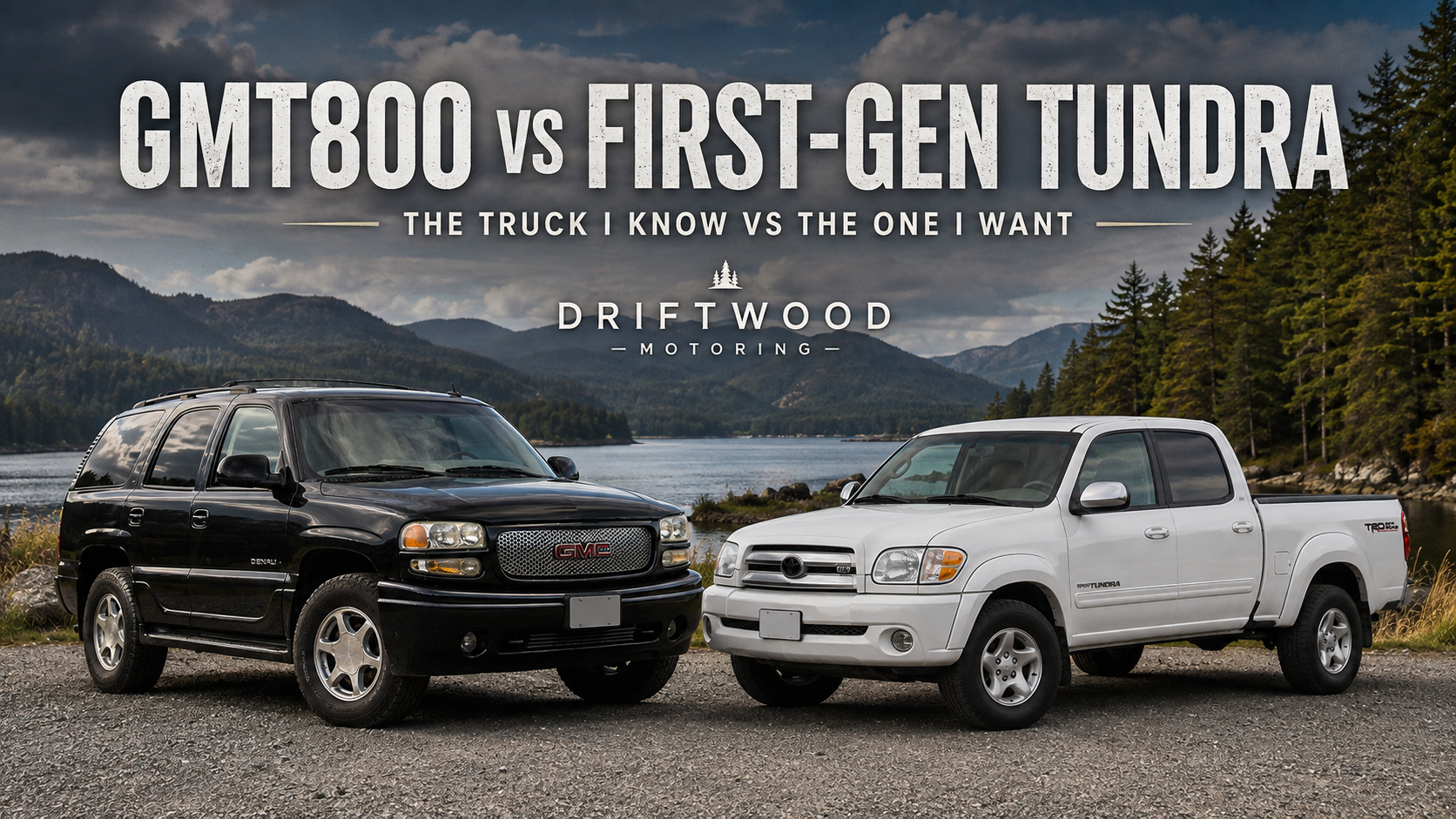
I already own a GMT800.
Mine is a 2003 GMC Yukon Denali, which means I have all the things I love about the GMT800 platform — the 6.0-litre V8, comfortable seats, simple controls, parts everywhere, enough room to lose a small child in the cargo area — without the one thing I currently keep convincing myself I need.
A pickup bed.
And that stupid little distinction has sent me down yet another automotive rabbit hole.
Because apparently owning a perfectly functional vehicle that I genuinely love is not enough.
I have to wonder whether another old truck might solve a problem I only recently decided I had.
The Yukon Is Excellent at Carrying Everything Except My Patience
The Yukon has been our everything vehicle for years.
Camping gear.
Kayaks.
Paddleboards.
Bikes.
Tools.
Beach chairs.
Life jackets.
Enough random family crap that opening the rear hatch sometimes feels like dismantling a poorly packed storage locker.
It handles all of it.
That isn't the problem.
The problem is that I have developed a growing desire to keep the dirty shit out of the passenger compartment.
Sand.
Mud.
Wet life jackets.
Bike tires.
Whatever mysterious organic material attaches itself to a five-year-old during fifteen minutes at the beach.
I like my interior.
I'm also slightly obsessive.
These two characteristics do not always coexist peacefully with outdoor hobbies.
A pickup bed suddenly starts sounding wonderful.
Throw the bikes in.
Throw the wet gear in.
Throw the sandy shit in.
Close tailgate.
Go home.
Hose things out later.
Nobody has to worry about whether a bicycle pedal is slowly machining its way through an interior panel.
Simple.
Which immediately brings me to the two trucks I keep coming back to.
A GMT800 pickup.
Or a first-generation Toyota Tundra.
The GMT800 Is the Devil I Already Know
There is an extremely strong argument for simply buying another GMT800.
I already know the platform.
I've lived with one for years.
I know what they feel like when they're healthy.
I know what they feel like when the steering has approximately the precision of a shopping cart.
I know the interiors.
I know the 5.3.
I know the 6.0.
I know parts availability is ridiculous.
I know there are enough GMT800s being dismantled behind sheds across North America that civilization could collapse tomorrow and we'd probably still be able to source a window regulator.
That matters.
If I bought a clean GMT800 Crew Cab with a 5.3 or 6.0, there would be very little learning curve.
Add a decent double-DIN stereo with Apple CarPlay.
Add a backup camera.
Maybe improve the speakers.
Done.
That's basically all the modern technology I need.
I don't need the truck to monitor my face.
I don't need it deciding whether I've changed lanes correctly.
I don't need twelve cameras showing me a cinematic overhead view of the parking stall at Costco.
I need Spotify.
I need Google Maps.
I would like to see what's behind me.
We solved this.
But I've Always Had a Thing for the First-Gen Tundra
This is where Toyota keeps ruining the simplicity of the decision.
I've always liked the first-generation Tundra.
Especially the later Double Cab trucks with the 4.7-litre V8.
There is something about the proportions that just works.
It is a full-size pickup from an era before full-size pickups became the approximate dimensions of a municipal recreation centre.
The doors are normal.
The bed is useful.
The hood does not begin somewhere near your sternum.
You don't need a spotter to enter an underground parking garage.
It just looks like a truck.
And the 4.7 has developed exactly the sort of reputation that attracts me now.
Proven.
Naturally aspirated.
Simple enough.
Known problems.
Known maintenance.
Lots of people have put deeply unreasonable numbers of kilometres on them.
It's the kind of drivetrain where someone says:
“It's got 270,000 kilometres.”
And instead of immediately recoiling, everyone pauses and goes:
“Okay. So what's the timing belt history?”
That is a very specific kind of automotive insanity.
I understand it completely.
Toyota Has Its Own Weird Fan Lore
There is another difference between the two trucks that I can't quite explain without sounding mildly ridiculous.
The Tundra somehow feels more socially acceptable.
I know.
That's a stupid sentence.
But stay with me.
A GMT800 pickup has a certain reputation now.
It can be a beautiful, clean, tastefully maintained old truck.
It can also have six light bars, one tow mirror extended permanently, a Monster Energy sticker, three mismatched tires and an exhaust system designed primarily to wake infants.
There's a little redneck energy built into the platform.
Which suits me just fine, tell you what.
I'm not judging.
I've spent enough time around old GM trucks that I understand the ecosystem.
But Toyota has a different mythology around it.
The Tundra gets wrapped into the greater Toyota multiverse.
Land Cruisers.
Tacomas.
4Runners.
Million-mile engines.
People talking about frame condition with the seriousness normally reserved for structural engineers inspecting bridges.
Toyota owners don't merely own vehicles.
They join a small religion.
The first-gen Tundra benefits from that.
Even people who aren't really truck people look at a clean old Toyota and go:
“That's cool.”
A clean old GMT800 sometimes gets:
“My uncle had one of those.”
Different emotional response.
Neither is better.
It's just interesting.
The Tundra Is Almost the Toyota Version of What I Already Like
This is probably the real reason I keep looking at them.
The GMT800 and first-gen Tundra come from a similar moment in automotive history.
Modern enough.
Comfortable enough.
Safe enough for their era.
Fuel injected.
Good climate control.
Power accessories.
Decent brakes.
Useful cabins.
But still mechanically understandable.
They're not antique trucks.
I wouldn't put either one into the same category as a '50s pickup, a '60s Ford or even a square-body Chevy.
They're just older vehicles now.
And they're from an era that increasingly appeals to me.
Give me an old truck with a good engine and a normal automatic.
Then let me bolt in the handful of modern features I actually want.
Apple CarPlay?
Easy.
Backup camera?
Easy.
Better headlights?
Easy.
Bluetooth?
Already included with the stereo.
Done.
I don't need to replace the entire vehicle because the dashboard was designed before Spotify existed.
GMT800 Wins the Parts Argument
This one isn't even close for me.
GMT800 parts availability is one of the platform's greatest strengths.
They're everywhere.
I work around automotive parts every day, and there's enormous value in owning something the entire repair industry understands.
Need steering parts?
Of course.
Need brakes?
Take your pick.
Need a mirror?
There are fourteen versions on Marketplace before lunch.
Need a complete 5.3?
Someone probably has one sitting on a tire behind a shed.
The Tundra doesn't have bad parts support.
It's a Toyota.
It's not some obscure French pickup that was imported for seventeen months.
But there simply weren't GMT800 numbers of them running around North America.
GM built these things like it expected every household to require three.
That ecosystem lowers the pain of keeping one alive.
And if I'm thinking ten years ahead, that matters quite a bit.
Toyota Wins the “I Haven't Owned One Yet” Argument
This one matters more than it probably should.
I've done GMT800.
I'm still doing GMT800.
I love GMT800.
That's the problem.
Another GMT800 pickup would make enormous sense.
It would also mean I basically looked at the entire automotive universe and said:
“You know what? I'll have another one of those.”
There is part of me that wants to try another proven platform.
Not because I'm bored with the Yukon.
I'm not.
But I've spent enough years around cars to know that there is something interesting about learning a different vehicle.
Different engineering.
Different strengths.
Different stupid design decisions.
Different things owners swear are “totally normal.”
The first-gen Tundra scratches that itch without asking me to abandon everything I currently value.
V8.
Traditional automatic.
Useful size.
Repairable.
Proven.
No giant screen.
No subscription for the steering wheel.
It is different without being philosophically different.
The Tundra Might Actually Be the Better Size
This is one of the stranger things about old trucks.
They seem to be shrinking.
Obviously they aren't.
Everything else just got enormous.
Park a first-gen Tundra beside a current full-size pickup and it almost looks midsize now.
And for what I actually want a pickup to do, that's a feature.
I am not hauling a skid steer.
Our trailer remains proudly imaginary.
Our boat remains somewhere between inflatable and theoretical.
My major hauling concerns are currently an enormous e-bike, a small bicycle, a kayak, a paddleboard and enough beach equipment to make it appear that we're preparing to establish a coastal settlement.
I don't need an enormous truck.
I need a useful one.
The first-gen Tundra feels like a truck designed before everybody decided bigger automatically meant better.
But Condition Beats Everything
This is where the internet arguments become mostly useless.
Which is better?
GMT800 or first-gen Tundra?
The clean one.
Seriously.
At this age, condition matters more than tribal loyalty.
I'd rather own an extremely clean GMT800 than a tired Tundra with frame concerns, neglected maintenance and an owner who considers warning lights part of the interior ambience.
And I'd rather own a beautifully maintained Tundra than a GMT800 that has spent twenty years towing overloaded trailers down salted highways.
These things are old enough that you're not simply buying a platform anymore.
You're buying the accumulated decisions of every person who owned it before you.
That matters enormously.
A supposedly legendary drivetrain doesn't help much when everything attached to it has been abused.
The Toyota Tax Is Real
This is also where my affection for old Toyotas encounters capitalism.
People know what they have.
Or at least they believe they know what they have.
A twenty-year-old Toyota pickup with 300,000 kilometres can still be advertised for a number that causes you to refresh the page because you assume you misread it.
Sometimes the condition justifies it.
Sometimes the owner has simply spent too much time reading Toyota forums.
GMT800s have gone up too.
Clean ones are becoming harder to find.
But there are still enough of them around that you can occasionally find something sensible.
Toyota seems to begin negotiations from a place of:
“Yes, it has rust.
“Yes, the paint is gone.
“Yes, the timing belt was done sometime during the Obama administration.
“No, I will not accept less than twelve grand.”
Cool.
Thanks.
So Which One Would I Buy?
I don't know.
Helpful article.
If I wanted the safest decision?
Probably GMT800.
I know them.
Parts are everywhere.
I already trust the drivetrains.
They're comfortable.
They're cheap to improve.
And buying one would fit nicely with everything I've already learned owning the Yukon.
If I were buying with my heart?
The Tundra probably has the edge.
Not dramatically.
But enough.
I've always liked them.
I like the 4.7.
I like the size.
I like the Double Cab.
I like that it would let me try another proven old platform without entering a completely different automotive universe.
And I like that it looks good without needing much help.
No giant wheels.
No lift.
No angry headlights.
Give me a clean Double Cab Limited, some decent factory-looking wheels, a modern stereo and a backup camera.
I would be pretty damn happy.
Of Course, I Already Own the Best Argument Against Buying Either
That's the problem.
The Yukon.
I already have a vehicle I love.
It starts.
It runs.
It's comfortable.
It's paid for.
I've spent years sorting it out.
It carries the family.
It carries an obscene amount of gear.
It still looks great when I walk back toward it.
The only major thing it doesn't have is a pickup bed.
Which means I am considering replacing an entire vehicle because I would prefer the sand to be approximately six feet farther behind me.
This is how car people make decisions.
Completely rational.
So maybe I buy another GMT800.
Maybe I finally buy the Tundra I've been looking at for years.
Maybe I fix the Yukon seat, polish the paint, buy a better bike rack and stop browsing Marketplace for seventeen minutes.
That last one seems unlikely.
But stranger things have happened.
The shop is currently imaginary. The automotive obsession is not.
Related Reads
The Best GMT800 Upgrades: What’s Worth Doing—and What I’d Skip
From suspension and brakes to cooling, tuning, CarPlay and the popular modifications I’d probably leave on the internet.
Is the GMT800 Still the Smartest Vehicle to Own in 2026?
Why a paid-for old GM truck or SUV can still make more sense than replacing it—fuel bill, repair list and all.
The GMT800 Duramax: Why These Old Diesel Trucks Became Legends
LB7, LLY and LBZ engines, Allison transmissions, rust, Canadian scarcity and why these old diesel trucks earned their reputation.