Is the GMT800 Still the Smartest Vehicle to Own in 2026?
I’m going to start with an absolutely ridiculous statement:
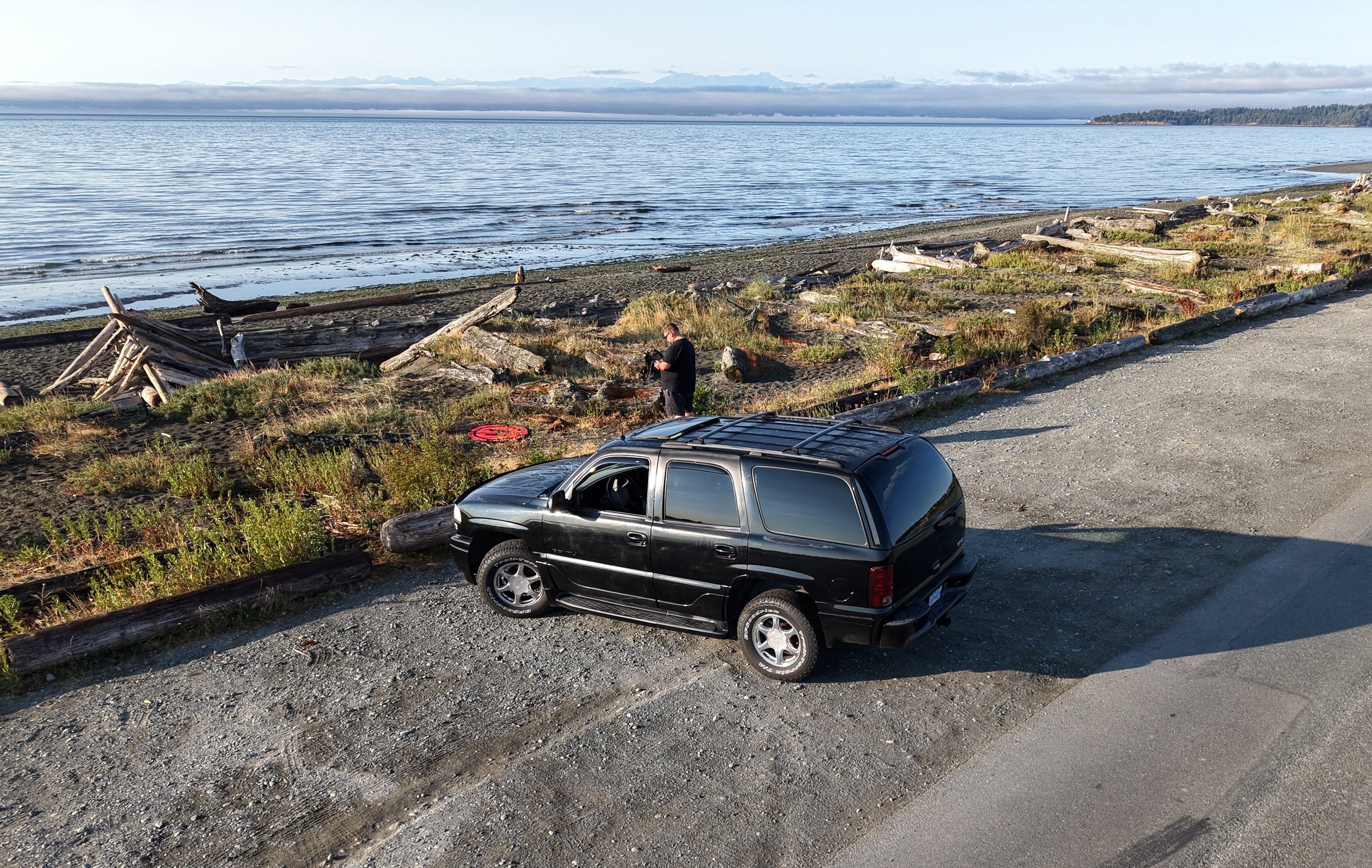
A 23-year-old GMC Yukon might be one of the smartest vehicles you can own in 2026.
There. I said it.
Now, before the Toyota people start sharpening their keyboards and somebody sends me a photograph of a rusty GMT800 frame held together by hope and spray foam, I’m not saying everybody should immediately run out and buy the first $4,500 Tahoe they find on Marketplace.
That would be terrible advice.
I’m saying that our 2003 Yukon Denali makes an increasingly compelling argument for keeping an older, proven vehicle instead of automatically replacing it just because the calendar says you should.
Because lately, buying new to avoid repairs feels a little bit like buying a boat to avoid getting wet.
We Bought Old Specifically Because I Didn’t Want Another Payment
Our Yukon is a 2003 Denali with the 6.0-litre Vortec V8, all-wheel drive, three rows of seats and roughly 276,000 kilometres.
It’s old.
It’s thirsty.
It smells vaguely like 2003.
And it has buttons.
Glorious, physical buttons.
We’ve had money into it over the years. Including buying the thing and maintaining it, we’re somewhere around the $10,000 mark over roughly five years.
That isn’t free transportation.
Old vehicles cost money.
They need brakes. Suspension parts wear out. Fluids leak. Rubber gets old. Things that have been travelling down Canadian roads for more than two decades eventually become tired of doing so.
But here’s the problem with the argument that I should replace it:
Replace it with what?
Something that does what this does is going to cost real money.
A newer three-row SUV with decent towing capability, actual cargo space, comfortable seats and enough vehicle underneath it to deal with family trips, beach gear and whatever else we throw at it is not $20,000 anymore.
And I don’t particularly feel like spending $60,000, $70,000 or more because I’m frightened that my old truck might someday need $1,000 worth of repairs.
That math makes my head hurt.
“I Bought New Because I Didn’t Want Repairs”
I understand this argument completely.
I spent years working in automotive service.
People would bring an older vehicle in, we’d inspect it, and suddenly there would be a list.
Brakes.
Tie rods.
A leaking water pump.
Maybe a wheel bearing.
Some suspension work.
The estimate gets to a few thousand dollars and you can see the expression changing on the customer’s face.
“Maybe it’s time to get something newer.”
Fair enough.
There is absolutely a point where an old vehicle stops making financial sense.
But what makes me laugh now is the idea that buying new somehow guarantees you’ll stay away from the dealership.
Have you met modern vehicles?
You might not be there for ball joints.
You’re there because the infotainment system needs an update.
Or some module has stopped communicating with another module.
Or your forward-facing camera is upset.
Or the manufacturer has released a recall.
Or there’s a software campaign.
Or your wireless CarPlay has decided today is a personal-growth day and would prefer not to participate.
Or some connected service needs to be reset because apparently your truck is now part vehicle, part laptop and part needy houseplant.
You bought new because you didn’t want to visit the service department.
Congratulations.
Now you’re drinking dealership coffee while somebody updates the operating system on your fucking pickup truck.
At Least My Problems Make Sense
Our Yukon needs some work right now.
I know.
Shocking.
The 23-year-old truck with 276,000 kilometres has some worn parts.
We have inner tie rods coming up. Sway-bar end links. Some transmission cooler line work. An oil leak that needs attention. The rear brakes are getting lower.
None of that fills me with existential dread.
Tie rod worn out?
Put another tie rod in it.
Sway-bar link worn out?
Replace it.
Brake pads getting low?
I have some extremely advanced technology for that called new brake pads.
The beauty of an old GMT800 is that most of its problems have already happened to approximately nine million other GMT800s.
There is almost nothing you can discover underneath one of these trucks that somebody hasn’t already fixed in a driveway, a farm shop, an independent garage or behind a Canadian Tire with questionable lighting.
Parts are everywhere.
People understand them.
The aftermarket is enormous.
And you don’t generally need to book a teleconference between three control modules to diagnose a clunk.
The Monthly Payment Argument Is Getting Stupid
This is where keeping an older vehicle gets really interesting.
Suppose I put another $1,000 into the Yukon.
That sounds like a lot when you say it by itself.
“A thousand dollars in repairs.”
Oooh.
Scary.
But then compare it to someone making a $1,000 vehicle payment.
Every.
Single.
Month.
My thousand dollars buys actual parts and labour.
Their thousand dollars gets them approximately four weeks closer to eventually owning the vehicle.
And depending on what they bought and how they financed it, they may be doing that for six, seven or eight years.
I’m not suggesting nobody should ever finance a vehicle. Most people don’t have seventy grand sitting between the sofa cushions.
But we have completely normalized absurd monthly payments because we’ve become conditioned to think of a vehicle as something that should always have one.
I hate that.
A paid-off vehicle is beautiful.
Not always literally.
Sometimes it has rust.
But financially? Gorgeous.
And Then There’s All the New Shit I Don’t Want
This is probably where I become Old Man Yells at Cloud.
I’m okay with that.
I don’t need most of the technology being forced into modern vehicles.
Apple CarPlay?
Absolutely.
Love it.
Backup camera?
Yep.
Very handy.
Heated seats?
I live in Canada. Pry them from my warm dead ass.
But there’s a point where I’m good.
I don’t need lane-keep assist tugging the steering wheel.
I don’t need adaptive cruise deciding that someone 200 metres ahead of me requires an immediate strategic reduction in speed.
I don’t need the engine shutting off every time I stop at a traffic light.
I don’t need a giant television occupying half the dashboard.
And I definitely don’t need basic functions buried three menus deep because somebody decided physical buttons weren’t sufficiently futuristic.
Maybe you love all that stuff.
Cool.
Enjoy it.
I genuinely mean that.
But I wish manufacturers would stop acting like everybody was desperately waiting for their vehicle to become a smartphone with cupholders.
Some of us just want to drive the damn thing.
“But Your Yukon Doesn’t Even Have CarPlay”
Correct.
You know what I can do about that?
Buy a stereo.
The aftermarket is there for you, man.
That’s one of the things I love about buying the previous generation of almost anything.
You keep the proven mechanical platform and add the modern features you actually care about.
My Yukon doesn’t need 74 electronic systems and a subscription service so I can listen to Spotify.
I can install CarPlay.
I can install a better backup camera.
I can improve the stereo.
I can even add modern lighting and other useful conveniences.
What I cannot do is buy a brand-new vehicle and delete 900 pounds of technology I never asked for.
The GMT800 Is Old, Not Primitive
This is another reason I think this particular era hits such a sweet spot.
A GMT800 isn’t a 1972 pickup.
I love old cars, but I also enjoy arriving places without smelling like gasoline.
The Yukon has fuel injection.
Four-wheel disc brakes.
ABS.
Airbags.
Power everything.
Excellent heat.
Air conditioning.
Cruise control.
Comfortable seats.
A ridiculously good 6.0-litre V8.
It starts when it’s cold.
It idles properly.
It can sit in traffic without requiring me to adjust anything with a screwdriver.
It’s modern enough to use every day without making ownership a hobby.
But it was built before the industry collectively decided every vehicle needed an IT department.
That’s the sweet spot I keep coming back to.
Previous generation.
Modern enough.
Proven.
Still repairable.
Yes, It Burns Fuel
This is where every GMT800 discussion eventually arrives.
Fuel economy.
No.
It isn’t good.
The 6.0-litre V8 does not sip gasoline.
It does not gently sample gasoline.
It arrives at the fuel tank with a ladle.
If your commute is 120 kilometres a day, perhaps a 6.0-litre AWD Yukon should not be your environmentally questionable soulmate.
But fuel is only one part of the cost of owning a vehicle.
People get obsessed with saving $100 or $150 a month in gasoline while voluntarily taking on an $800 payment.
I understand the psychological appeal. You see fuel expenses constantly. The payment just quietly escapes your bank account every month like a financial carbon monoxide leak.
The Yukon costs money to feed.
But it doesn’t require my bank’s permission to exist in my driveway.
I like that.
It Still Does Everything We Bought It to Do
This is probably the biggest reason I haven’t replaced it.
The Yukon still works.
Not philosophically.
Literally.
We take it on road trips.
It carries our family comfortably.
It swallows luggage.
It gets filled with beach chairs, life jackets, tools, paddleboards, kayaks and enough random shit that opening the rear hatch occasionally requires risk assessment.
It’s comfortable on the highway.
The seats are better than a lot of newer vehicles I’ve driven.
It has enough power.
It tows.
It works in bad weather.
And I don’t have to treat the interior like a museum exhibit.
There is enormous freedom in owning a vehicle that is nice enough to enjoy but old enough that a five-year-old climbing into it with sandy shoes doesn’t trigger a small emotional crisis.
Is It Actually the Smartest Vehicle to Own in 2026?
Obviously not for everybody.
If you drive enormous distances every year, fuel economy matters.
If you don’t work on vehicles, don’t know a good independent shop and get physically ill when a check-engine light appears, owning something twenty years old may not bring joy into your life.
And some old GMT800s are complete garbage now.
Rust.
Neglect.
Bad modifications.
Twenty-three years of owners fixing electrical problems using household wire nuts and optimism.
Condition matters enormously.
But a good one?
One that has been maintained?
One that you know?
I’d have a very hard time convincing myself that replacing it with a massive monthly payment represents financial progress.
Especially when the supposed reward for buying new is increasingly a vehicle filled with complicated systems, recalls, software updates and technology I didn’t ask for.
I Don’t Want to Stay Out of the Repair Shop at Any Cost
That’s really the point.
People talk about repairs like they represent failure.
They don’t.
Machines require maintenance.
Eventually things wear out.
The goal shouldn’t be to never repair a vehicle.
The goal should be to own something where the repairs remain understandable and financially sensible.
I would rather occasionally spend $800 fixing a paid-off vehicle I like than spend $1,000 every month avoiding the possibility of occasionally spending $800 fixing a vehicle.
Especially when the brand-new one might end up back at the dealership anyway.
At least when my Yukon goes into the shop, there’s usually something physically wrong with it.
Nobody has ever called me to say:
“Good news, Ryan. We’ve updated your tie rod’s firmware.”
Yet.
So Yeah, I Think the GMT800 Still Makes a Hell of a Lot of Sense
Our Yukon isn’t perfect.
It needs some work.
The driver's seat leans slightly and remains haunted by the ghosts of a thousand farts.
It needs to sound more like the 6.0-litre V8 it actually has.
There are a few upgrades coming.
There will undoubtedly be more repairs.
At some point I’ll probably stare at another estimate and question every decision that led me here.
That’s old-car ownership.
But when I look at what replacing it would cost—and what I’d actually gain—I keep arriving at the same answer.
Fix the Yukon.
Drive the Yukon.
Enjoy the Yukon.
Add CarPlay.
Maybe make it rumble a little more.
And let somebody else spend eight years making payments while their brand-new truck downloads an update.
I think we’re good.
The shop is currently imaginary. The automotive obsession is not.
Related Reads
The Best GMT800 Upgrades: What’s Worth Doing—and What I’d Skip
From suspension and brakes to cooling, tuning, CarPlay and the popular modifications I’d probably leave on the internet.
Is the GMT800 Still the Smartest Vehicle to Own in 2026?
Why a paid-for old GM truck or SUV can still make more sense than replacing it—fuel bill, repair list and all.
The GMT800 Duramax: Why These Old Diesel Trucks Became Legends
LB7, LLY and LBZ engines, Allison transmissions, rust, Canadian scarcity and why these old diesel trucks earned their reputation.