
Why the GMT800 Might Be GM’s Best Truck Platform
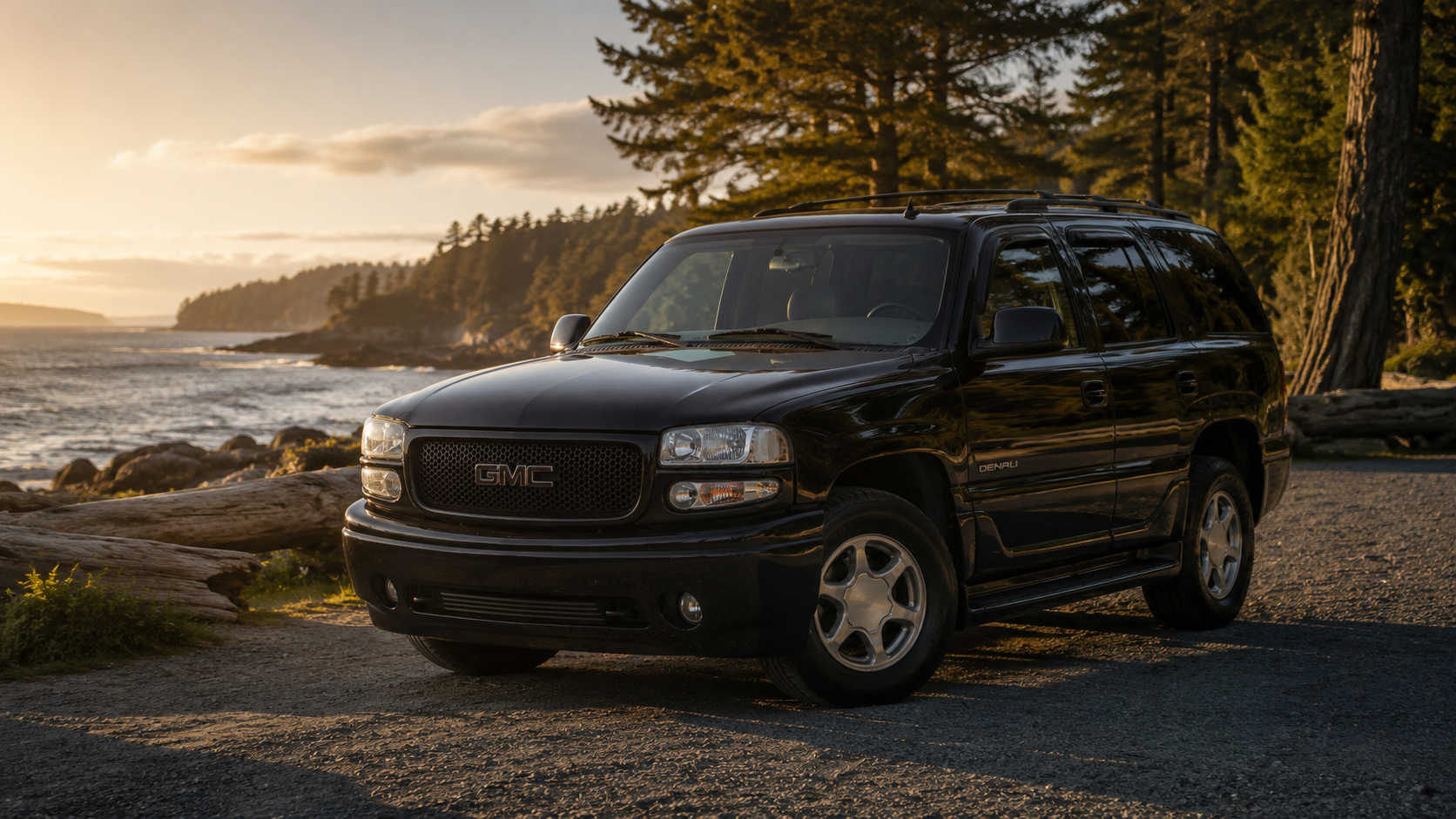
I’m going to say something that will immediately piss off at least three generations of General Motors truck owners:
The GMT800 might be the best truck platform GM ever built.
Not the fastest. Not the most powerful. Not the most luxurious. Definitely not the most fuel-efficient. My 2003 Yukon Denali can turn a quick run for milk into a minor petroleum-industry stimulus package.
But when you combine comfort, capability, simplicity, repairability, drivetrain choices and the frankly ridiculous number of them still driving around more than twenty years later, the GMT800 landed in a sweet spot that GM may never find again.
The GMT400 crowd is already typing that their trucks were simpler.
They were.
The new-truck crowd will point out that their trucks tow more, stop better, make more power, burn less fuel and have enough cameras to document their own eventual repossession.
Also true.
But the GMT800 arrived at exactly the right moment. Trucks had become comfortable enough to serve as daily drivers and family vehicles, but they had not yet become rolling mortgage applications with software updates, subscription features and dashboards designed by someone with a personal vendetta against physical buttons.
They were modern without being exhausting.
That matters.
What the hell is a GMT800?
GMT800 was General Motors’ internal platform designation for the full-size trucks and SUVs it produced from the late 1990s into the mid-2000s.
That family included the Chevrolet Silverado, GMC Sierra, Chevrolet Tahoe, GMC Yukon, Chevrolet Suburban, GMC Yukon XL, Cadillac Escalade and the heavy-duty trucks.
Basically, if you see an older GM truck still hauling landscaping equipment, towing a boat, carrying six children or idling outside Canadian Tire with one headlight slightly dimmer than the other, there is a decent chance you are looking at a GMT800.
Mine is a 2003 GMC Yukon Denali with a 6.0-litre V8, all-wheel drive and roughly 276,000 kilometres.
It carries our family, tools, toys, drone gear, a paddleboard, a kayak, lawn chairs and enough life jackets to satisfy a nervous ferry captain.
It is also still one of the most comfortable vehicles I have ever owned.
That does not mean it is perfect.
The steering offers approximately the same feedback as a strongly worded email. The dashboard contains enough grey plastic to furnish a government office. The fuel gauge moves quickly enough to qualify as animation.
I still love the damn thing.
GM gave buyers an actual choice of engines
One of the biggest reasons the platform became so successful was that GM offered an entire family of drivetrains instead of pretending one turbocharged four-cylinder could meet the needs of every human being with a driver’s licence.
The 4.8, 5.3 and 6.0-litre gas V8s are a huge part of the GMT800 story.
They are simple, durable and supported by an aftermarket so large you could probably assemble an entire 5.3 from parts found within twelve kilometres of any medium-sized Canadian town.
They generally followed a sophisticated maintenance philosophy:
Give them oil occasionally and try not to do anything catastrophically stupid.
They make decent power, produce useful torque and usually sound good doing it. They are naturally aspirated pushrod V8s from a period when an engine could operate without constantly turning cylinders off, changing its own valve timing, adjusting six cooling circuits and consulting a software engineer before deciding whether to idle properly.
That simplicity matters once a vehicle becomes old enough to buy its own alcohol.
Modern engines can produce more power from less displacement while burning less fuel and producing fewer emissions. That is impressive, and I am not going to stand on the beach yelling at direct injection like it parked on my lawn.
But when modern equipment fails, repairs can involve turbochargers, high-pressure fuel systems, emissions hardware, integrated assemblies, software and enough networked modules to make the vehicle feel like an IT department with cupholders.
When an old GM V8 has a problem, your local shop has probably already seen it, the parts store probably has what you need, and somebody on YouTube has filmed the entire repair in a gravel driveway while wearing flip-flops.
That has value too.
Then there’s the Duramax and Allison combination
You cannot talk about GMT800 drivetrains without talking about the heavy-duty diesels, unless your goal is to attract an angry mob of men wearing wraparound sunglasses and shirts with injection-pump company logos.
The Duramax diesel paired with the Allison automatic transmission became one of the defining combinations of this truck generation.
A clean GMT800 diesel is still seriously desirable today. In particular, plenty of diesel enthusiasts view the later trucks from around 2005 and 2006—especially the LBZ-era 2006 models—as something close to the perfect old diesel pickup: strong, usable, still relatively straightforward and built before modern diesel-emissions systems became substantially more complicated. The 2006 Duramax was offered with an Allison six-speed automatic, making 360 horsepower and 650 lb-ft in LBZ form.
I wish I had one.
A crew-cab, four-wheel-drive GMT800 Duramax with an Allison, in good condition and without seventeen questionable tuning devices zip-tied under the dashboard, would be damn close to dream-truck territory.
The problem is that everybody else knows this too.
Clean examples are sought after, and owners often price them as though the glovebox contains a small parcel of waterfront property.
And diesel ownership is not the same cheap-and-simple proposition as running a gas 5.3. Injectors, turbochargers, fuel systems and diesel-specific repairs can become expensive in a hurry.
Still, there is a reason people hunt for these trucks.
The engine makes serious torque. The Allison earned a formidable reputation. Together, they gave the GMT800 heavy-duty lineup an identity that still carries weight two decades later.
Mention “Duramax and Allison” around diesel owners and somebody will immediately begin explaining the differences between LB7, LLY and LBZ engines, whether you asked or not.
That argument could continue until the sun burns out.
I am not stepping directly into that knife fight today.
The point is that GM did not just offer one decent drivetrain. It offered everything from basic gas work trucks to heavy-duty diesels that are still being used, modified, collected, debated and lusted after.
That depth is part of what made the platform special.
GM was also trying weird shit
The GMT800 era was not only about simple engines and sensible trucks.
GM was still willing to occasionally walk into a meeting and say, “What if the rear wheels turned too?”
Enter Quadrasteer.
Developed with Delphi, Quadrasteer used four-wheel steering to turn the rear wheels. At lower speeds they turned opposite the front wheels, tightening the turning circle. At higher speeds they could turn in the same direction to improve stability during lane changes and towing.
It was offered on several GM trucks and long-wheelbase SUVs, including versions of the Sierra, Silverado, Suburban and Yukon XL.
Was it necessary?
Probably not.
Was it expensive and complicated enough that buyers became nervous?
Absolutely.
Was it cool as hell?
Yes.
A GMT800 Quadrasteer truck rolling slowly through a parking lot with the rear wheels visibly turning still looks like someone installed the suspension incorrectly until you realize what you are seeing.
It is one of those strange automotive ideas that probably deserved more success than it got. A long truck that can make tight turns and become more stable while towing is not a stupid concept.
It just arrived during an era when customers apparently looked at four-wheel steering and decided ordinary steering had been working fine since horses.
Now Quadrasteer-equipped trucks are unusual enough to make enthusiasts stop and look.
That is another thing I miss about vehicles from this period. Manufacturers were willing to experiment with genuinely mechanical ideas instead of announcing a new dashboard theme and calling it innovation.
The GMT800 family also gave us everything from basic regular-cab work trucks to Denalis, Escalades, heavy-duty tow rigs, long-wheelbase family barges and specialized configurations that could become entire collector niches on their own.
It was a proper platform.
Not one vehicle wearing six different grille designs.
Parts are absolutely everywhere
GMT800 parts are available from just about every possible source.
Parts stores have them. Wrecking yards have them. Online retailers have them. Marketplace has them.
Some guy named Darren probably has half a Yukon behind his shed and will sell you a transfer case at 9:30 at night if you bring cash and do not ask why the donor vehicle has no doors.
That availability is a huge reason these vehicles remain viable.
When something breaks, you usually have choices.
You can buy the cheapest part available because the truck is already held together with hope and deck screws. You can buy a decent aftermarket replacement. You can buy premium parts. You can upgrade the weak point. You can find used factory pieces.
You are rarely waiting six weeks for a proprietary assembly to arrive so the passenger window can begin acknowledging the switch again.
I work in automotive parts, which gives me an obvious advantage. I can source much of what my Yukon needs affordably, and after twenty years around this business I have a decent idea which brands I trust and which boxes should be gently returned to the shelf.
But even without that advantage, the parts ecosystem around these trucks is enormous.
A vehicle lasts when owners can afford to repair it.
That sounds obvious, but apparently the modern automotive industry needed a reminder.
An engine capable of running 400,000 kilometres is not much use if the first failed electronic module costs more than the vehicle is worth and requires a dealership appointment, two software subscriptions and the blessing of a regional technical representative.
GMT800s remain worth fixing.
That may be their greatest strength.
They were built to do actual truck and SUV things
A lot of modern SUVs are tall cars wearing hiking boots.
GMT800 SUVs were trucks underneath.
They could tow, haul people, carry ridiculous amounts of cargo and survive roads that had not recently been described as “curated.”
The Tahoe and Yukon were large enough to be proper family vehicles without occupying their own climate zone.
The Suburban and Yukon XL could carry a family, luggage, camping equipment, sports gear and whatever deeply unnecessary Marketplace purchase Dad made on the way home.
My Yukon is our family adventure vehicle.
At various times it contains a paddleboard, kayak, chairs, tools, toys, drone equipment and enough random equipment to make it appear we are either camping or quietly leaving the country.
It does not care.
The truck does not need the cargo arranged beautifully for social media. It does not need a roof box that costs more than my first car.
Open the hatch. Throw the shit in. Go somewhere.
That is usefulness.
The interiors were better than people remember
Nobody is going to confuse the inside of a GMT800 with the lobby of a luxury hotel.
There is a lot of grey plastic. The buttons wear. The instrument clusters occasionally decide that displaying accurate information is optional. Seat heaters can become temperamental, and the leather on the driver’s seat often begins surrendering in exactly the same place.
But the basic design was excellent.
The seats were big and genuinely comfortable. Visibility was good. The controls made sense. The buttons were large enough to operate while wearing gloves or while your five-year-old asks seventeen unrelated questions from the back seat.
You could change the temperature or fan speed without opening a menu labelled “Climate Experience.”
You did not need to wait for the infotainment system to finish booting before the defroster became available.
Mine has heated leather seats, power accessories, automatic climate control and enough comfort to make long road trips easy even after twenty-three years.
It does not feel primitive in the ways that matter.
It feels like a vehicle designed when controls were expected to work through touch rather than prolonged eye contact.
I love Apple CarPlay. I love backup cameras. Ventilated seats are glorious and should be protected under international law.
I do not hate modern features.
I hate when every feature gets buried inside an enormous screen because someone decided physical buttons did not photograph well in promotional material.
They are simple without being ancient
This is where the GMT800 really shines.
It has electronic fuel injection, anti-lock brakes, airbags, decent climate control, power equipment and enough technology to remain pleasant in modern traffic.
It is not a carbureted farm truck that requires a weather forecast and a small prayer before starting.
But it also does not have several dozen modules constantly sharing information about whether the cupholder is emotionally prepared to receive a beverage.
That middle ground is becoming harder to find.
The GMT800 was built after trucks became refined enough to live with every day, but before manufacturers became convinced every vehicle needed to function as a smartphone with a towing package.
It was modern before modern became a pain in the ass.
Obviously, they have problems
This is not some misty-eyed love letter claiming every GMT800 is immortal.
These trucks have problems.
Instrument clusters fail. Fuel pumps die. Steering components wear. Window regulators quit. Door hinges sag. Brake lines can rust. Transfer cases can develop issues. Interior plastics crack. Exhaust manifold bolts break. Some leak enough fluids to require their own environmental assessment.
And rust can absolutely murder them.
A mechanically perfect truck is not particularly useful when the frame has developed the structural integrity of wet toast.
They are also old enough that previous owners become one of the largest reliability variables.
A well-maintained GMT800 can be a fantastic vehicle.
A neglected one purchased from somebody who says “easy fix, just don’t have time” may introduce you to entirely new forms of financial and emotional suffering.
Rubber deteriorates. Seals harden. Wiring ages. Repairs get performed with hardware-store fasteners, wire nuts and optimism.
The platform’s durability does not mean every surviving truck is good.
It means a good one is worth preserving.
That is an important difference.
New trucks are better at plenty of things
A new truck will probably make more power, tow more, stop better, use less fuel and protect its occupants better in a serious crash.
That is progress.
New trucks can be incredibly comfortable. Some offer excellent camera systems, advanced driver assistance, ventilated and massaging seats and enough horsepower to embarrass performance cars from the period when the GMT800 was new.
I would happily use many of those features.
The problem is not that modern trucks are bad.
The problem is that they have become unbelievably expensive, increasingly complicated and, in some cases, financially terrifying to own outside warranty.
A truck can perform brilliantly when new and still become a questionable long-term ownership proposition.
Longevity is not only whether the engine can physically keep running.
It is whether the entire vehicle remains economically worth repairing.
Can a normal independent shop diagnose it?
Can the owner buy the part?
Can one component be replaced without purchasing an entire integrated assembly?
Can the vehicle remain useful after the manufacturer stops caring about it?
The GMT800 usually answers yes.
The platform hit the sweet spot
That is why I think the GMT800 might be GM’s best truck platform.
It combined proven gas V8s, the legendary Duramax and Allison pairing, interesting technology like Quadrasteer, proper truck capability, comfortable interiors and an enormous parts supply.
It was sophisticated enough to be pleasant but basic enough to understand.
It could be a work truck, tow rig, luxury SUV, family vehicle, off-road project, diesel monster, lowered street truck or something your uncle has been “almost finished restoring” since 2018.
The platform gave owners choices.
And twenty-plus years later, many are still commuting, hauling, towing, plowing snow, carrying families and showing up at beaches loaded with far too much recreational equipment.
Mine is still doing exactly what I bought it to do.
It is not flawless. It is not cheap to fuel. It does not have a 360-degree camera, ventilated seats or enough computing power to mine cryptocurrency while I drive.
But it is comfortable, capable, repairable and paid for.
I understand it. Local shops understand it. Parts stores understand it.
That relationship between a person and a machine is becoming rarer than it should be.
So yes, I am biased.
I own one. I have spent roughly twenty years working around automotive parts, service departments, dealerships and repair shops. I have seen enough vehicles age to understand that newer does not automatically mean better, and simple does not necessarily mean crude.
The GMT800 got the balance right.
Maybe better than anything GM built before it.
Maybe better than anything GM has built since.
And somewhere, right now, a diesel owner is preparing a four-paragraph response explaining why I should have devoted the entire article to the LBZ.
Honestly, he might have a point.
Related Reads
The Best GMT800 Upgrades: What’s Worth Doing—and What I’d Skip
From suspension and brakes to cooling, tuning, CarPlay and the popular modifications I’d probably leave on the internet.
Is the GMT800 Still the Smartest Vehicle to Own in 2026?
Why a paid-for old GM truck or SUV can still make more sense than replacing it—fuel bill, repair list and all.
The GMT800 Duramax: Why These Old Diesel Trucks Became Legends
LB7, LLY and LBZ engines, Allison transmissions, rust, Canadian scarcity and why these old diesel trucks earned their reputation.
