
The Last Honest Powertrains Are Becoming a Selling Feature
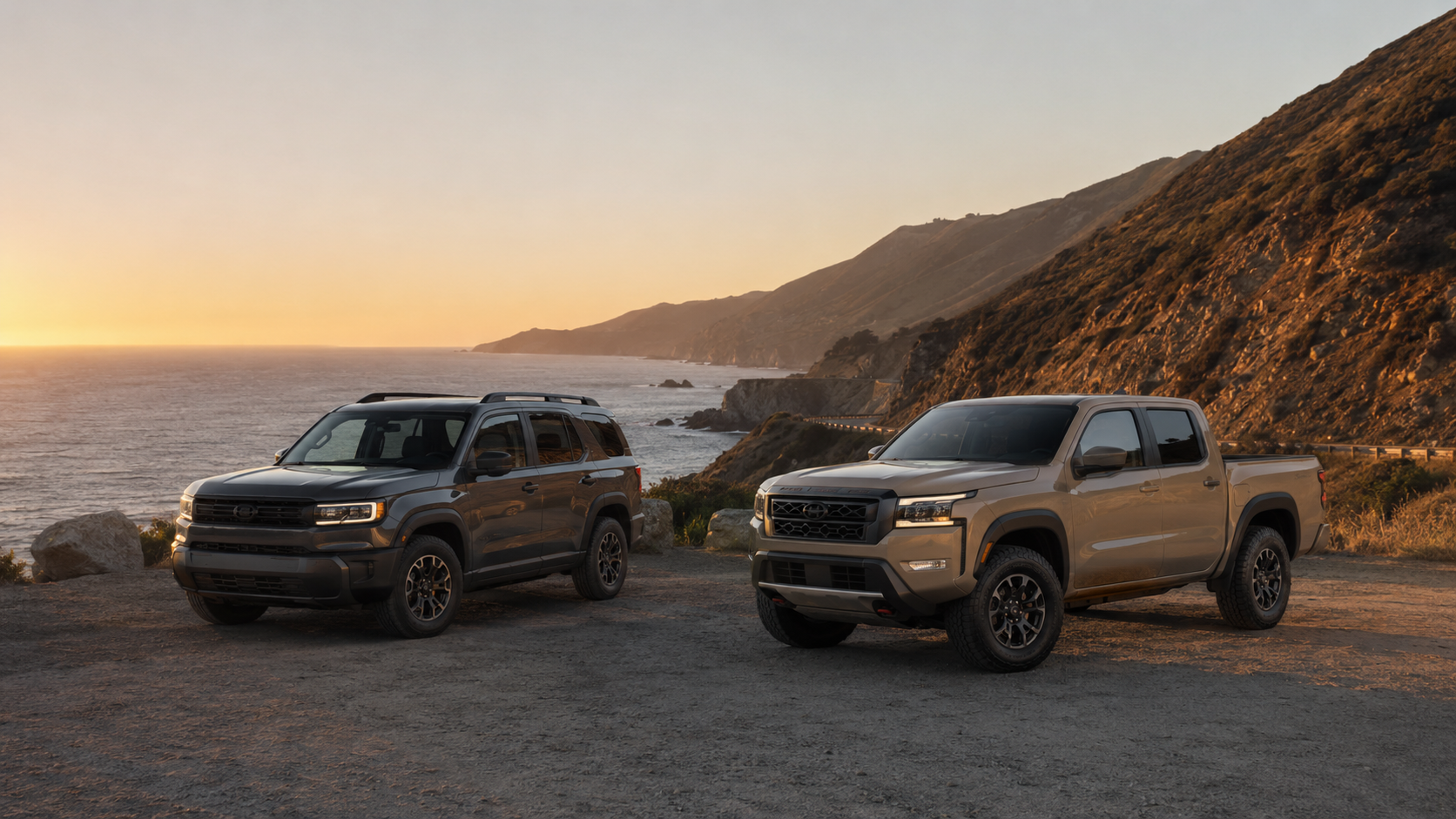
Somewhere along the way, a naturally aspirated V6 and a normal automatic transmission became exciting.
Not exciting because they’re exotic. Not exciting because they’re fast enough to rearrange your internal organs. Exciting because they aren’t trying to shut off half their cylinders, spool two turbos, simulate eight fake CVT shifts and save half a teaspoon of fuel before the warranty expires.
A regular engine breathing regular air through regular plumbing now feels almost rebellious.
And honestly, I’m here for it.
I’ve owned turbocharged vehicles. I’ve owned a tuned twin-turbo V6 that was an absolute riot. Put your foot into it, wait half a heartbeat and suddenly every responsible decision you’ve ever made feels wildly overrated.
Boost is fun.
Boost after 180,000 kilometres may be less fun.
That’s the distinction people seem determined to miss. A vehicle can be exciting to lease for three years and still be something I wouldn’t want to own for fifteen. Those are two completely different tests.
I’m not afraid of turbochargers. I’m afraid of receiving the invoice for turbochargers after they’ve spent a decade living beside a hot engine, pushing extra air into an already highly stressed collection of expensive parts.
Apparently, simple is premium now
The new Honda Passport caught my attention immediately because it looks fantastic.
It has a proper SUV shape. It looks rugged without looking like a Transformer suffering from unresolved childhood trauma. It has some presence, some width and enough character that you don’t need three different exterior packages just to stop it resembling a rental appliance.
Then I looked under the hood.
A 3.5-litre naturally aspirated V6.
No turbochargers.
No CVT.
A conventional 10-speed automatic.
Honda rates the redesigned 2026 Passport’s V6 at 285 horsepower, paired with its first 10-speed automatic in the model.
That got my attention more than any giant screen or clever drive mode.
Now, this is still a modern engine. It has direct injection, variable valve timing, cylinder-management technology and plenty of computers making decisions behind the scenes. It is not a carbureted tractor motor accidentally installed in a family SUV.
But compared with the industry’s rush toward smaller turbocharged engines and continuously variable transmissions, it feels almost refreshingly normal.
That is how far we’ve gone.
Honda announces a V6 and a real automatic transmission and I react like they’ve rediscovered fire.
The Frontier quietly kept doing truck things
The Nissan Frontier fits into the same conversation.
Nissan has made plenty of decisions over the years that I would not personally frame and hang in the boardroom. I own a Nissan Kicks with a CVT, so my relationship with the company includes a small but persistent sense of mechanical dread.
But the Frontier?
That thing makes sense to me.
The 2026 Frontier still uses a naturally aspirated 3.8-litre V6 making 310 horsepower, paired with a conventional nine-speed automatic.
No turbo four-cylinder screaming for help.
No belt-and-pulley transmission making a prolonged groaning noise while the truck gradually catches up with the engine.
Just a V6 and gears.
Remember gears?
You press the accelerator. The transmission selects one. The truck moves. Nobody needs to simulate a shift to reassure the driver that mechanical events are still occurring.
Nissan even describes the V6 as part of its long-running VQ engine family and specifically promotes the engine’s longevity and reliability. Marketing departments say many things, obviously, but at least this one is advertising the quality I actually give a shit about.
I wouldn’t claim the Frontier is perfect. Every vehicle has problems, and anyone who says otherwise is either selling one or has owned it for twelve minutes.
But I understand why a buyer looking for a long-term midsize truck might stop and stare at it.
It isn’t winning the engineering arms race.
That may be the appeal.
Toyota used to understand this better than anyone
Toyota built its reputation on vehicles that were often deeply unexciting right up until you realized they had survived eighteen years of neglect, three owners and an interior permanently scented by old French fries.
That was the magic.
Toyota didn’t always produce the most power. It didn’t always have the best infotainment. It occasionally sold vehicles with acceleration best measured using geological equipment.
But they lasted.
People trusted them because Toyota seemed willing to leave a proven design alone after everyone else had started attaching more shit to theirs.
Then the Tundra lost its naturally aspirated V8 and moved to a twin-turbo V6.
On paper, the newer engine is better. More torque. Better fuel economy. Modern technology. Stronger numbers for people who shop for trucks by comparing PDFs.
And then Toyota had to recall certain newer Tundras because machining debris could remain in the engine and potentially lead to knocking, rough running, failure to start or loss of power. Toyota expanded related engine recalls again in 2025 and 2026.
To be fair, that specific problem involved manufacturing debris. It does not prove turbocharged V6 engines are inherently doomed.
But it still lands badly.
Toyota spent decades building its identity around engines that would outlive the mortgage, the garage and possibly the owner. Then it replaced a well-known V8 with a more complicated twin-turbo drivetrain and immediately gave everyone something new to worry about.
That doesn’t mean the new Tundra is garbage.
It means Toyota gave up some of the simplicity people trusted and now has to prove the replacement deserves the same faith.
That proof takes years.
Horsepower takes one press release.
More power from less engine is not free
Turbocharging lets manufacturers get larger-engine performance from smaller displacement.
That sounds like free power.
It isn’t.
You’re adding turbochargers, oil and coolant lines, wastegates, intercoolers, extra heat, higher cylinder pressures and more plumbing packed into an engine bay already designed by someone who apparently hates mechanics’ hands.
None of that guarantees failure.
Turbocharged engines can last a long time when they are engineered properly, maintained well and operated by someone who doesn’t treat oil-change intervals as loose philosophical suggestions.
But the simple truth remains:
More parts create more possible failures.
More heat creates more stress.
More pressure leaves less room for neglect.
That may be worth it in a performance car. My tuned twin-turbo V6 was stupid fun. I knew what I had. I enjoyed it for what it was.
But for a family vehicle I want to keep for fifteen years?
My priorities change.
I don’t need every traffic-light departure to feel like the opening scene of a police documentary.
I need it to start on a wet Tuesday morning in 2039.
The CVT is where I become less diplomatic
I understand why manufacturers use CVTs.
They can keep the engine operating in an efficient range. They’re often lighter. They can help improve fuel economy. They make the numbers on the window sticker look a little prettier.
Wonderful.
I still hate the fucking things.
I hate the way most of them drive. I hate the disconnect between engine noise and vehicle speed. I hate the prolonged droning sound that makes it seem like the engine is holding a note while the rest of the vehicle searches for motivation.
Then manufacturers started programming fake shifts into them because apparently even the people building CVTs realized customers preferred the sensation of having an actual transmission.
That’s a hell of an admission.
We invented a gearbox without gears, then programmed it to pretend it had gears because people found the gearless experience annoying.
Progress.
And yes, there are important exceptions. Toyota’s hybrid e-CVT system is mechanically different from the belt-and-pulley CVT found in vehicles like our Nissan Kicks. They share a name, not necessarily the same operating design or reputation.
But our Kicks has exactly the kind of CVT that keeps a little question mark floating in the back of my mind.
The car is currently fine.
That is how anxiety works.
You don’t worry because it has exploded. You worry because you’ve read enough, worked around enough vehicles and know that if the transmission does eventually fail, nobody is going to say, “Excellent news, Ryan. This will be cheap and emotionally painless.”
I’m not demanding ancient technology
I’m not asking manufacturers to stop improving vehicles.
I like modern features.
Ventilated seats are glorious. Apple CarPlay is excellent. Backup cameras are useful. A warning that I’m about to drive into something because I was distracted by my five-year-old asking why birds don’t wear shoes is appreciated.
I like good crash protection. Better emissions matter. Fuel economy matters.
But I reject the idea that every improvement on a laboratory test automatically creates a better ownership experience.
A smaller engine making more power is impressive.
A transmission extracting another fraction of efficiency is impressive.
Cylinder deactivation, stop-start and ultra-thin oil all make sense when you examine the specific engineering goal.
Then you put all of it together, age it for twelve years, add Canadian winters, missed maintenance, towing, overheating, software problems and three owners, and ask whether the vehicle is still economically worth repairing.
That is the test I care about.
Not whether it saved twelve dollars during an official fuel-economy cycle when everything was new.
Efficiency can become a very expensive bargain
Imagine two vehicles.
One has a naturally aspirated V6 and uses slightly more fuel.
The other has a smaller turbo engine, complicated emissions equipment and a CVT, but saves a litre or two per hundred kilometres.
The second vehicle wins the fuel-economy argument.
No question.
But does it win the ownership argument?
Not automatically.
How much fuel do you actually save in a year?
How many years does it take before those savings equal one major drivetrain repair?
What happens when the turbo fails?
What happens when the CVT fails?
What happens when a high-pressure fuel-system component fails?
A person can save a couple hundred dollars a year at the pump and lose every dollar of it in one afternoon at the repair shop.
With tax.
Efficiency is visible. The number appears on the dashboard every day.
Future repair risk is invisible.
That makes efficiency much easier to sell.
I want the vehicle they forgot to ruin
The 2026 Passport appeals to me because it looks like somebody designed a genuinely modern SUV and then forgot to ruin the drivetrain.
The Frontier appeals to me because Nissan kept a V6 and a conventional automatic while other manufacturers looked for more creative ways to turn a pickup into a fuel-economy demonstration.
That doesn’t make either vehicle perfect.
The Passport still has modern engine-management technology. The Frontier still uses direct injection. The days of truly simple new vehicles are mostly gone.
But there are levels to this shit.
A naturally aspirated V6 with a normal automatic starts with fewer long-term question marks than a highly boosted little engine attached to a transmission I already dislike.
That matters to me.
I have spent about twenty years around automotive dealerships, parts, service departments and repair shops. I’ve watched customers buy new vehicles because they wanted reliability and peace of mind, then discover that “new” and “simple” stopped meaning the same thing a long time ago.
I’ve seen technology make vehicles better.
I’ve also seen it make them expensive as hell to fix.
So when a manufacturer introduces something that looks good, works well and still uses a drivetrain I can imagine owning after the warranty expires, I notice.
That shouldn’t be unusual.
But apparently, in 2026, a naturally aspirated V6 and a regular automatic transmission are enough to make me emotional.
The bar is on the floor.
At least the Passport and Frontier managed not to trip over it.
